TPS for Alzheimer’s & Dementia
Transcranial pulse stimulation (TPS) is a non-invasive procedure that reaches targeted brain regions from the outside using short ultrasound pressure pulses. For the treatment of Alzheimer’s disease, TPS is CE-approved in Europe; within this indication we rate the evidence as solid. If you are reading this page for a relative: the diagnosis says little about what the next two years will look like. What is done in that time for function and daily life says more. This article explains the principle, the process and the limits.
Last updated: 2026-07-25 · Medically reviewed by Dr. med. univ. Julian Douwes
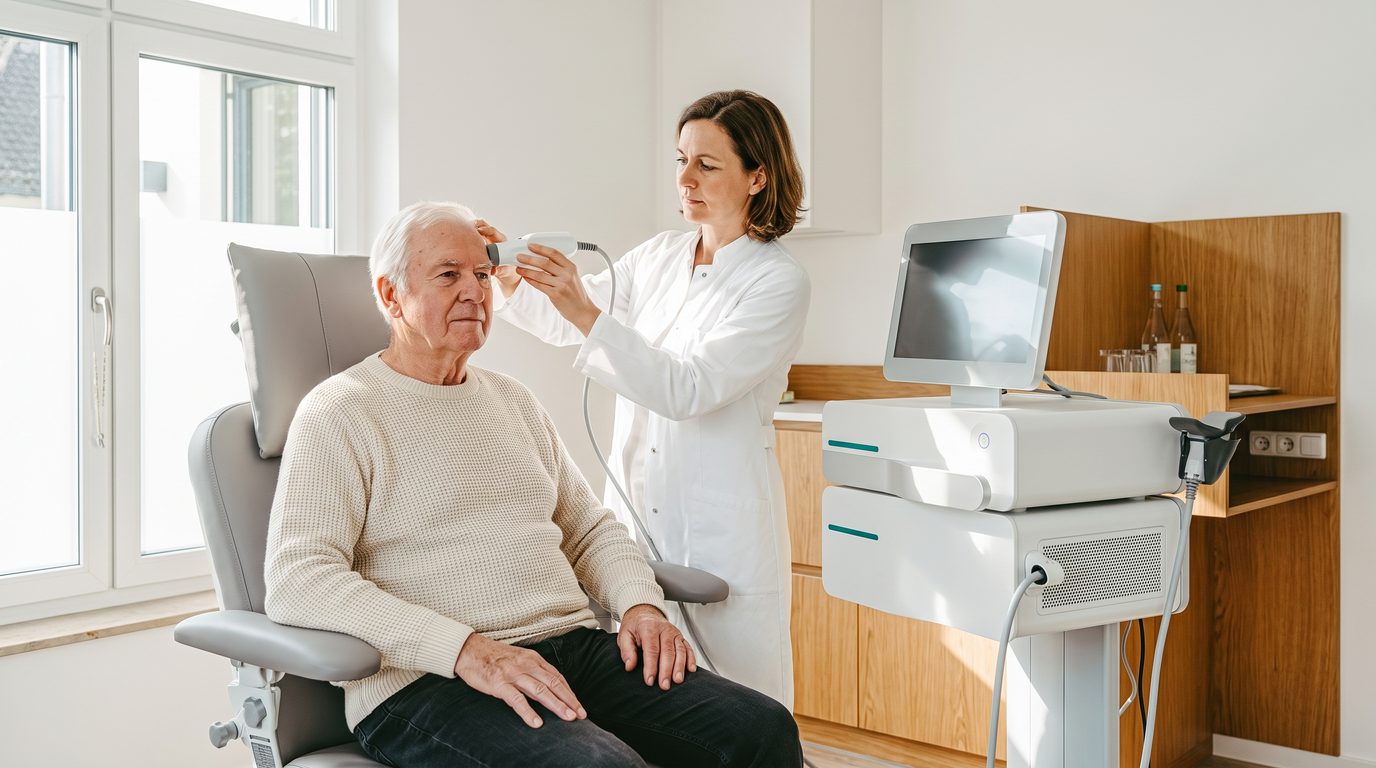
What TPS is
TPS (transcranial pulse stimulation) uses very short, focused ultrasound pressure pulses that reach through the skull into defined brain regions. Unlike magnetic or current methods, TPS acts mechanically through pressure waves and can therefore reach deeper-lying areas more precisely. The aim is to stimulate the body’s own regeneration and perfusion processes in the tissue (neuroplasticity). For the detail, read How does TPS work?
CE-approved for Alzheimer’s
An important difference from many other neuromodulation applications: for the treatment of Alzheimer’s disease, TPS is CE-approved in Europe. This means the procedure is regulatorily recognised for precisely this indication. Within this approval we rate the evidence as solid. In other areas TPS is used off-label, which we then discuss transparently case by case.
What happens in the brain in Alzheimer’s
In Alzheimer’s, cognitive functions such as memory, orientation and language decline over years; memory structures such as the hippocampus and widely branched brain networks are particularly affected. TPS aims to support the activity and connectivity of relevant regions. TPS is not a cure and does not stop the disease; within a program it is one building block aimed at function and quality of life.
What a TPS treatment looks like
A TPS session is outpatient and without anaesthesia. Via a handheld applicator, navigated using individual imaging, short pulses are delivered to the target regions. A session typically lasts around 30 minutes; a course comprises several sessions over a few weeks, often with refreshers. You feel a light tapping on the scalp. Before starting, a physician in our program brings the diagnostic levels together and checks whether TPS is sensible and safe for you.
Expectations and evidence
For TPS in Alzheimer’s there are first clinical studies suggesting improvements in cognitive domains; the research is active and growing. We rate the evidence in this CE-approved indication as solid. Real, linked studies are available at Science & Studies. How strongly someone responds shows in the course; that is why we record cognitive functions before and after.
Frequently asked questions
Is TPS officially approved for Alzheimer’s?
Can TPS cure Alzheimer’s?
Is TPS painful?
How does TPS differ from rTMS?
How do I get started?
Read more
Similar articles
An article does not know your findings.
What fits you is shown by the structured assessment. The free consultation takes 15 to 20 minutes and clarifies whether this path is worth it for you.