
OCD:
when thoughts become compulsions
A thought that will not let go. An action you have to carry out even though you know it makes no sense. That is not weakness. It is a loop in the brain that can be measured, and that can be braked from outside so your behavioural therapy gets more traction.
- Free
- No obligation
- Reply within 2 business days
- Outpatient · Bad Aibling
- Non-invasive
Free & non-binding · usually a reply within 2 business days · confidential
Prefer to talk? Call us: +49 (0)8061 398-0
Three hours a day nobody sees: the checking, the washing, the going back. You do exposure therapy, you take the medication, and both have helped, but not enough. “That is the foundation, there is nothing more” describes where standard therapy stands. It does not describe what your brain can still do when the loop itself is treated.
About 2 to 3 in 100 people develop OCD over their lifetime; it often begins in adolescence.
Symptoms have a map
In OCD a loop between the central executive network (frontal) and deeper structures is overactive: the brain repeatedly signals that something is wrong, and the salience network cannot switch off this error message. This produces thought loops and the urge to check and control. Two things keep the loop running. The psyche: every ritual carried out brings brief relief and teaches the brain that the ritual was necessary; exposure therapy interrupts exactly this learning loop, and that is why it is part of the concept. The stress axis: sleep loss and elevated cortisol make the error message louder, so compulsions increase in strained weeks. So we treat loop, stress and sleep together. A neurological examination rules out structural causes beforehand.
For an overview of the six brain networks and a first orientation, see the Brain Network Analysis.
The assessment first, then your program.
Every patient starts with a structured assessment: your treatment history with therapy and medication, existing findings, questionnaires on severity and themes of the compulsions, sleep and mood, a clinical examination, lab work where needed. A qEEG is added when we want to see how strongly the frontal brain is working the loop at rest. In our program neuromodulation is one building block beside your exposure and behavioural therapy, your sleep and stress regulation: TMS, including deep TMS, has the strongest evidence for the overactive circuit, and accelerated protocols and tDCS come in when the profile suggests them. Your therapist continues the therapy; we schedule sessions so that exposure and stimulation can coincide. The medication you take stays as it is unless your psychiatrist decides otherwise. The first consultation takes 15 to 20 minutes.
Our aim stays the same: to restore functional balance, with as little medication as possible and a life with high quality of life as the measure.
You don’t have to decide anything today. A 15 to 20 minute conversation is enough to know whether an assessment is worth it for you.
Free & non-binding · usually a reply within 2 business days · confidential
Who it is for, and who it is not for
A good fit if …
- Medication or therapy has not been enough so far
- You are looking for a measurement-based, non-invasive path
- You are open to outpatient treatment in Bad Aibling
Less suitable if …
- You expect a purely remote or online treatment without on-site diagnostics
- You expect a guarantee — serious medicine cannot give one
In an acute crisis or having suicidal thoughts? Please seek immediate medical or emergency help — in Germany call 112, or the free 24/7 helpline Telefonseelsorge 0800 111 0 111.
The first consultation is free. We discuss the scope, duration and cost of any program openly afterwards, outpatient, here in Bad Aibling.
What the research shows
Peer-reviewed work on OCD and the relevant procedures, graded by evidence level. No study proves an individual outcome.
In short: for some procedures the evidence is solid, for others still early. Where your case stands is settled in the assessment, and the program follows from it.
Efficacy and safety of deep transcranial magnetic stimulation for obsessive-compulsive disorder: a prospective multicenter randomized double-blind placebo-controlled trial
Deep transcranial magnetic stimulation for treatment-resistant obsessive-compulsive disorder: a meta-analysis of randomized-controlled trials
A meta-analysis of transcranial magnetic stimulation in obsessive-compulsive disorder
Efficacy of accelerated deep transcranial magnetic stimulation with double cone coil in obsessive-compulsive disorder: a double-blind, placebo-controlled study
A meta-analysis of the effectiveness of different cortical targets used in rTMS for the treatment of obsessive-compulsive disorder
Efficacy and safety of transcranial direct current stimulation (tDCS) in patients with obsessive-compulsive disorder: a systematic review and meta-analysis of randomized controlled trials
Brain stimulation in obsessive-compulsive disorder (OCD): a systematic review
More studies across all conditions: Science & Studies.
Deep TMS for OCD is supported by a multicentre, placebo-controlled trial and is FDA-cleared in the US; meta-analyses confirm the effect, and it differs from person to person. How much your loop gives way is measured by the Y-BOCS questionnaire over the course, and that is what we align target and frequency to.
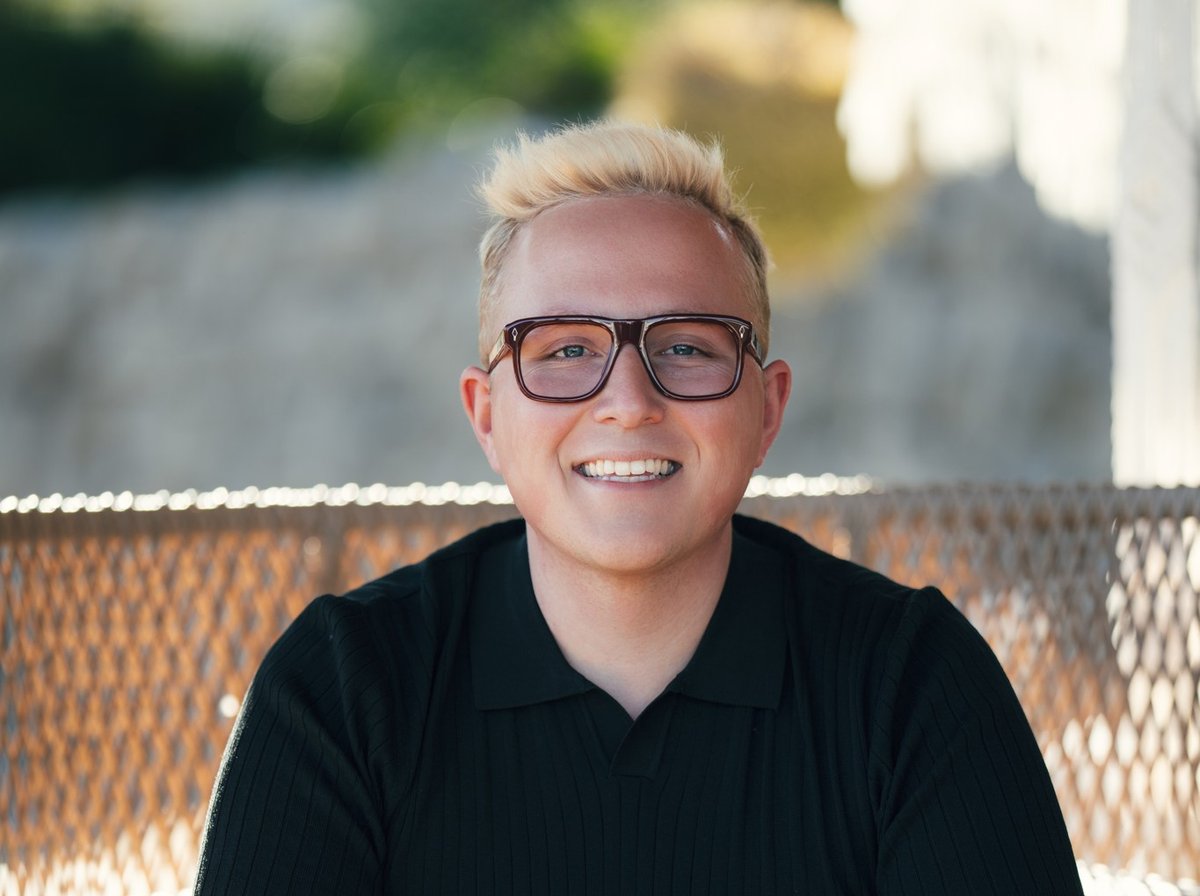
A real doctor. A real clinic.
Dr. med. univ. Julian Douwes · Medical Director
Part of Clinicum St. Georg, under the medical direction of Dr. med. univ. Julian Douwes. Outpatient, evidence-graded, without medication as the first step — tailored to your profile. More on our program.
- 30+ Years of clinical heritage
- 90+ Countries patients travel from
- 30,000+ Treatment sessions delivered
In three calm steps
OCD: let’s talk about your path.
In a free consultation we clarify whether and how our measured program could fit you — no obligation, fully confidential.
Free & non-binding · usually a reply within 2 business days · confidential