
Treatment-Resistant
Depression
Three antidepressants, psychotherapy, years. What was tried was the chemistry of the brain. The brain itself, its networks and their rhythm, was never treated directly, and the body around it was rarely checked. We catch up on both.
- Free
- No obligation
- Reply within 2 business days
- Outpatient · Bad Aibling
- Non-invasive
Free & non-binding · usually a reply within 2 business days · confidential
Prefer to talk? Call us: +49 (0)8061 398-0
When one drug after another fails, the exhaustion grows and with it the quiet thought that the problem is you. It is not. Roughly a third of depressions do not respond sufficiently to first-line standard therapies, and there are reasons for that which can be measured: in the frontal brain, in the thyroid, in inflammation status. You have not failed. A tool has reached its limit.
Around a third of people with depression do not achieve sufficient improvement with first-line standard therapies.
Symptoms have a map
In treatment-resistant depression too, the limbic network and the default mode network (DMN) are overactive while the central executive network stays dampened; a qEEG often shows this as a persistent dysregulation in the frontal brain that does not fit a medication-only strategy. Two systems are frequently overlooked here. Hormones: thyroid, cortisol and sex hormones set the baseline tension of the nervous system, and an underactive prefrontal cortex with an underactive thyroid is a thyroid case first, not an rTMS case. Inflammation: a subset of depressions that do not respond to antidepressants comes with elevated inflammation markers, and inflammatory messengers change how networks fire. So we check both before we stimulate. Before we stimulate, a neurological examination rules out structural causes.
For an overview of the six brain networks and a first orientation, see the Brain Network Analysis.
The assessment first, then your program.
Every patient starts with a structured assessment: your treatment history with every drug and every dose, your psychiatrist’s findings, questionnaires, a clinical examination and lab work (thyroid, inflammation markers, vitamin D, B12), imaging where needed. A qEEG is added when we want to see the frontal brain before we stimulate there; in treatment-resistant depression that is usually the case. From this, our program builds a plan in which neuromodulation now sets the tone: accelerated TMS on the SAINT principle, which compresses a whole course into a few days, or classic rTMS over the left prefrontal cortex, plus tDCS and, where the lab calls for it, correction of a hormone or inflammation axis. Dr. med. univ. Julian Douwes decides the protocol with you; if you have not responded after two weeks, the measurement shows it and we change site or frequency instead of waiting out thirty sessions. Your medication stays as it is unless your psychiatrist decides otherwise. All outpatient, at Clinicum St. Georg, with internists and a lab in the same building.
Our aim stays the same: to restore functional balance, with as little medication as possible and a life with high quality of life as the measure.
You don’t have to decide anything today. A 15 to 20 minute conversation is enough to know whether an assessment is worth it for you.
Free & non-binding · usually a reply within 2 business days · confidential
Who it is for, and who it is not for
A good fit if …
- Medication or therapy has not been enough so far
- You are looking for a measurement-based, non-invasive path
- You are open to outpatient treatment in Bad Aibling
Less suitable if …
- You expect a purely remote or online treatment without on-site diagnostics
- You expect a guarantee — serious medicine cannot give one
In an acute crisis or having suicidal thoughts? Please seek immediate medical or emergency help — in Germany call 112, or the free 24/7 helpline Telefonseelsorge 0800 111 0 111.
The first consultation is free. We discuss the scope, duration and cost of any program openly afterwards, outpatient, here in Bad Aibling.
What the research shows
Peer-reviewed work on Treatment-Resistant Depression and the relevant procedures, graded by evidence level. No study proves an individual outcome.
In short: for some procedures the evidence is solid, for others still early. Where your case stands is settled in the assessment, and the program follows from it.
Stanford Neuromodulation Therapy (SNT): a double-blind randomized controlled trial
Stanford Accelerated Intelligent Neuromodulation Therapy for treatment-resistant depression
Accelerated TMS for depression: a systematic review and meta-analysis
Comparisons of accelerated continuous and intermittent theta burst stimulation for treatment-resistant depression
Comparison between accelerated and standard or sham rTMS in the treatment of depression: a systematic review
New neuromodulation techniques for treatment-resistant depression
Theta burst versus high-frequency rTMS in depression (THREE-D): a randomised non-inferiority trial
More studies across all conditions: Science & Studies.
For rTMS in depression there are randomised trials, meta-analyses, the German S3 guideline and regulatory approvals; for accelerated protocols a double-blind randomised trial with high response rates in treatment-resistant depression, whose results are still being confirmed in larger groups. After several attempts your measured profile counts for more than the mean, and that is what we align site, frequency and duration to.
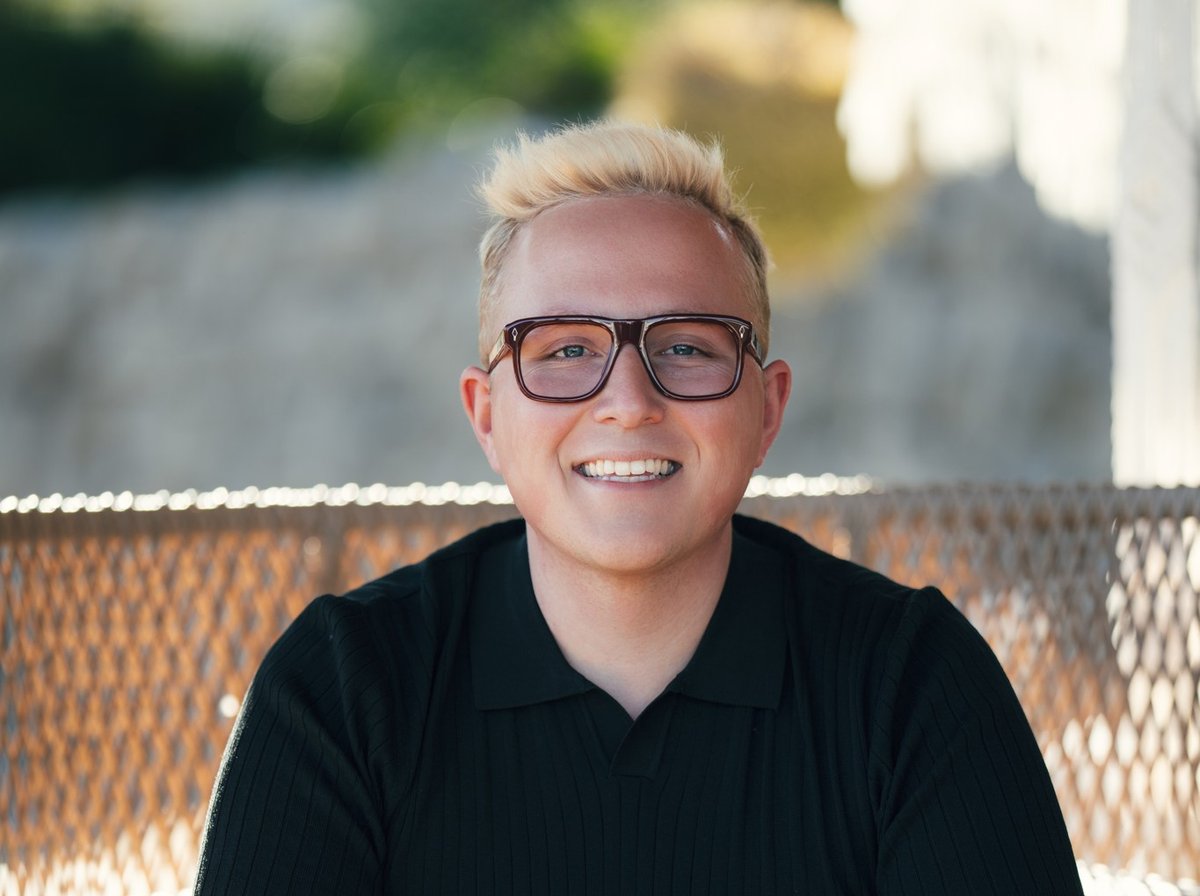
A real doctor. A real clinic.
Dr. med. univ. Julian Douwes · Medical Director
Part of Clinicum St. Georg, under the medical direction of Dr. med. univ. Julian Douwes. Outpatient, evidence-graded, without medication as the first step — tailored to your profile. More on our program.
- 30+ Years of clinical heritage
- 90+ Countries patients travel from
- 30,000+ Treatment sessions delivered
In three calm steps
Treatment-Resistant Depression: let’s talk about your path.
In a free consultation we clarify whether and how our measured program could fit you — no obligation, fully confidential.
Free & non-binding · usually a reply within 2 business days · confidential