How much does TMS therapy cost in Europe?
In Germany, TMS therapy costs roughly €30 to €140 per session depending on the clinic and protocol, based on publicly listed prices as of September 2026. A full course of 20 to 30 sessions therefore usually lands between €1,300 and €3,750, plus an initial assessment. That is typically a third or less of what a comparable course costs in the United States. Statutory insurers rarely cover outpatient TMS; private insurers decide case by case on a written cost estimate. This article explains what is behind those numbers, how accelerated 5-day protocols are priced, and how we handle costs at the Douwes Brain Center. A four-figure sum deserves one precondition: that the protocol fits your findings. That is why, with us, the assessment comes before the cost estimate.
Last updated: 2026-09-13 · Medically reviewed by Dr. med. univ. Julian Douwes
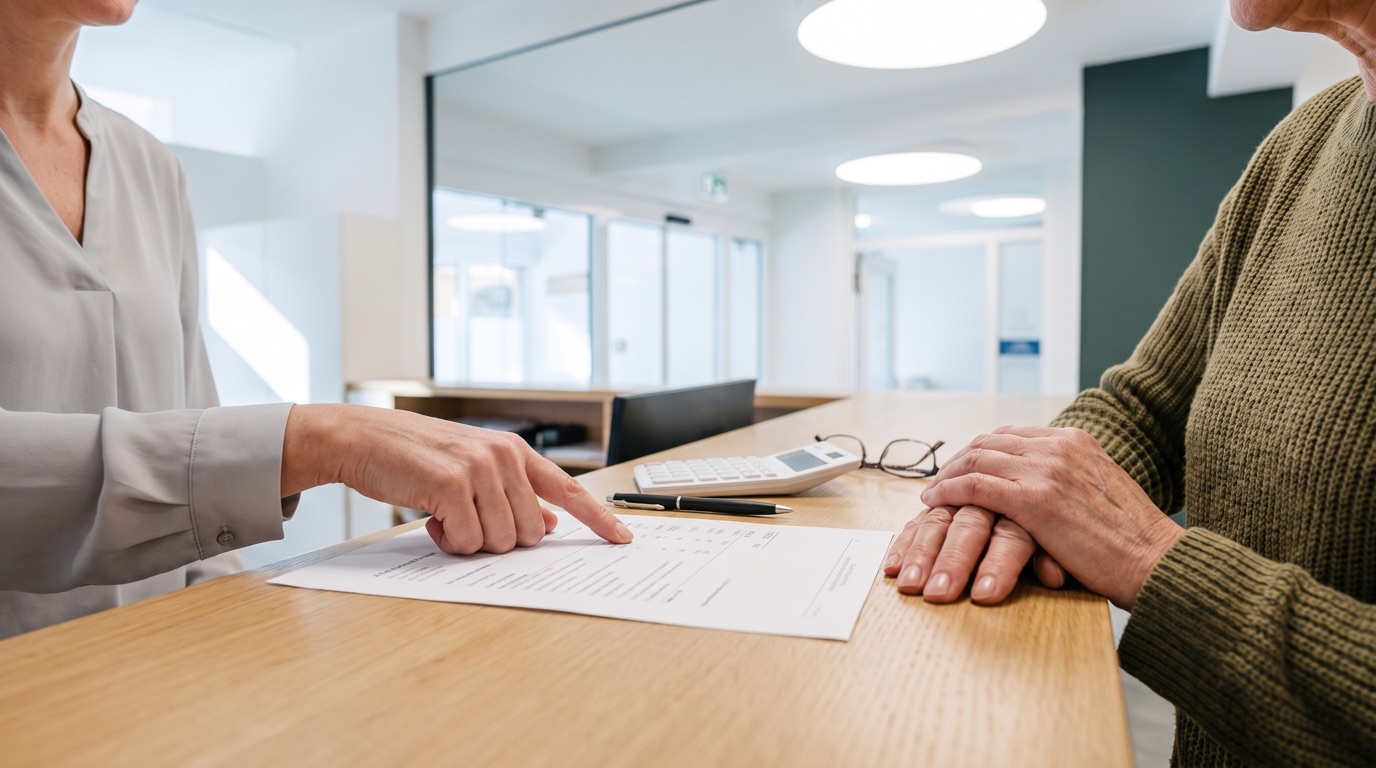
TMS therapy cost in Germany: the numbers
Because rTMS in Germany is mostly a self-pay or private-insurance service, many clinics publish their prices. As of September 2026 we reviewed publicly listed price sheets from providers in Bavaria, North Rhine-Westphalia, Hamburg and Switzerland. The range is wide, but the pattern is clear:
- Per session: The lowest published prices start at around €27–30 per session (30-session series, self-pay rate); most physician-led private clinics charge €100–140 per session.
- Initial assessment: History, contraindication screening and motor-threshold determination are usually billed separately, typically €150–200.
- Per course: Published package prices run from about €1,300 for 10 sessions through €2,600 for 20 to €3,750 for 30 sessions. Total costs quoted by clinics themselves fall between €1,000 and €3,600.
So for a complete course, budget in the order of €1,500 to €4,000. It gets cheaper when a short theta-burst protocol is used or sessions are packed densely; more expensive when imaging, neuronavigation or extensive diagnostics are included. A price without a statement of what is included tells you little, more on that below.
What a TMS course comprises: sessions, weeks, protocols
The price depends above all on the number of sessions, and that depends on the protocol. Three formats are common today:
- Classic 10 Hz protocol: 20 to 30 sessions on consecutive weekdays over 4 to 6 weeks, each session about 20 to 40 minutes. This is the protocol of the large approval trials and the standard for depression.
- iTBS (intermittent theta-burst stimulation): the same number of sessions, but only about 3 minutes of stimulation each. In the THREE-D trial iTBS was non-inferior to 10 Hz. In practice that means less chair time and often lower per-session prices.
- Accelerated protocols: several iTBS sessions per day; SAINT-inspired formats deliver up to 10 sessions a day over 5 days: 50 sessions in one week. These are usually priced as a one-week package rather than per session. See Accelerated TMS.
To compare two offers, always ask: How many sessions are included? Is the initial assessment part of the price? Are progress measurements and physician reviews included? And what does a maintenance session cost if a booster is useful later? For a realistic view of outcomes, read TMS success rate: what the evidence says.
Is TMS covered by insurance? Statutory, private and civil-service schemes
Statutory health insurance (GKV): Outpatient rTMS is currently not a standard benefit of Germany’s statutory insurers, the Federal Joint Committee has not added it to the outpatient catalogue. In inpatient settings rTMS can be part of hospital treatment and is then billed through the stay. Individual applications for reimbursement are possible but rarely approved. For statutorily insured patients, outpatient TMS is therefore almost always self-pay.
Private insurance (PKV) and civil-service schemes (Beihilfe): Reimbursement is decided case by case. Many private insurers cover the cost in full or in part when medical necessity is documented, usually depression that has not responded adequately to medication. Others decline or reimburse only partly. The usual route: you receive a written cost estimate with a medical rationale before treatment and submit it to your insurer; approval should be in hand before the first session.
Billing basis: rTMS has no dedicated code in the German physicians' fee schedule (GOÄ) and is billed by analogy under § 6 (2) GOÄ, usually at 2.3 times the base rate. Physicians are legally required to inform you in writing about the expected fee beforehand and to point out that a private insurer may assess necessity differently. Reputable providers do exactly that, and do not run "special offers".
How we handle costs at the Douwes Brain Center
Every treatment with us begins with a free initial consultation. There we clarify whether TMS is a suitable option for you at all, which contraindications need to be excluded and which diagnostics make sense. Then comes the structured assessment; qEEG brain mapping is added when the question calls for it. Only from that follows which protocol, how many sessions, and whether TMS alone or in combination with other methods makes sense. This avoids the most expensive scenario: a long course that never matched your measured profile in the first place.
We quote our exact prices transparently in the free initial consultation; they depend on the program your assessment calls for.
What you can expect in every case: a written cost estimate on the GOÄ basis that you can submit to a private insurer, physician reviews as part of the program, and no flat package that does not fit your measurements. Patients travelling from Munich, Salzburg or further afield will find practical notes on our location page.
Cost of other neuromodulation methods: TPS, tDCS, taVNS, neurofeedback
People researching TMS costs often compare with other methods. The same caveat applies: as of September 2026, publicly listed German self-pay prices.
- Transcranial pulse stimulation (TPS): Almost always offered as a series of six sessions. Published package prices including history and pre/post assessment are around €2,000 to €3,000; single booster sessions are billed at about €300. TPS is purely self-pay; a few private insurers reimburse case by case.
- tDCS (direct current stimulation): Equipment and staff time are lower than for TMS, so sessions are usually cheaper. Public price lists are rare; one example quotes about €1,600 for a complete course. tDCS is not covered by statutory insurance; some private insurers reimburse.
- taVNS (ear vagus nerve stimulation): Hardly any public price lists. Session costs are typically below those of a TMS session; taVNS is often priced as one building block within a program.
- Neurofeedback: Typically €70 to €150 per session over 20 to 40 sessions. Details, insurance and package prices are in Neurofeedback cost.
Bottom line: per session, TMS is one of the more expensive methods; per course it sits in the same range as TPS or a longer neurofeedback course. What matters is not the session price but whether the method fits your measured profile.
International comparison: Germany vs. the US, UK and Switzerland
For international patients, Germany is a comparatively affordable location. In the United States, providers and financing portals quote, as of 2026, typically $300 to $500 per session and $6,000 to $15,000 for a course of 20 to 36 sessions without insurance; with insurance, out-of-pocket costs often remain at $1,500 to $5,000. In the United Kingdom, private TMS chains charge around £3,300 to £3,750 for an initial 15-session course and about £350 for an assessment; on the NHS, rTMS is available only at a handful of sites with long waiting lists. In Switzerland, rTMS is not a basic-insurance benefit; Zurich providers price individual packages in CHF.
A 30-session course in Germany therefore usually costs a third to a half of the US price, even after adding travel and accommodation. For an accelerated 5-day protocol that is exactly what you should budget for: five treatment days with several sessions each, i.e. one week of accommodation in Bad Aibling or nearby. Bad Aibling is a spa town with the infrastructure to match, 50 minutes from Munich and its airport. Protocol and schedule details are on the Accelerated TMS page; travel notes are on our location page.
Weighing cost against benefit
A four-figure sum is a lot of money. It is worth holding it against what the evidence says: for rTMS in depression there are numerous randomised trials, meta-analyses and regulatory approvals; a meaningful share of those treated respond, a smaller share reach remission, and not everyone benefits. We set out those numbers in TMS success rate: what the evidence says. In treatment-resistant depression the alternative is often another medication switch or an inpatient stay; both carry costs too, just less visible ones.
Our aim is always the same: to restore the functional balance of your brain, as far as possible without drugs and with as little medication as possible. Measuring first helps put your money where, according to your profile, it is most likely to work. Whether TMS is part of that is something we work out together, in the free initial consultation.
Frequently asked questions
How much does TMS therapy cost?
How much is TMS therapy per session?
Is TMS therapy covered by insurance?
How many TMS sessions are needed?
How is TMS billed in Germany?
What do TPS, tDCS or neurofeedback cost by comparison?
Read more
Similar articles
An article does not know your findings.
What fits you is shown by the structured assessment. The free consultation takes 15 to 20 minutes and clarifies whether this path is worth it for you.