After a traumatic brain injury:
finding your way back
“The MRI is clear” means the tissue is intact. It says nothing about the connections between your brain networks, and those are what carry concentration, stimulus filtering and mood. That is where we look, alongside your neurologist and your rehabilitation.
- Free
- No obligation
- Reply within 2 business days
- Outpatient · Bad Aibling
- Non-invasive
Free & non-binding · usually a reply within 2 business days · confidential
Prefer to talk? Call us: +49 (0)8061 398-0
Fourteen months after the fall, and half a working day is still the limit. The supermarket lighting, the word that will not come, the irritability that does not feel like you, and friends who say you are “better now”. We take these invisible after-effects for what they are: a nervous system that has not yet found its way back, and that can be worked on.
Traumatic brain injuries are among the leading causes of long-term disability in younger adults worldwide; tens of millions of people are affected every year.
Are you a family member or carer? You are in the right place too — call or write to us; we support you alongside.
Symptoms have a map
A traumatic brain injury disturbs the connections between brain networks more than single regions. Often the central executive network (concentration, working memory, planning), the salience network (stimulus filtering, inner calm) and the limbic network (mood, stress processing) fall out of balance; hence the full head, the sensory overload, the fatigue. Two systems keep that going. Sleep: after a brain injury it is often shallow and fragmented, and without deep sleep the brain can neither clear up nor rewire. The autonomic nervous system: a sympathetic branch that has not powered down since the accident keeps heart rate, light sensitivity and irritability high. So we measure both and treat both. A medical work-up first rules out structural causes.
For an overview of the six brain networks and a first orientation, see the Brain Network Analysis.
Alongside your neurological care: what can be done for everyday life.
Every patient starts with a structured assessment: how the injury happened and the reports from hospital and rehabilitation, questionnaires on concentration, sleep and sensitivity to stimuli, a clinical examination, lab work and current imaging where needed. qEEG brain mapping is added when we want to see the connections the MRI does not show. From this we build a complementary program that adds to your neurological care and your rehabilitation: rTMS or iTBS for concentration and mood, tDCS for working memory, neurofeedback for the stimulus filter, photobiomodulation for the energy supply of nerve cells, plus sleep and a step-by-step build-up of load. Your medication stays as it is unless your neurologist decides otherwise. Bring the discharge letter to the first consultation.
Our aim stays the same: to restore functional balance, with as little medication as possible and a life with high quality of life as the measure.
You don’t have to decide anything today. A 15 to 20 minute conversation is enough to know whether an assessment is worth it for you.
Free & non-binding · usually a reply within 2 business days · confidential
Who it is for, and who it is not for
A good fit if …
- Medication or therapy has not been enough so far
- You are looking for a measurement-based, non-invasive path
- You are open to outpatient treatment in Bad Aibling
Less suitable if …
- You expect a purely remote or online treatment without on-site diagnostics
- You expect a guarantee — serious medicine cannot give one
In an acute crisis or having suicidal thoughts? Please seek immediate medical or emergency help — in Germany call 112, or the free 24/7 helpline Telefonseelsorge 0800 111 0 111.
The first consultation is free. We discuss the scope, duration and cost of any program openly afterwards, outpatient, here in Bad Aibling.
What the research shows
Peer-reviewed work on Traumatic Brain Injury and the relevant procedures, graded by evidence level. No study proves an individual outcome.
In short: for some procedures the evidence is solid, for others still early. Where your case stands is settled in the assessment, and the program follows from it.
Repetitive transcranial magnetic stimulation in traumatic brain injury: evidence from animal and human studies
Transcranial magnetic stimulation for the treatment of concussion: a systematic review
Accelerated rTMS in the treatment of post-concussion symptoms due to mild traumatic brain injury: a pilot study
Noninvasive neuromodulatory effect on cognition in individuals with traumatic brain injury: a single-blinded, two-arm parallel randomized clinical trial
Efficacy of non-invasive brain stimulation on cognitive functioning in brain disorders: a meta-analysis
Traumatic brain injury recovery with photobiomodulation: cellular mechanisms, clinical evidence, and future potential
Noninvasive brain stimulation for persistent postconcussion symptoms in mild traumatic brain injury
More studies across all conditions: Science & Studies.
For rTMS in persistent post-concussion symptoms there are controlled trials and pilot data, for photobiomodulation mainly mechanistic and early clinical data; the evidence ranges from early to growing. Which of it takes hold in your case shows in the comparison with the baseline after the first treatment block.
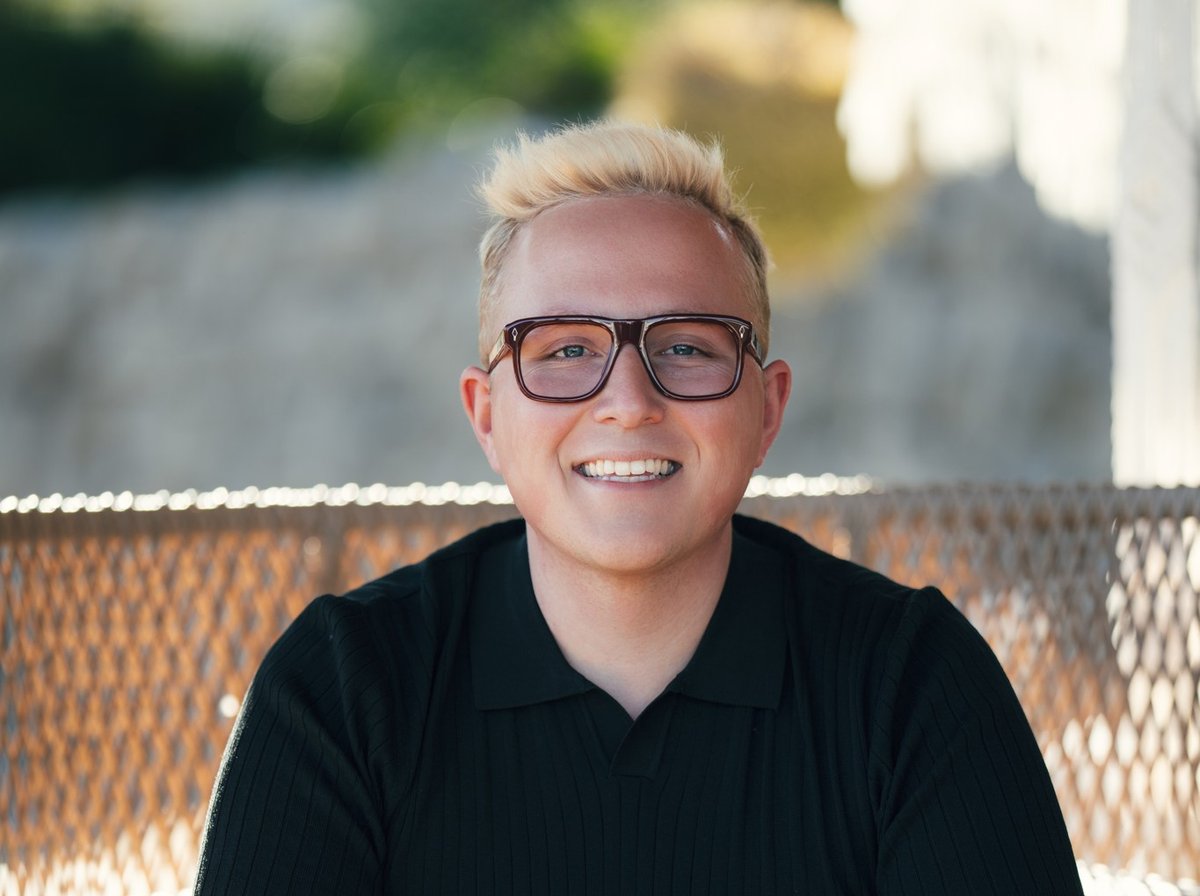
A real doctor. A real clinic.
Dr. med. univ. Julian Douwes · Medical Director
Part of Clinicum St. Georg, under the medical direction of Dr. med. univ. Julian Douwes. Outpatient, evidence-graded, without medication as the first step — tailored to your profile. More on our program.
- 30+ Years of clinical heritage
- 90+ Countries patients travel from
- 30,000+ Treatment sessions delivered
In three calm steps
Traumatic Brain Injury: let’s talk about your path.
In a free consultation we clarify whether and how our measured program could fit you — no obligation, fully confidential.
Free & non-binding · usually a reply within 2 business days · confidential