Non-invasive neuromodulation –
nudging the brain from the outside
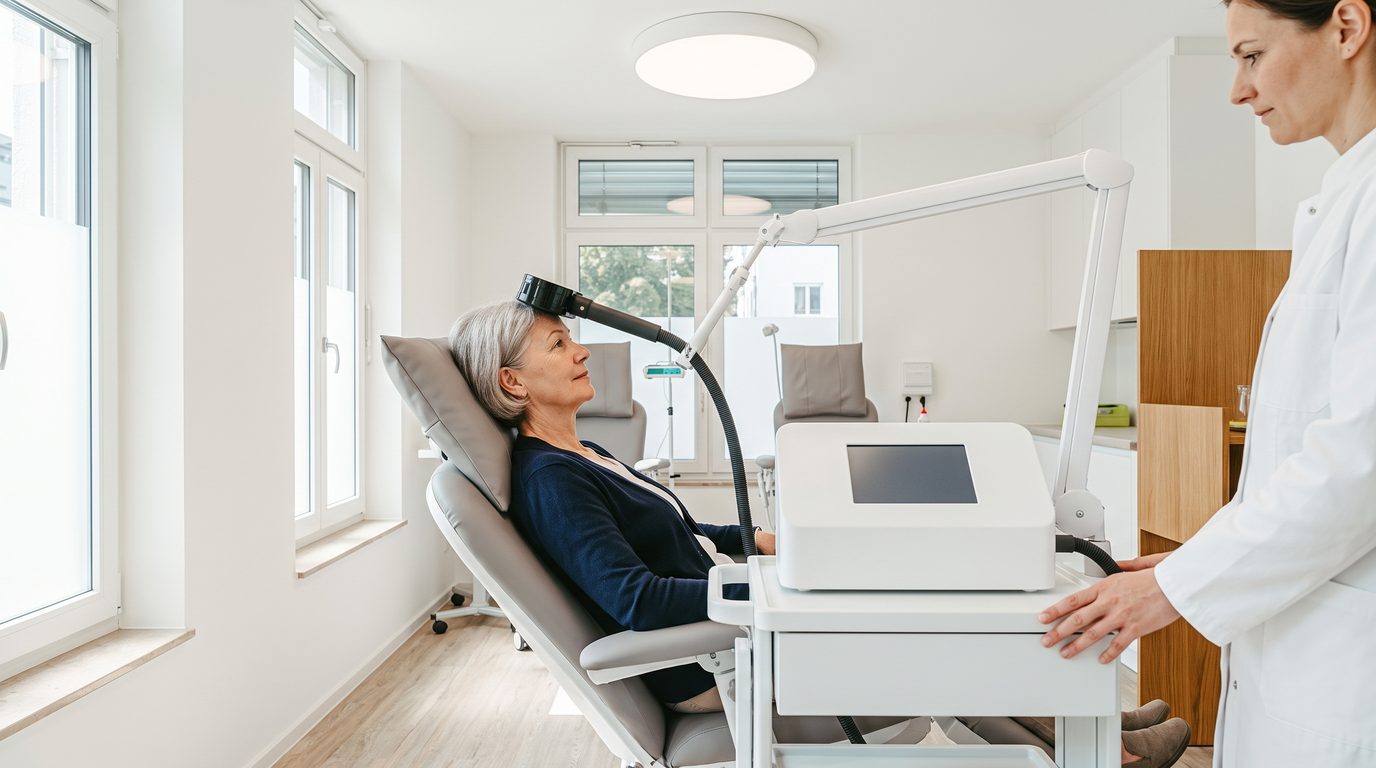
Non-invasive neuromodulation is the umbrella term for methods that deliberately influence the activity of brain regions: without surgery, without an implant and without anaesthesia. They act from the outside, via magnetic fields, weak current, nerve stimulation at the skin, or ultrasound shockwaves. The aim is to bring networks that have fallen out of rhythm back into balance. Which method comes into question for you is not a matter of taste: it follows from the assessment, and for each method we state the level of evidence.
Last updated: 2026-07-25 · Medically reviewed by Dr. med. univ. Julian Douwes
What does “non-invasive” mean?
In medicine, “invasive” means entering the body, for instance through surgery or an implanted device. A well-known example of invasive neuromodulation is deep brain stimulation, where electrodes are surgically placed in the brain.
Non-invasive methods do without all of that. They act from outside the skull and are therefore generally well tolerated, deliverable on an outpatient basis and without recovery time. They are not a replacement for everything, but an important, lower-risk toolbox when medication alone is not enough or not an option.
The four methods at a glance
We use several non-invasive methods, each with its own mechanism:
- rTMS (magnetic stimulation), magnetic pulses induce small currents in the tissue and prompt nerve cells to fire. Best evidenced for depression. Details: How does rTMS work?
- tDCS (direct current), a weak direct current gently shifts the excitability of nerve cells up or down, without directly making them fire. Well tolerated, moderate evidence.
- taVNS (vagus nerve stimulation at the ear), an ear electrode stimulates a branch of the vagus nerve and modulates the autonomic nervous system. Growing evidence.
- TPS (pulse stimulation), focused ultrasound shockwaves also reach deeper regions; in Europe CE-marked for Alzheimer’s dementia, otherwise off-label. Details: How does TPS work?
Stimulation vs. training: where neurofeedback fits
Not every method “stimulates”. Neurofeedback also belongs to non-invasive neuromodulation, but works fundamentally differently: it applies no external stimulus but mirrors your own brain activity in real time, so your brain learns to regulate itself. More in What is neurofeedback?
Stimulation and training can complement each other: a stimulus can open a window for change, a training can consolidate what is learned. Adjunctive photobiomodulation (near-infrared light) is also being investigated as a complementary, non-invasive building block.
Why the assessment comes first
No method works the same for everyone, and none is “the best” in itself. Which method, which region and which protocol are suitable depends on which of your brain networks has fallen out of balance. That is why, with us, nothing begins with a device but with a structured assessment: history, existing findings, questionnaires, a neurological exam, and where needed lab work and imaging, combined by a physician into one picture. Whether qEEG brain mapping is added is decided after that, not before.
Only from this does an individual program emerge, in which neuromodulation, feedback training and adjunctive therapies are tuned to one another, not a single device, but an overall concept. For a first, non-binding impression of your profile, try the Brain Network Analysis.
Safety, limits and evidence
Non-invasive methods are generally well tolerated; typical side effects are mild and temporary, such as headache or skin irritation at the electrode. Contraindications (e.g. metal implants in the head for rTMS) are checked beforehand.
The evidence varies in strength by method and indication, from solid (rTMS for depression) to growing or early. We offer only methods with a traceable evidence base; new research is added continuously. We summarise the current evidence transparently on Science & Studies. What off-label means is explained in this article.
Frequently asked questions
Is non-invasive neuromodulation dangerous?
The methods are considered well tolerated. Side effects are usually mild and temporary (e.g. headache, skin tingling). Serious events are rare, and we carefully check contraindications before starting.
Which method is the best?
There is no blanket “best” method. Which one fits depends on your measured network profile and your concern. That is exactly why the assessment comes before any decision about a device; your program follows from it.
Does neuromodulation replace my medication?
Not automatically. Neuromodulation can complement medication or be an option when it is insufficient or not tolerated. Any change to existing medication should always be discussed with your treating physician.
Is this the same as deep brain stimulation?
No. Deep brain stimulation is invasive: electrodes are surgically placed in the brain. The methods described here act from the outside, without surgery and without an implant.
Read more
Similar articles
An article does not know your findings.
What fits you is shown by the structured assessment. The free consultation takes 15 to 20 minutes and clarifies whether this path is worth it for you.