Brain fog: what helps? Understanding it, placing it, tackling it
Brain fog is not a disease in its own right but a state: thinking feels sluggish, words go missing, concentration breaks off, every mental effort tires you out of proportion. Routine tests often come back normal, and that is the frustrating part. What you can do depends on the cause, and in most cases the cause can be narrowed down. This article explains which causes come into question (from Long COVID to sleep loss), what you can do yourself and when a measurement of brain activity makes sense.
Last updated: 2026-09-13 · Medically reviewed by Dr. med. univ. Julian Douwes
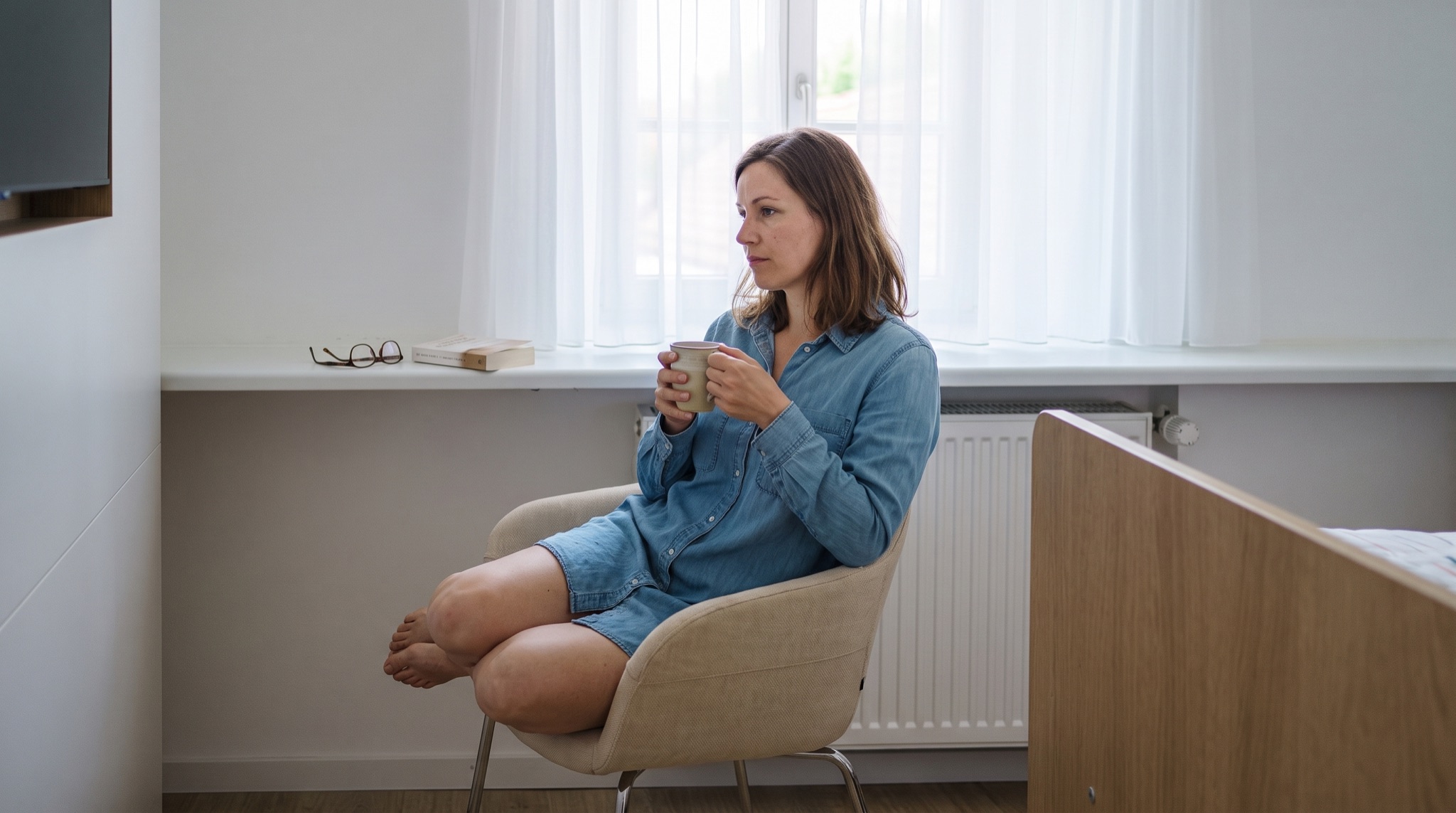
In short: what helps with brain fog?
Three things, in this order: narrow down the cause (medical work-up with labs, sleep and medication check), relieve the nervous system (sleep, pacing instead of pushing through, reducing stimulation, movement in a tolerable dose) and, if the fog stays after weeks, measure instead of guessing: a qEEG shows whether and where your brain activity is slowed or over-activated. On this basis it can be regulated in a targeted way, for example with taVNS, tDCS or neurofeedback. The path starts at the cause, not at the symptom.
What brain fog is – and what it is not
"Brain fog" is an experiential term, not a diagnosis. It describes a group of symptoms: slowed thinking, word-finding difficulties, breaks in concentration, everyday forgetfulness, trouble switching between tasks, the feeling of being "behind glass", and rapid mental fatigability. Typically, routine tests often remain unremarkable – patients know something is wrong and find no explanation.
At the network level, the state can be described well: the central-executive network (working memory, planning), the salience network (switching, stimulus filtering) and the attention network work slowed or uncoordinated. How these networks interact is explained in Brain networks explained. Brain fog is not the same as dementia: in brain fog, processing is disturbed, not storage – an important difference that shows in tests and in the qEEG.
The most common causes of brain fog
Brain fog rarely has only one cause. The most important ones we check in the work-up:
- Long COVID / post-COVID: currently the most frequent cause in our consultations. EEG studies after COVID-19 show an increase in slow brain waves and altered network activity that correlates with the cognitive complaints (Cecchetti 2022; Silva-Passadouro 2024); neuroinflammation (Fernández-Castañeda 2022), autonomic dysregulation (Mooren 2023) and microclots with endothelial dysfunction (Pretorius 2022) are being researched as mechanisms. More on the page Long COVID & post-COVID.
- Sleep loss and sleep disorders: even a few nights of too little or non-restorative sleep measurably slow executive functions. Sleep apnoea often goes unrecognised for years.
- Chronic stress and exhaustion: a permanently activated stress system blocks the prefrontal cortex – the fog is then an expression of overload, not of a defect.
- Depression and anxiety: cognitive slowing is one of the core symptoms; it is often experienced as "brain fog" before the mood itself becomes noticeable.
- Hormonal changes: menopause, hypothyroidism.
- Medication: antihistamines, benzodiazepines, some pain and blood-pressure drugs, anticholinergics.
- Deficiencies and metabolism: vitamin B12, iron, vitamin D, blood-sugar swings.
- ME/CFS, fibromyalgia, adult ADHD: here brain fog is part of the overall picture and needs the right context.
The order of the work-up is therefore always: first find or rule out the treatable contributing causes, then look at the network level.
What you can do yourself
Self-help does not replace a work-up, but it relieves the system – and in brain fog that is half the battle:
- Sleep first: fixed times, cool dark room, screens off an hour before bed. If you snore or are sleepy during the day: have sleep apnoea checked.
- Pacing instead of pushing through: if mental effort sets you back the next day (typical in Long COVID), plan tasks in short blocks with breaks before exhaustion – not after. Details in Long COVID, fatigue and PEM.
- Reduce stimulation: one task at a time, notifications off, avoid noise. The salience network will thank you.
- Movement in a tolerable dose: walking, light cycling, stretching – only as much as causes no worsening the following day.
- Breathing and the vagus: slow exhalation (e.g. 4 seconds in, 6 seconds out) for a few minutes activates the parasympathetic system. Why the vagus nerve plays the key role here is explained in taVNS for Long COVID.
- Have medication and deficiencies checked: a look at your medication list and a baseline lab panel belong in every work-up.
- Keep a symptom diary: when is the fog denser, when lighter? These patterns help the physician more than any description from memory.
When you should have it measured
If the fog lasts longer than eight to twelve weeks, if baseline labs and a sleep check give no explanation, or if you cannot get back on your feet after a COVID infection, a look at the network level is worthwhile. Even then, a structured assessment comes first; if the network question stays open, we record in our diagnostics a qEEG with 19 channels and compare it with an age-normed database. In brain fog we typically see more slow theta activity and less stable alpha rhythms over the frontal lobe – a pattern that a systematic review describes for Long COVID, ME/CFS and fibromyalgia (Silva-Passadouro 2024). Heart-rate variability and standardised cognitive tests are added. Important: the qEEG does not make a diagnosis. It shows where and how processing is out of balance – and therefore where regulation can start. The Brain Network Analysis offers a first orientation.
Our program for brain fog: measure, regulate, restore
Our aim is to restore functional balance, as far as possible without drugs, with as little medication as possible. From your findings, a plan that fits you emerges in our program: in autonomic imbalance, taVNS is often the first building block (pilot data in Long COVID: Gierthmuehlen 2026; Azabou 2026). For a slowed prefrontal cortex we use, where the evidence supports it, tDCS, for which two randomised, double-blind trials show improved cognitive fatigue in Long COVID (Oliver-Mas 2023; Mischke 2026), or rTMS (Sasaki 2023). Neurofeedback stabilises the measured rhythm, photobiomodulation supports the energy budget (Lim 2026). Neuromodulation is one building block beside lab work and sleep: an untreated B12 deficiency or sleep apnoea throttles the prefrontal cortex just as post-COVID inflammation does, and as long as they persist, any stimulation works against the current. That is why both belong in the same plan. At the end we measure again, so you see what has objectively changed. The evidence is growing, not complete; all procedures are used off-label for brain fog. How our approach to post-COVID looks as a whole is described in Long COVID treatment without medication.
Frequently asked questions
What exactly is brain fog?
How long does brain fog last after COVID?
Is brain fog a sign of dementia?
Which vitamins help against brain fog?
How do I begin at the Douwes Brain Center?
Read more
Similar articles
An article does not know your findings.
What fits you is shown by the structured assessment. The free consultation takes 15 to 20 minutes and clarifies whether this path is worth it for you.