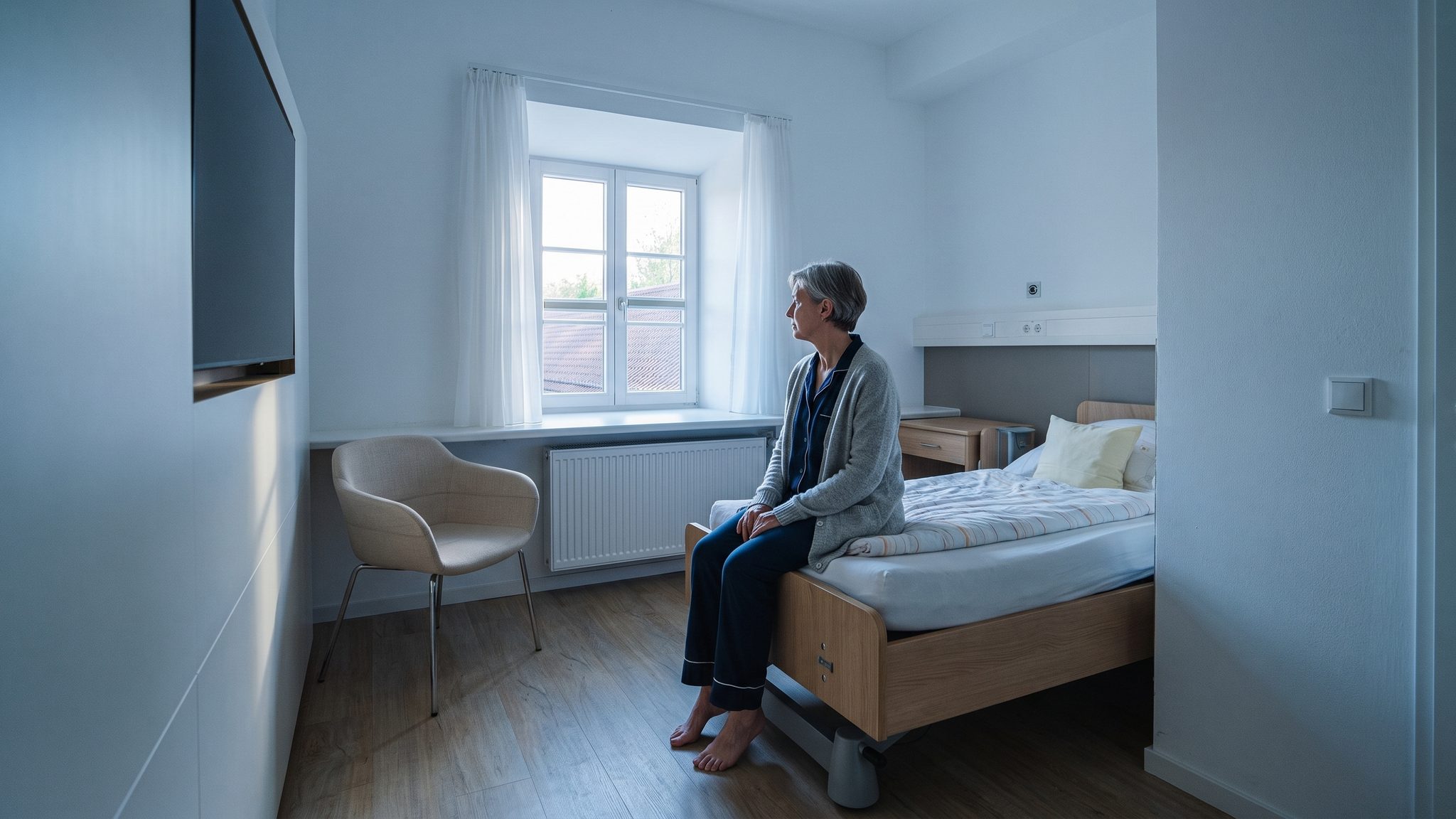
When sleep
no longer carries you
You have had sleep hygiene for years. What you lack is a nervous system that powers down in the evening. We measure why your brain cannot find its resting mode, and we work on the settings that prevent it: arousal, hormones, a vagus that does not grip.
- Free
- No obligation
- Reply within 2 business days
- Outpatient · Bad Aibling
- Non-invasive
Free & non-binding · usually a reply within 2 business days · confidential
Prefer to talk? Call us: +49 (0)8061 398-0
Four years in which every evening begins with the question whether tonight will work. Teas, apps, a sleep training that made the nights a little better, and the pill you do not want to depend on. Sleep cannot be forced, and the harder you try, the more awake you become. That is not a character trait. It is a state that can be measured.
Around a third of adults report intermittent sleep problems; roughly 6 to 10% meet the criteria for chronic insomnia.
Symptoms have a map
Chronic insomnia is usually a state of hyperarousal: the salience network stays activated, the default mode network keeps thoughts circling, and the transition into deep sleep stages does not run cleanly. Two systems set this baseline tension. The autonomic nervous system: a sympathetic branch that does not hand over in the evening keeps pulse, muscle tone and body temperature at daytime level, and without a vagal brake there is no impulse to fall asleep. Hormones: cortisol that stays high in the evening, and in perimenopause the drop in oestrogen and progesterone, shift sleep architecture before any thought starts circling. A restless head with high cortisol is a cortisol case first. A physician rules out organic sleep disorders such as sleep apnoea.
For an overview of the six brain networks and a first orientation, see the Brain Network Analysis.
The assessment first, then your program.
Every patient starts with a structured assessment: your sleep diary and history, existing findings, questionnaires on sleep and arousal, a clinical examination and lab work where the question calls for it (cortisol day profile, thyroid, sex hormones, iron). qEEG brain mapping is added when we want to see whether your brain really is too awake at rest. In our program neuromodulation is one building block beside sleep training, daylight and correcting whatever the lab shows: rTMS, which has the most studies in insomnia, taVNS for the vagal brake, neurofeedback so you learn the powering down yourself, and photobiomodulation where it fits the profile. We never stop a sleeping pill without your treating physician. Bring two weeks of sleep diary to the first consultation.
Our aim stays the same: to restore functional balance, with as little medication as possible and a life with high quality of life as the measure.
You don’t have to decide anything today. A 15 to 20 minute conversation is enough to know whether an assessment is worth it for you.
Free & non-binding · usually a reply within 2 business days · confidential
Who it is for, and who it is not for
A good fit if …
- Medication or therapy has not been enough so far
- You are looking for a measurement-based, non-invasive path
- You are open to outpatient treatment in Bad Aibling
Less suitable if …
- You expect a purely remote or online treatment without on-site diagnostics
- You expect a guarantee — serious medicine cannot give one
In an acute crisis or having suicidal thoughts? Please seek immediate medical or emergency help — in Germany call 112, or the free 24/7 helpline Telefonseelsorge 0800 111 0 111.
The first consultation is free. We discuss the scope, duration and cost of any program openly afterwards, outpatient, here in Bad Aibling.
What the research shows
Peer-reviewed work on Insomnia & Sleep and the relevant procedures, graded by evidence level. No study proves an individual outcome.
In short: for some procedures the evidence is solid, for others still early. Where your case stands is settled in the assessment, and the program follows from it.
rTMS for insomnia: systematic review and meta-analysis
Efficacy of rTMS for insomnia disorder: meta-analysis of RCTs
taVNS for chronic insomnia disorder: randomized clinical trial
taVNS in insomnia: systematic review and meta-analysis
Transcranial alternating current stimulation for chronic insomnia: RCT
Neurofeedback to enhance sleep quality and insomnia: meta-analysis
Photobiomodulation and sleep quality: systematic review and meta-analysis
More studies across all conditions: Science & Studies.
For rTMS in insomnia there are several meta-analyses of randomised trials, for taVNS a randomised trial and a meta-analysis; effect sizes vary between studies. How your sleep answers will be in the diary week by week, and that is what we measure ourselves against.
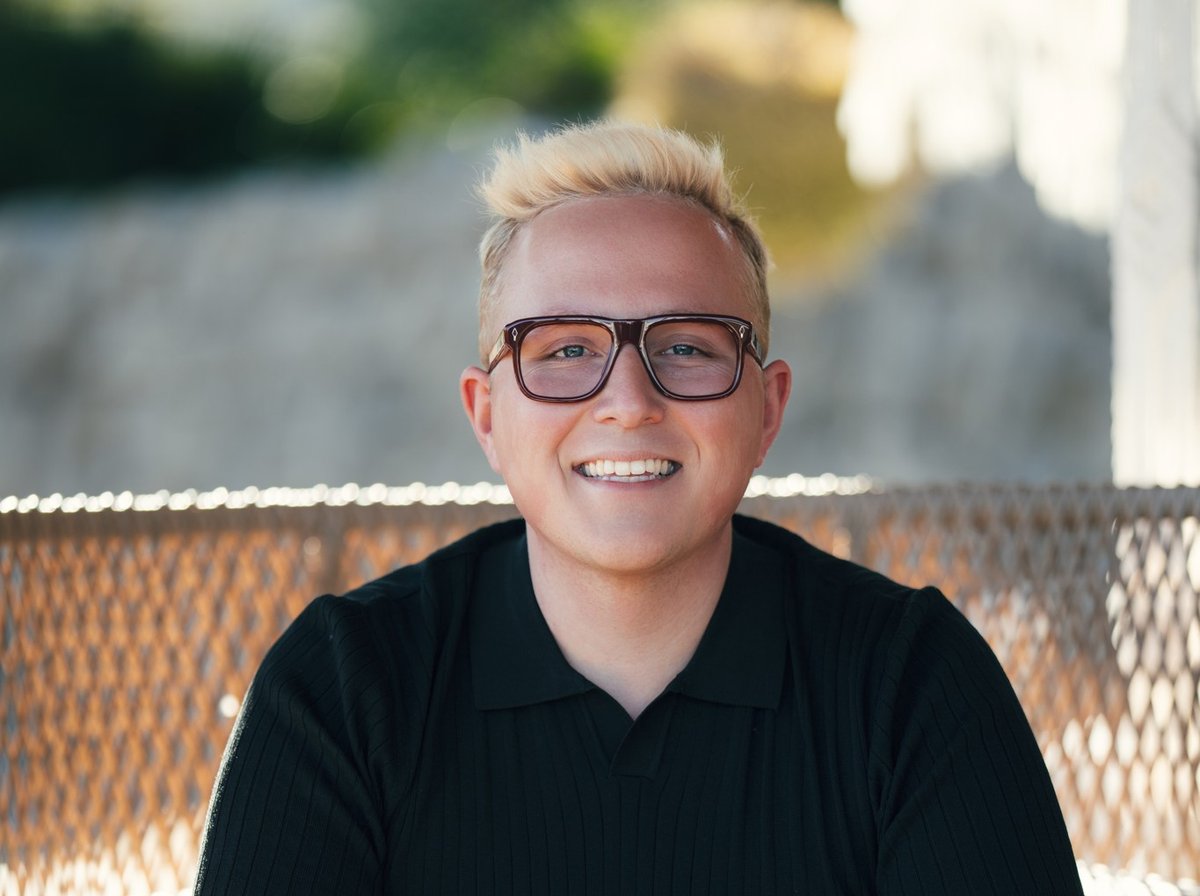
A real doctor. A real clinic.
Dr. med. univ. Julian Douwes · Medical Director
Part of Clinicum St. Georg, under the medical direction of Dr. med. univ. Julian Douwes. Outpatient, evidence-graded, without medication as the first step — tailored to your profile. More on our program.
- 30+ Years of clinical heritage
- 90+ Countries patients travel from
- 30,000+ Treatment sessions delivered
In three calm steps
Insomnia & Sleep: let’s talk about your path.
In a free consultation we clarify whether and how our measured program could fit you — no obligation, fully confidential.
Free & non-binding · usually a reply within 2 business days · confidential