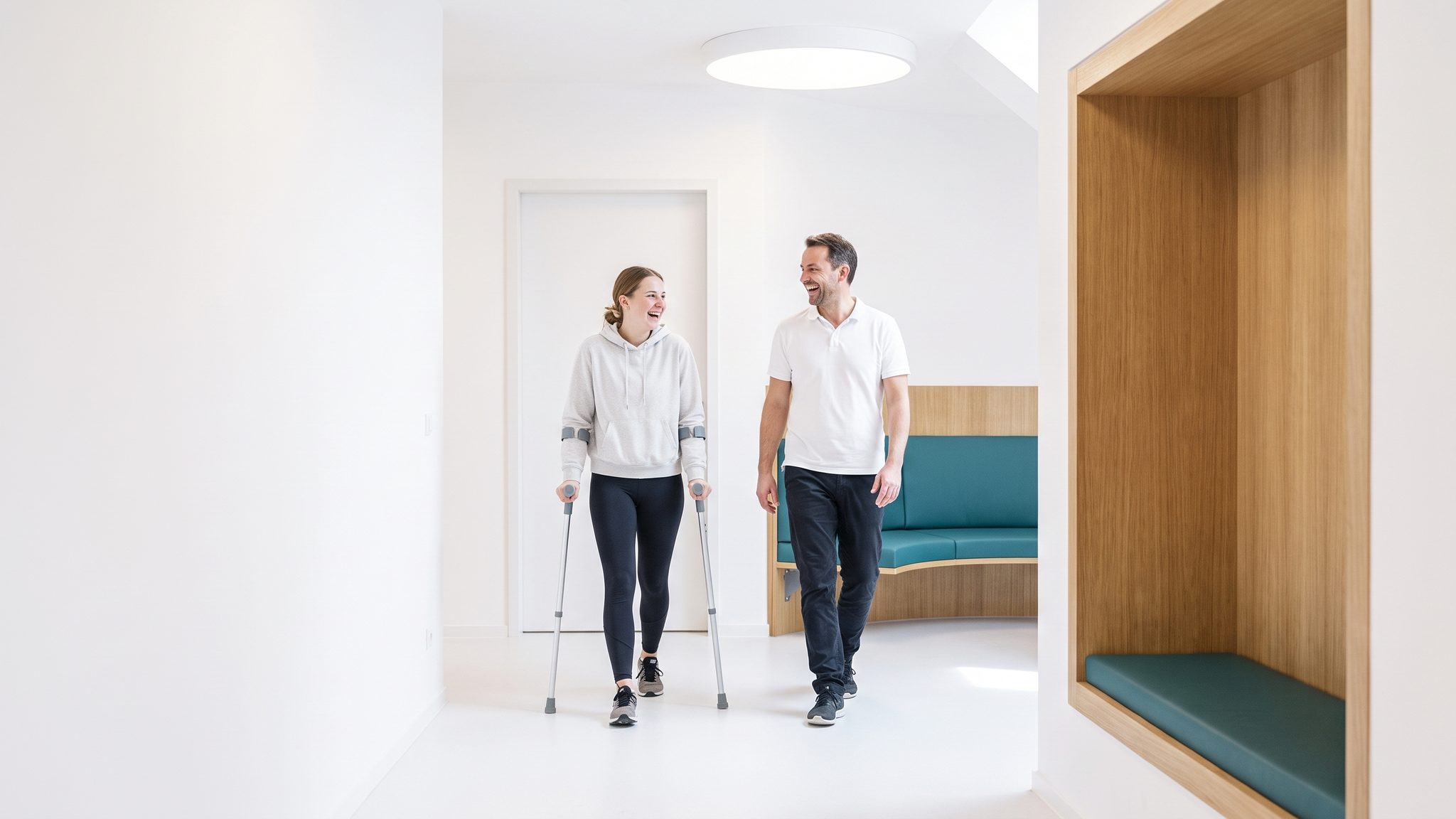
Cerebral palsy:
taking every gain seriously
Physiotherapy, occupational therapy and neuro-paediatric care remain the foundation. We work alongside them: stimulation that makes your child’s brain more receptive to training, and measurement that shows whether the left hand really does more.
- Free
- No obligation
- Reply within 2 business days
- Outpatient · Bad Aibling
- Non-invasive
Free & non-binding · usually a reply within 2 business days · confidential
Prefer to talk? Call us: +49 (0)8061 398-0
You know every appointment, every exercise, every small gain and every setback. Physiotherapy twice a week, the splints, the question whether the left hand will ever reach out on its own. “Maintain what is there,” you have heard. For a brain that is still growing, that is too small a goal: it learns as long as it is trained, and stimulation can make that learning easier.
Cerebral palsy is the most common motor disability of childhood, affecting roughly 2 to 3 in every 1,000 live births.
Are you a family member or carer? You are in the right place too — call or write to us; we support you alongside.
Symptoms have a map
Cerebral palsy results from an early, non-progressive injury to the developing brain that mainly affects the sensorimotor network (movement, coordination, body awareness); it shows as spasticity, altered muscle tone and balance difficulties. Attention and executive networks are often involved too. The injury itself stays, but a child’s brain rewires with every exercise, and two things help decide how much of that lasts. Sleep: movements are consolidated at night, and children with spasticity often sleep badly, so part of the therapy is lost. Attention: a child who cannot hold the exercise practises less, and an irritated nervous system holds attention less well. So we measure sleep and attention too and treat them in the same plan as the hand.
For an overview of the six brain networks and a first orientation, see the Brain Network Analysis.
Alongside your neurological care: what can be done for everyday life.
Every patient starts with a structured assessment: the reports from neuro-paediatrics and the therapists, the current treatment plan, questionnaires on sleep, attention and daily life, a clinical examination of tone, strength and balance. qEEG brain mapping is added when attention or seizure tendency plays a role and we want to see how the networks are working. From this we build a complementary program that adds to physiotherapy, occupational therapy and neuro-paediatric care and is coordinated with them: tDCS or rTMS immediately before intensive training of the affected hand, neurofeedback for attention, physiotherapy that carries what was learned into daily life, and sleep as its own item in the plan. Botulinum toxin, antispastic drugs and all other medication stay as they are unless the treating neuro-paediatrician decides otherwise. Bring the latest report to the first consultation; we also talk there about whether your child can sit still for as long as a session needs.
Our aim stays the same: to restore functional balance, with as little medication as possible and a life with high quality of life as the measure.
You don’t have to decide anything today. A 15 to 20 minute conversation is enough to know whether an assessment is worth it for you.
Free & non-binding · usually a reply within 2 business days · confidential
Who it is for, and who it is not for
A good fit if …
- Medication or therapy has not been enough so far
- You are looking for a measurement-based, non-invasive path
- You are open to outpatient treatment in Bad Aibling
Less suitable if …
- You expect a purely remote or online treatment without on-site diagnostics
- You expect a guarantee — serious medicine cannot give one
In an acute crisis or having suicidal thoughts? Please seek immediate medical or emergency help — in Germany call 112, or the free 24/7 helpline Telefonseelsorge 0800 111 0 111.
The first consultation is free. We discuss the scope, duration and cost of any program openly afterwards, outpatient, here in Bad Aibling.
What the research shows
Peer-reviewed work on Cerebral Palsy and the relevant procedures, graded by evidence level. No study proves an individual outcome.
In short: for some procedures the evidence is solid, for others still early. Where your case stands is settled in the assessment, and the program follows from it.
Noninvasive brain stimulation for upper limb motor activity in children and young adults with cerebral palsy and pediatric stroke: a systematic review and meta-analysis
Neuromodulation for children with hemiparesis and perinatal stroke: a randomized clinical trial
Transcranial direct current stimulation combined with an intensive training program for upper limb rehabilitation in children with unilateral cerebral palsy: a randomized controlled pilot study
Safety and effectiveness of non-invasive brain stimulation on mobility and balance function in children with cerebral palsy: a systematic review and meta-analysis
Safety and efficacy of non-invasive brain stimulation for the upper extremities in children with cerebral palsy: a systematic review
The effects of neurofeedback training for children with cerebral palsy and co-occurring attention deficits: a pilot study
More studies across all conditions: Science & Studies.
Systematic reviews and meta-analyses of non-invasive brain stimulation in children with cerebral palsy show signals for arm function, balance and safety, mostly from small studies; the methods do not change the underlying injury. Whether your child’s hand answers shows in the comparison with the baseline test after the first training block.
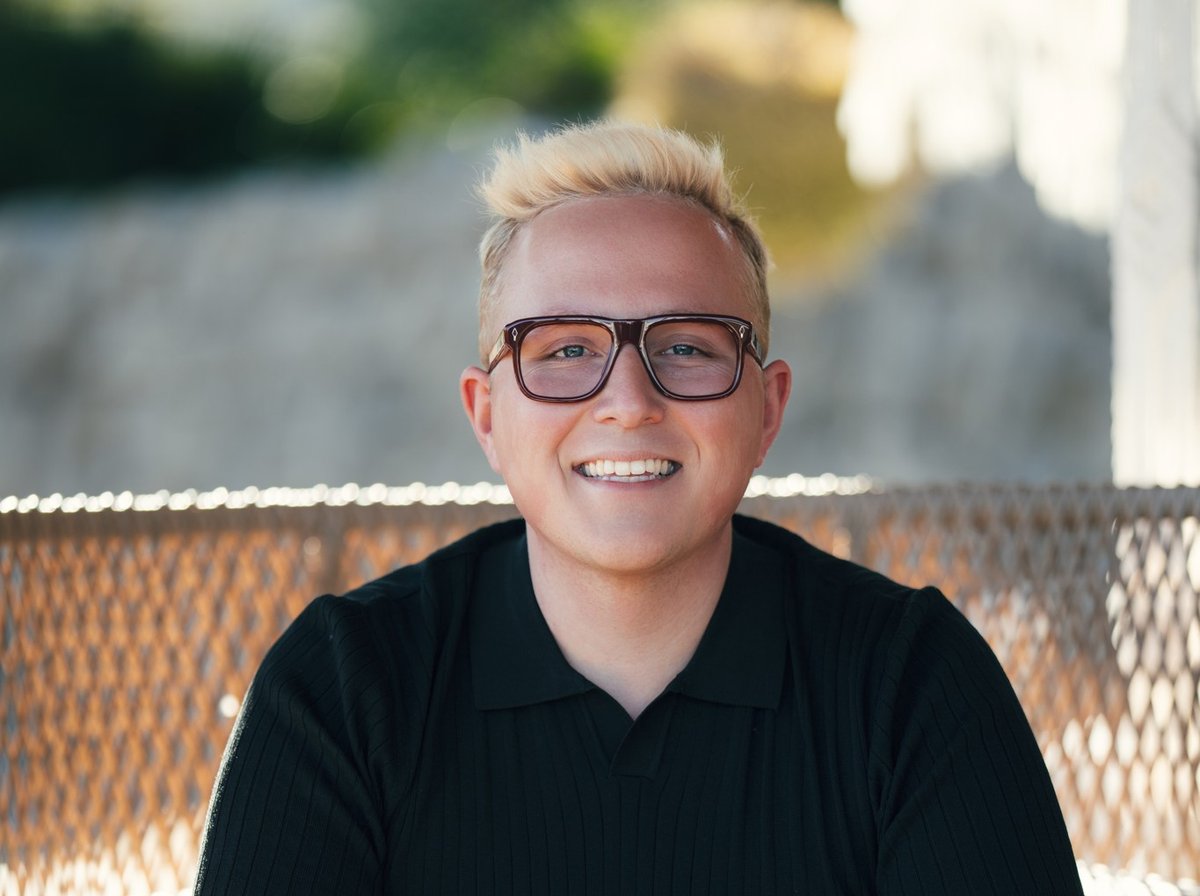
A real doctor. A real clinic.
Dr. med. univ. Julian Douwes · Medical Director
Part of Clinicum St. Georg, under the medical direction of Dr. med. univ. Julian Douwes. Outpatient, evidence-graded, without medication as the first step — tailored to your profile. More on our program.
- 30+ Years of clinical heritage
- 90+ Countries patients travel from
- 30,000+ Treatment sessions delivered
In three calm steps
Cerebral Palsy: let’s talk about your path.
In a free consultation we clarify whether and how our measured program could fit you — no obligation, fully confidential.
Free & non-binding · usually a reply within 2 business days · confidential