
PTSD & Trauma:
when the past will not pass
Your nervous system has learned that danger is everywhere, and it has unlearned how to end the alarm. That is a protective response running too long. We measure where it is stuck and help your brain tell then from now again, alongside your trauma therapy.
- Free
- No obligation
- Reply within 2 business days
- Outpatient · Bad Aibling
- Non-invasive
Free & non-binding · usually a reply within 2 business days · confidential
Prefer to talk? Call us: +49 (0)8061 398-0
Two years later, and the body still jumps at every door that slams. Four hours of sleep on a good night. A therapy that helps, and still days on which the alarm wins. “It takes time” is true, and it is not a plan. An over-aroused nervous system can be calmed, and trauma therapy lands far better in a brain that is not on permanent alert.
About 4 in 100 people are affected by post-traumatic stress disorder over their lifetime; considerably more after severe trauma.
Symptoms have a map
In a trauma-related disorder the salience network with the amygdala sits in constant alarm, while the central executive network no longer brakes the response. The default mode network (DMN) is altered, which explains dissociation and the feeling of standing beside yourself. Two levels hold this state in place. The psyche: what was lived through measurably changes the wiring, and memories that are not processed keep firing the alarm system; that is why psychological support is part of the concept, not an add-on. The autonomic nervous system: sympathetic branch and vagus form a control loop with the brain networks, heart-rate variability and qEEG show two sides of the same state, and a vagus that grips again takes the bodily ground from under the alarm. A physician first rules out structural causes.
For an overview of the six brain networks and a first orientation, see the Brain Network Analysis.
The assessment first, then your program.
Every patient starts with a structured assessment: your history at the pace you set, existing findings, questionnaires on hyperarousal, sleep and dissociation, a clinical examination, lab work where needed. A qEEG is added when we want to see how strongly the alarm system fires at rest, often together with a heart-rate variability measurement. In our program neuromodulation is one building block beside your trauma-focused psychotherapy and your sleep: neurofeedback so you learn to turn the alarm down yourself, taVNS for the vagus, rTMS and tDCS for the prefrontal brake. Your therapist continues the psychotherapy; we coordinate with her. Your medication stays as it is unless your treating psychiatrist decides otherwise. The first consultation takes 15 to 20 minutes, and you do not have to tell anything in it that you do not want to tell.
Our aim stays the same: to restore functional balance, with as little medication as possible and a life with high quality of life as the measure.
You don’t have to decide anything today. A 15 to 20 minute conversation is enough to know whether an assessment is worth it for you.
Free & non-binding · usually a reply within 2 business days · confidential
Who it is for, and who it is not for
A good fit if …
- Medication or therapy has not been enough so far
- You are looking for a measurement-based, non-invasive path
- You are open to outpatient treatment in Bad Aibling
Less suitable if …
- You expect a purely remote or online treatment without on-site diagnostics
- You expect a guarantee — serious medicine cannot give one
In an acute crisis or having suicidal thoughts? Please seek immediate medical or emergency help — in Germany call 112, or the free 24/7 helpline Telefonseelsorge 0800 111 0 111.
The first consultation is free. We discuss the scope, duration and cost of any program openly afterwards, outpatient, here in Bad Aibling.
What the research shows
Peer-reviewed work on PTSD & Trauma and the relevant procedures, graded by evidence level. No study proves an individual outcome.
In short: for some procedures the evidence is solid, for others still early. Where your case stands is settled in the assessment, and the program follows from it.
Repetitive transcranial magnetic stimulation for post-traumatic stress disorder in adults
Neuromodulation treatments for post-traumatic stress disorder: a systematic review and network meta-analysis
Transcranial magnetic stimulation as a treatment for posttraumatic stress disorder: a meta-analysis
Non-invasive brain stimulation for posttraumatic stress disorder: a systematic review and meta-analysis
A randomized controlled study of neurofeedback for chronic PTSD
A randomized, controlled trial of alpha-rhythm EEG neurofeedback in posttraumatic stress disorder
Virtual reality and transcranial direct current stimulation for posttraumatic stress disorder: a randomized clinical trial
Preliminary evidence of transcutaneous vagus nerve stimulation effects on sleep in veterans with post-traumatic stress disorder
More studies across all conditions: Science & Studies.
Meta-analyses and a 2024 Cochrane review describe effects of rTMS on core PTSD symptoms with data quality that is still limited; for neurofeedback there are randomised trials with moderate evidence. Whether your alarm system answers shows in sleep, startle and your questionnaire after the first weeks.
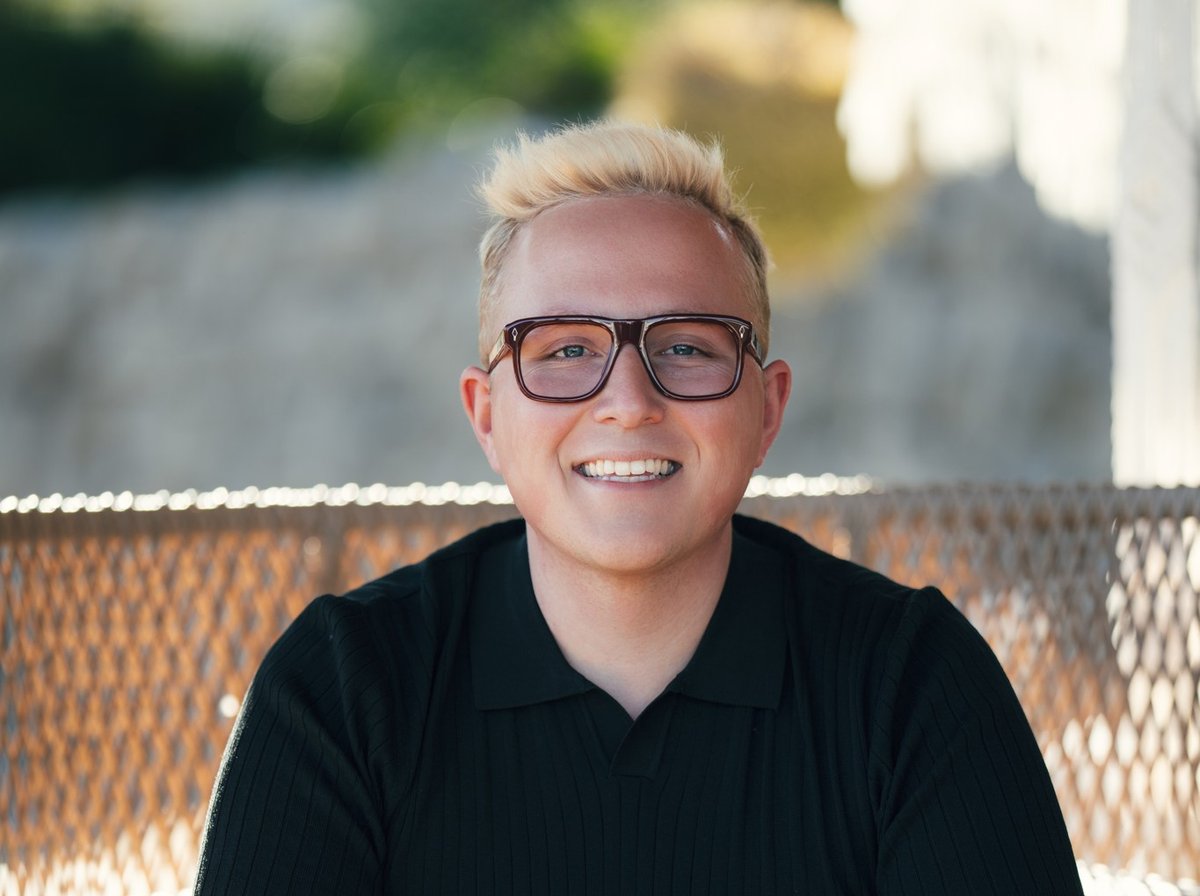
A real doctor. A real clinic.
Dr. med. univ. Julian Douwes · Medical Director
Part of Clinicum St. Georg, under the medical direction of Dr. med. univ. Julian Douwes. Outpatient, evidence-graded, without medication as the first step — tailored to your profile. More on our program.
- 30+ Years of clinical heritage
- 90+ Countries patients travel from
- 30,000+ Treatment sessions delivered
In three calm steps
PTSD & Trauma: let’s talk about your path.
In a free consultation we clarify whether and how our measured program could fit you — no obligation, fully confidential.
Free & non-binding · usually a reply within 2 business days · confidential