
When the next attack
plans your life
You plan your life around the next attack. We plan with you around what prepares it: a brain that stays over-excitable between attacks, and the things that keep that excitability high, sleep, hormones, a nervous system without a brake.
- Free
- No obligation
- Reply within 2 business days
- Outpatient · Bad Aibling
- Non-invasive
Free & non-binding · usually a reply within 2 business days · confidential
Prefer to talk? Call us: +49 (0)8061 398-0
You know the warning signs, the darkened room, the days an attack takes from you, and the message to colleagues you did not want to write yet again. Preventives with side effects, triptans with a monthly cap, a trigger diary that brought more avoidance than answers. “You will have to live with it” describes what a drug achieves on its own. It says nothing about what your stimulus processing can still learn.
Migraine affects roughly 12 to 15% of people, making it one of the most common neurological disorders; women are affected about three times as often as men.
Symptoms have a map
Migraine is today understood as a disorder of central stimulus processing: an over-excitable brain filters less well, the salience network (the gatekeeper that decides what matters) lets too much through, and the sensorimotor network and the pain pathways around brainstem and thalamus answer. Excitability stays elevated between attacks, which is why small triggers suffice. Two systems help set it: the autonomic nervous system, whose vagal brake pulls too weakly in many patients, and sleep and hormones, because a broken night and the oestrogen drop before a period lower the threshold. For treatment this means we dampen the excitability and work at the same time on what feeds it. Before any treatment, imaging and a neurological exam rule out secondary causes of headache.
For an overview of the six brain networks and a first orientation, see the Brain Network Analysis.
The assessment first, then your program.
Every patient starts with a structured assessment: your attack history and headache diary, your neurologist’s findings, questionnaires, a clinical examination, and where needed lab work (thyroid, hormone status, magnesium) and imaging. qEEG brain mapping is added when we want to know how excitable your brain actually is between attacks. From this your program takes shape, with neuromodulation as one building block: rTMS, tDCS and transcutaneous vagus nerve stimulation (taVNS) are among the best-studied methods in migraine, and neurofeedback trains self-regulation. Beside it sit sleep, your cycle and whatever the lab shows. Your preventive and your acute medication stay as they are unless your neurologist decides otherwise. Bring the diary to the first consultation.
Our aim stays the same: to restore functional balance, with as little medication as possible and a life with high quality of life as the measure.
You don’t have to decide anything today. A 15 to 20 minute conversation is enough to know whether an assessment is worth it for you.
Free & non-binding · usually a reply within 2 business days · confidential
Who it is for, and who it is not for
A good fit if …
- Medication or therapy has not been enough so far
- You are looking for a measurement-based, non-invasive path
- You are open to outpatient treatment in Bad Aibling
Less suitable if …
- You expect a purely remote or online treatment without on-site diagnostics
- You expect a guarantee — serious medicine cannot give one
In an acute crisis or having suicidal thoughts? Please seek immediate medical or emergency help — in Germany call 112, or the free 24/7 helpline Telefonseelsorge 0800 111 0 111.
The first consultation is free. We discuss the scope, duration and cost of any program openly afterwards, outpatient, here in Bad Aibling.
What the research shows
Peer-reviewed work on Migraine and the relevant procedures, graded by evidence level. No study proves an individual outcome.
In short: for some procedures the evidence is solid, for others still early. Where your case stands is settled in the assessment, and the program follows from it.
International Headache Society evidence-based guidelines on non-invasive neuromodulation for migraine
Non-invasive brain stimulation for migraine prophylaxis — network meta-analysis of RCTs
Neuromodulation for acute and preventive migraine treatment — systematic review & meta-analysis
Efficacy of transcranial magnetic stimulation on migraine — meta-analysis of RCTs
Single-pulse TMS for acute treatment of migraine with aura — randomised, sham-controlled trial
Transcranial direct current stimulation (tDCS) for migraine — systematic review & meta-analysis
Non-invasive vagus nerve stimulation for prevention of episodic migraine — PREMIUM trial (RCT)
Non-invasive vagus nerve stimulation for migraine prevention — PREMIUM II trial (RCT)
Transcutaneous auricular vagus nerve stimulation (taVNS) for migraine — fMRI study
qEEG-guided neurofeedback for recurrent migraine headaches
More studies across all conditions: Science & Studies.
The International Headache Society guideline lists rTMS, tDCS and vagus nerve stimulation as methods with documented effects on attack frequency and intensity, with evidence of varying strength. What your stimulus processing takes from them shows in the diary over the course, and we realign frequency and target accordingly.
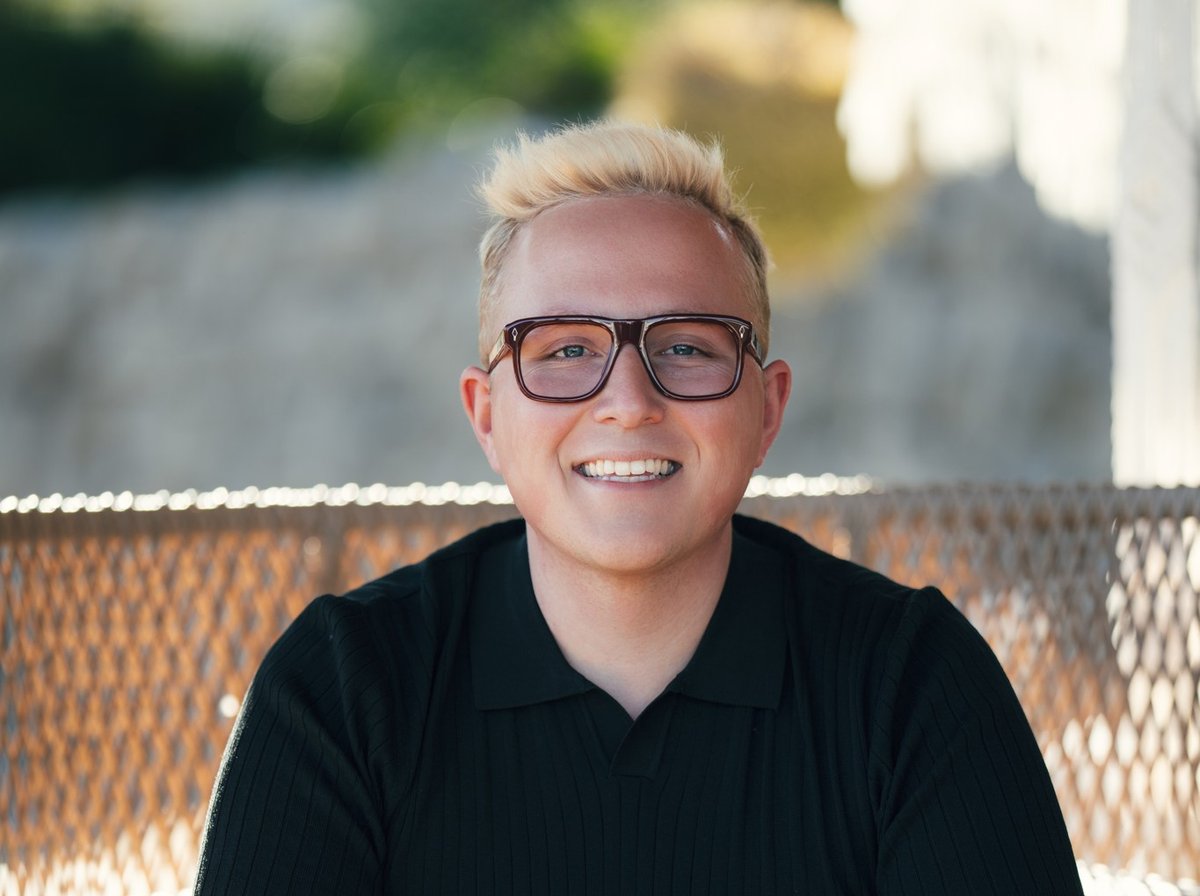
A real doctor. A real clinic.
Dr. med. univ. Julian Douwes · Medical Director
Part of Clinicum St. Georg, under the medical direction of Dr. med. univ. Julian Douwes. Outpatient, evidence-graded, without medication as the first step — tailored to your profile. More on our program.
- 30+ Years of clinical heritage
- 90+ Countries patients travel from
- 30,000+ Treatment sessions delivered
In three calm steps
Migraine: let’s talk about your path.
In a free consultation we clarify whether and how our measured program could fit you — no obligation, fully confidential.
Free & non-binding · usually a reply within 2 business days · confidential