Not a studio.
A hospital.
The Douwes Brain Center is the neuromodulation department of Clinicum St. Georg in Bad Aibling. The hospital has treated patients since 1991, internists and a laboratory work under the same roof, and whoever orders a treatment answers for it by name.
The question you are asking is the right one
Most people researching for a parent have already been through a round: medications changed, appointments collected, and at the end the sentence “the results are unremarkable”, although nothing feels unremarkable. Then a centre with a confident name appears, and the first question is fair: is this a clinic, or a studio with one device?
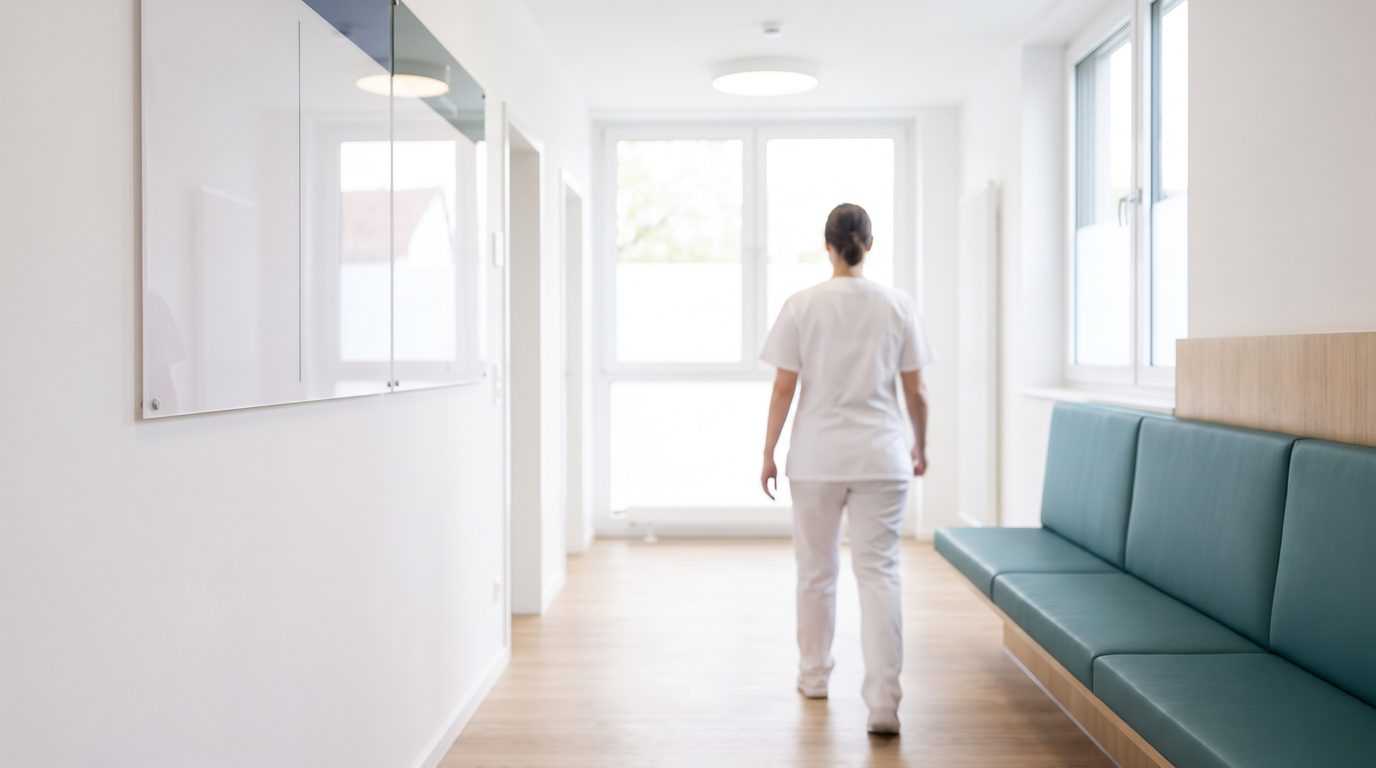
The answer is an address. Rosenheimer Straße 6-8, Bad Aibling, a hospital that has admitted patients since 1991. The Douwes Brain Center is a department there, with the same physicians, the same laboratory and the same accountability as the rest of the building. Whoever is examined here sits in the house where internists do ward rounds and the lab runs the blood work.
How a hospital became a brain centre
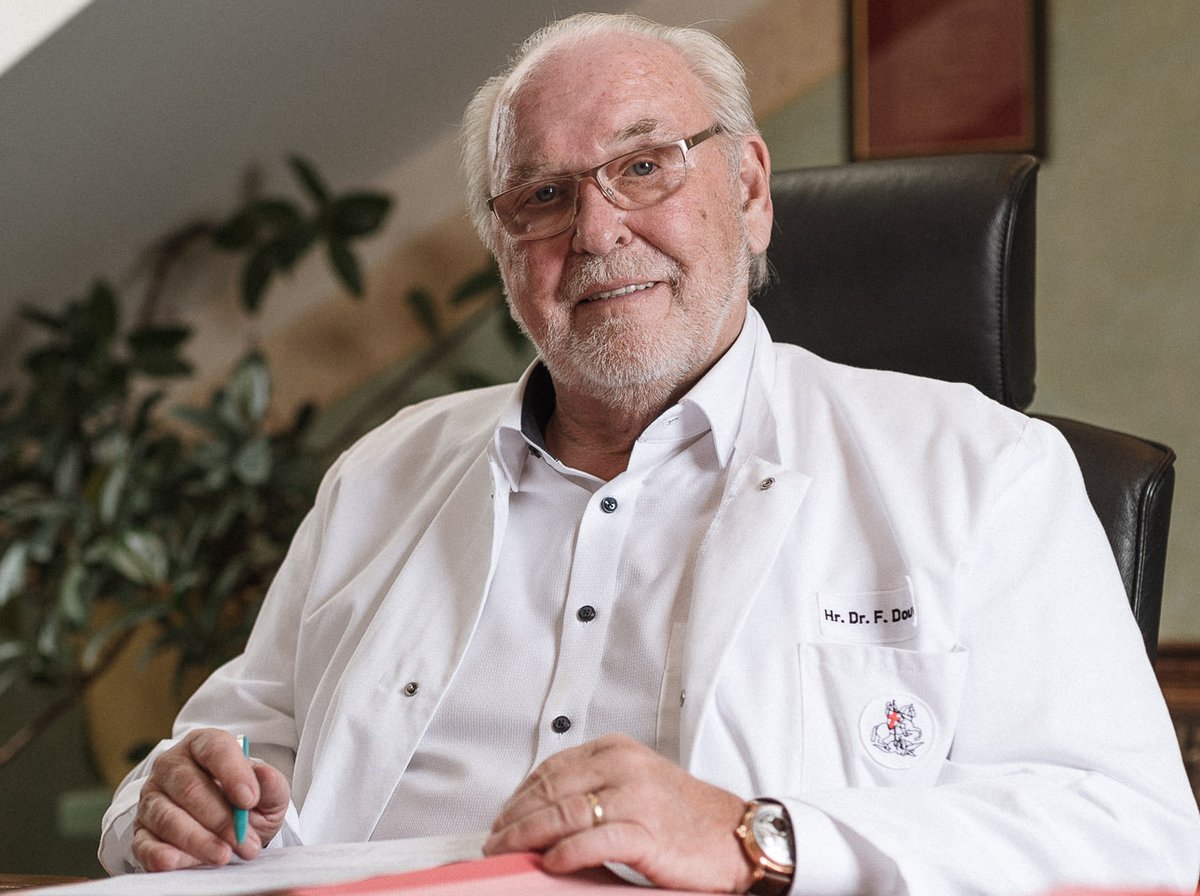
Dr. med. Friedrich Rudolf Douwes had been treating patients since the 1980s when he founded Clinicum St. Georg in Bad Aibling in 1991. Over three decades it grew into a hospital that patients travel to from more than 90 countries.
In 1994, treating a cancer patient with whole-body hyperthermia, he noticed that her long-standing Lyme symptoms eased with the heat. That single observation grew, over years, into a treatment programme; the hospital has since treated more than 12,000 people with Lyme disease. The stance the Brain Center inherited from it is simple: look closely at what the body shows, then decide. His son grew up in this building and carries it on today. You can see where that standard lives at our location in Bad Aibling.
Why a hospital with thirty years of history opens a brain centre now
Two things have come together in recent years that did not exist in this form before.
First, brain diagnostics has become objective: qEEG brain mapping shows which networks are out of rhythm and compares them with a normative database. Second, neuromodulation has become non-invasive and outpatient: magnetic pulses, direct current, ultrasound, aimed at one region, without surgery and without medication as the first step. For a hospital that has put lab values and findings before every decision for decades, this was the moment to add the brain.
What changes when neuromodulation happens in a hospital
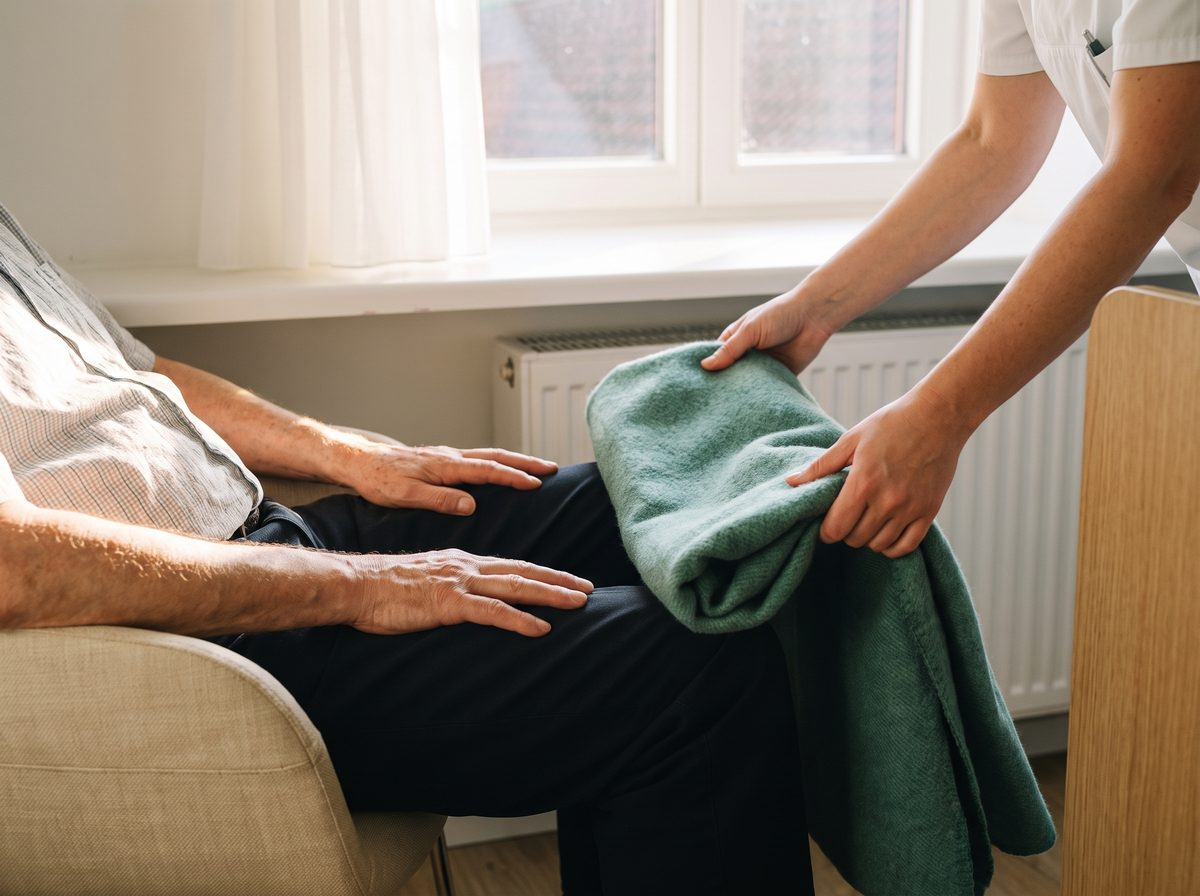
We treat the body as one connected system, and the brain is part of it. The Douwes Brain Center is not a TMS-only practice, not a hyperbaric-oxygen-only practice and not a brain-mapping-only practice, although all three are available in the building. Each method is one building block in a plan assembled for you, and which blocks belong in it is decided by the structured assessment every patient here begins with: history, existing findings, questionnaires, clinical examination, and where needed blood work from our own laboratory. A qEEG is added when the question calls for it.
The laboratory shows us every day why we work this way. A chronic infection, Lyme for instance or viral persistence after COVID, keeps the immune system running at full load; its inflammatory messengers reach the brain and change how its networks fire. Stimulating the network alone then means working against an engine that keeps running. An undetected underactive thyroid lowers the baseline tone of the entire nervous system; the underactive prefrontal cortex you then see is a thyroid case first and perhaps an rTMS case afterwards. And an irritated gut talks through the vagus nerve directly to the networks that govern attention and mood. That is why internists and the lab are in the same building here, and why infection work-up, hormone status, gut and sleep sit in the same plan as the stimulation.
What you receive follows your findings, not which device happens to be free. The aim behind it: to restore functional balance, as far as possible without drugs and with as little medication as possible. Every treatment carries its evidence level: strong, moderate, growing or limited. How much of that is achievable for you shows in the course, which is why we measure before treatment and once more afterwards.
The Douwes lineage
Behind the Douwes Brain Center stand physicians with names. Chief Medical Officer is Dr. med. univ. Julian Douwes; he holds medical responsibility for diagnostics and treatment, at the Brain Center and at Clinicum St. Georg.
He grew up in this building, worked in its laboratory, on its wards and in its consulting rooms from his first year of medical school, and today treats patients six days a week where his father began in 1991. The family history is here because it means accountability: behind every decision stand a hospital and a physician who answers for it by name. Meet the team.
What we stand for
Graded
Every procedure here carries its evidence level: strong for rTMS in depression, growing for taVNS, limited for TPS beyond its Alzheimer’s certification. What we cannot support, we do not advertise.
Warm
Brain medicine is a matter of trust. We take 15 to 20 minutes in the first consultation, listen, and then tell you whether it is worth going further.
Transparent
From the assessment to the last session we explain every step, with your own findings on the screen, and when a qEEG was recorded, with the qEEG. You decide on the basis of what you have seen yourself.
Put us to the test in a conversation
The free consultation takes 15 to 20 minutes. Bring the latest reports; you leave with a clear view of whether measurement-based neuromodulation is an option for you or your parent.