rTMS for Depression
rTMS (repetitive transcranial magnetic stimulation) is a non-invasive procedure that activates a targeted brain region from the outside using magnetic pulses, with no surgery and no anaesthesia. For depression, rTMS is part of the German S3 guideline and has been FDA-cleared in the US since 2008; the evidence is solid, especially when medication has not helped enough. The difference from the next drug: rTMS treats the network that is measurably underactive in depression directly. This article explains how it works, what treatment involves and how strong the evidence is.
Last updated: 2026-07-25 · Medically reviewed by Dr. med. univ. Julian Douwes
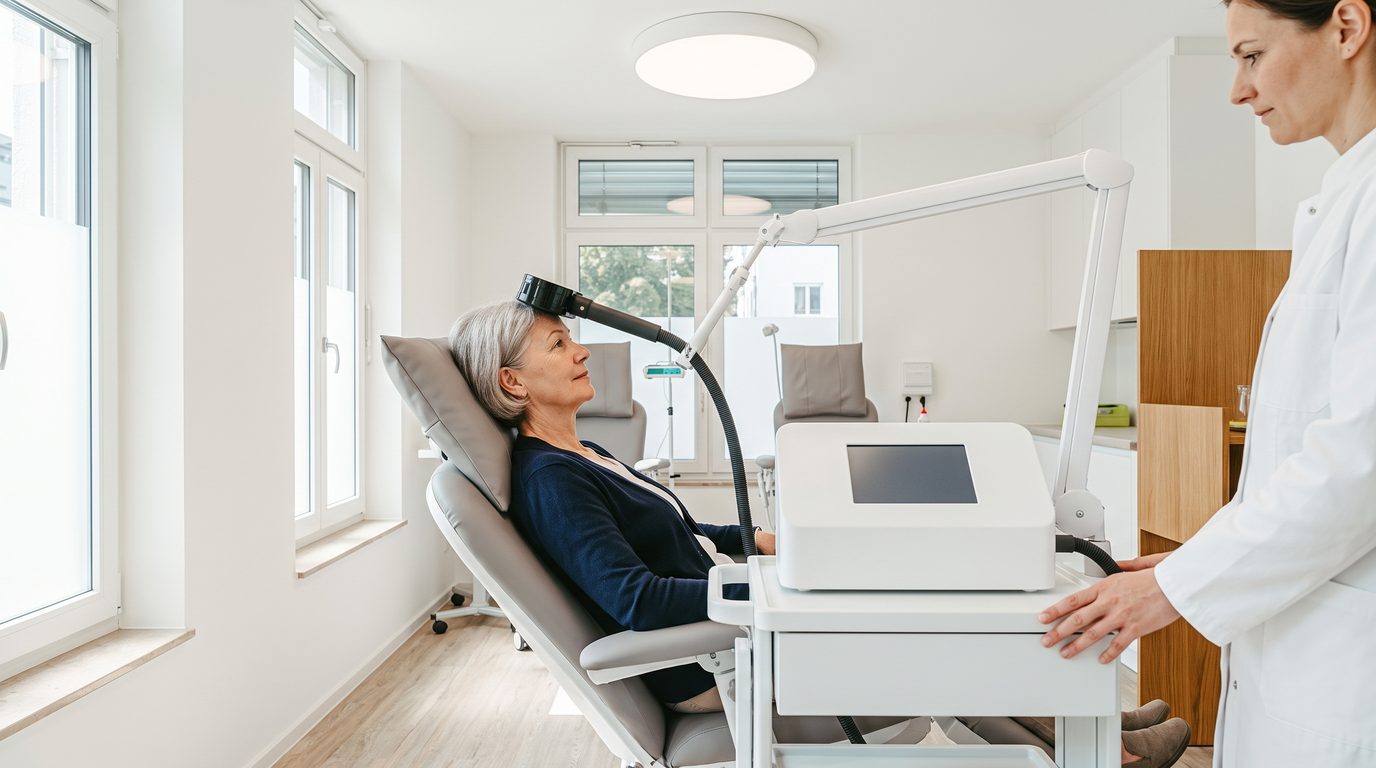
How rTMS works in depression
In depression several brain networks fall out of balance. Very often the left dorsolateral prefrontal cortex, a hub for drive, planning and mood regulation, runs dampened. rTMS targets exactly this region: brief magnetic pulses induce small electrical currents in the tissue beneath and prompt nerve cells to fire. Across several sessions the activity and connectivity of this region can re-tune itself (neuroplasticity).
Important: rTMS is not electroconvulsive therapy and not medication. You are awake and responsive throughout the session. For the technical detail, read How does rTMS work?
Measure first, then treat
We do not stimulate by rote. Before an rTMS treatment begins, our program starts with a structured assessment: history, existing findings, questionnaires, clinical examination, and where needed lab work and imaging. Whether qEEG brain mapping is added to refine target and protocol is decided after that. This shows which network has fallen out of rhythm in you, and which region and protocol are suitable.
For a first, non-binding impression try the Brain Network Analysis. It is an orientation tool, not a diagnosis.
What a course of treatment looks like
You sit comfortably in a treatment chair; the figure-8 coil rests against the outside of your head. A classic session lasts roughly 20–40 minutes depending on protocol, while modern theta-burst protocols take only a few minutes. A typical course runs over several weeks with sessions on consecutive weekdays. You hear a rhythmic tapping and feel a tapping or tingling on the scalp.
- No hospital stay, no anaesthesia, you can return to your day straight afterwards.
- Regular progress measurements show whether and how you respond.
- Where a denser format makes sense, accelerated TMS (accelerated/iTBS) with several sessions per day may be an option.
How strong is the evidence?
rTMS for depression is among the best-studied neuromodulation methods and is approved in many countries. Randomised trials and meta-analyses show an antidepressant effect, especially when medication has not helped enough. Internally we rate this evidence as solid to strong. A curated, linked overview of real studies is available in our Science & Studies section.
Not everyone responds the same way, studies describe averages, your course is individual. That is why we measure first, treat on the evidence and monitor the course closely.
rTMS as part of a program
For us rTMS is one building block in a coordinated program, not an isolated device. Depending on your findings we combine it with neurofeedback, ongoing assessments and, in coordination with your existing treatment, further elements of the clinic: sleep, lab work, psychological support, where the assessment suggests it. Your psychotherapy or medication continues; we coordinate with your treating clinicians. Read more about depression and our approach on the condition page.
Frequently asked questions
Is rTMS for depression painful?
How many sessions will I need?
Does rTMS replace my antidepressants?
When is accelerated TMS more suitable than classic rTMS?
How do I get started?
Read more
Similar articles
An article does not know your findings.
What fits you is shown by the structured assessment. The free consultation takes 15 to 20 minutes and clarifies whether this path is worth it for you.