01Imaging
Structural imaging
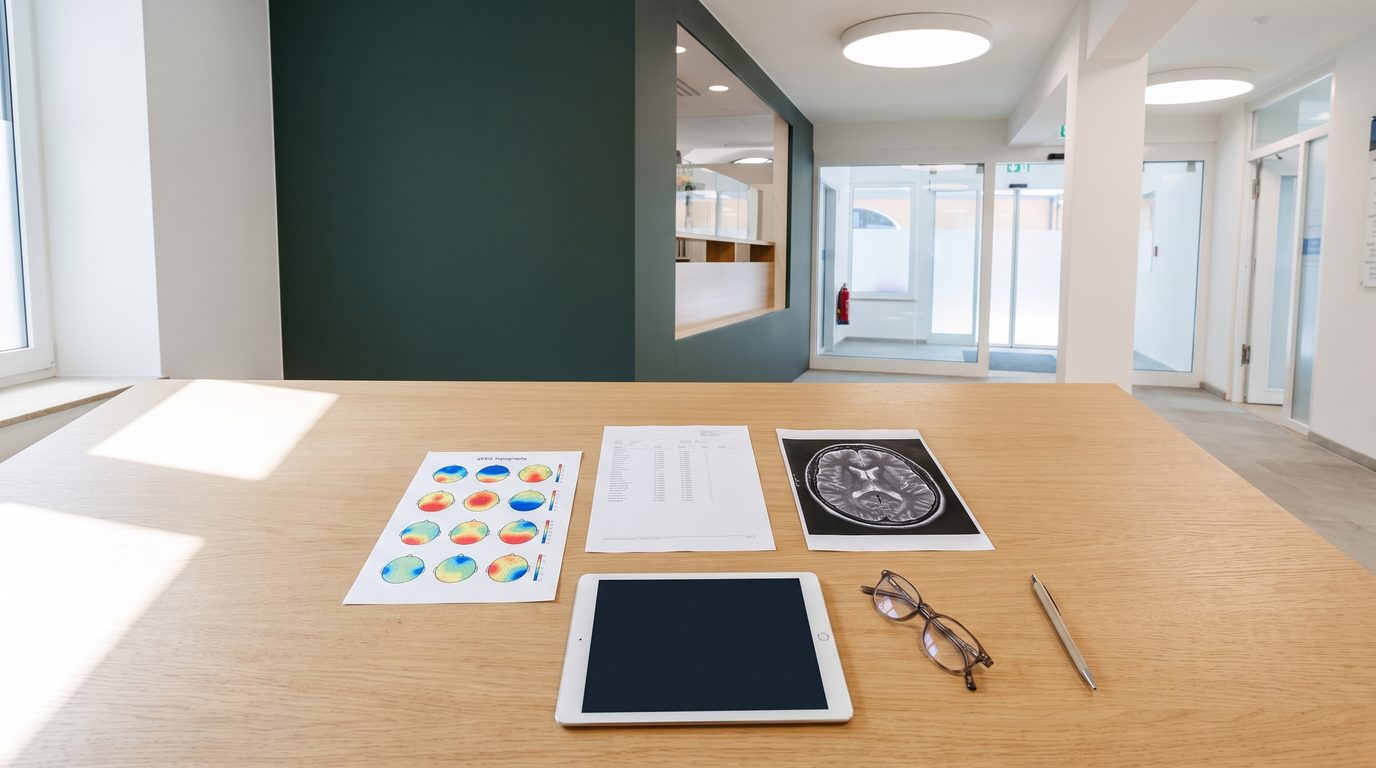
Structural imaging and MRI findings are taken into account. They rule out structural causes before any functional treatment is decided.
Your personalized neuromodulation program is a course with two measurement points: your findings at the start, a second set at the end, and in between the willingness to change something when the findings call for it.
You have decided that measuring first makes sense. Now you want to know what that means in weeks: when you come in, who sees you, how long a session takes, and what happens if nothing has moved by the halfway point. That is what this page is about.
A bundle of sessions runs its course whether it works or not. A program has a start, where we measure, an end, where we measure again, and in between questionnaires that show whether the direction is right. What the first findings show decides the building blocks. What the questionnaires show decides whether we stay with them.
Before the first building block begins, your findings come out of the assessment. Up to five layers feed into it; which of them you need is decided by a physician. He brings them together and goes through the result with you.
Structural imaging and MRI findings are taken into account. They rule out structural causes before any functional treatment is decided.
A structured neurological examination links clinical signs to brain networks and rules out focal lesions.
Structured self- and observer ratings, including the Brain Network Analysis and the follow-up questionnaires you complete again during the program. They translate your experience into patterns that can be compared.
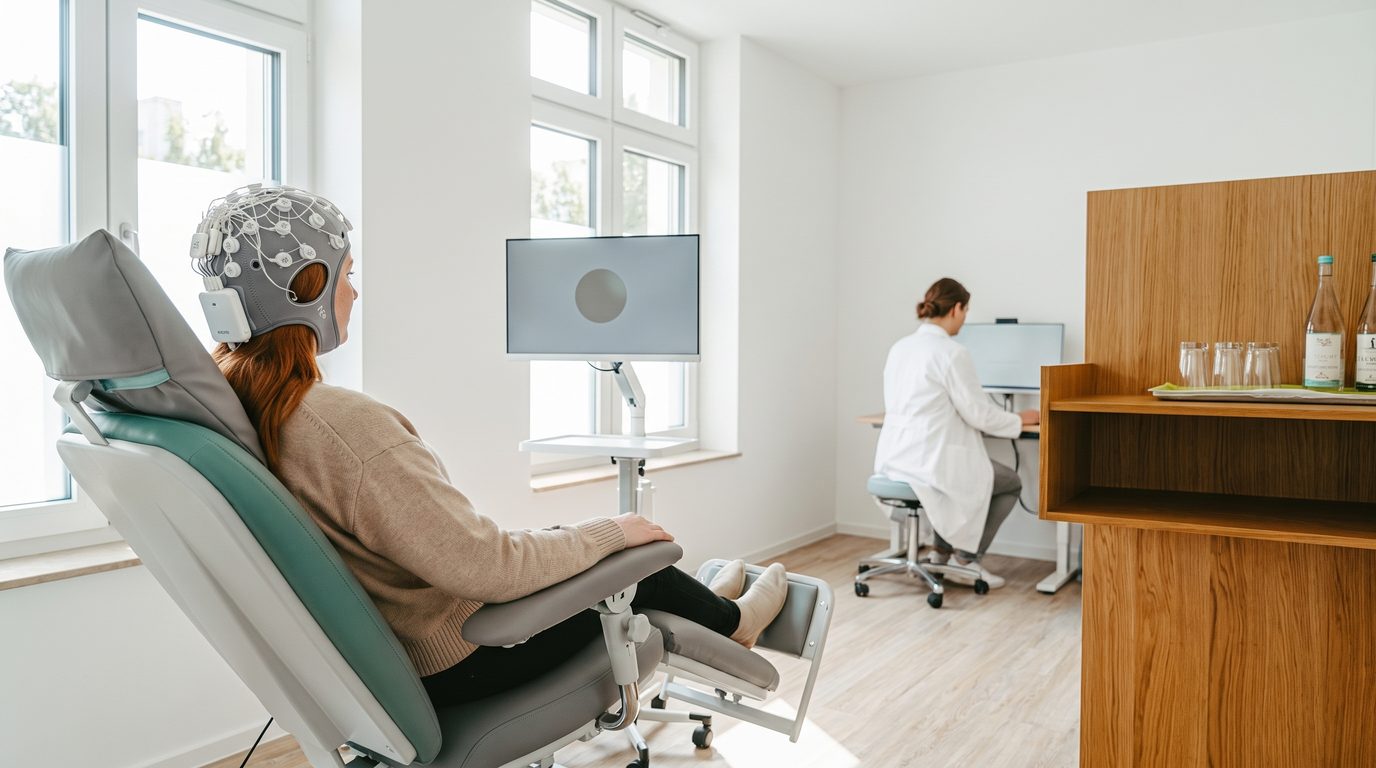
To the Brain Network Analysis →When the question calls for it: you wear a light cap with 32 electrodes, sit still, open and close your eyes on cue; the recording takes 20 to 40 minutes. Comparison with a normative database shows which network deviates. Diagnostics, not a therapy.
To Diagnostics →Inflammatory, metabolic, hormonal and micronutrient values, and an infection work-up where there is reason to suspect one, provide the physical context, because the brain does not work in isolation.
Once your findings are in place, we set the building blocks with you, and the rhythm: which days you come in, how long a session takes, when the questionnaires are due and when the second set of findings is made. An rTMS series typically means 20 to 30 sessions on five days a week over four to six weeks; a session lasts 20 to 40 minutes, a few minutes with iTBS. Other building blocks have their own cadence.
All building blocks are outpatient, graded by evidence and run under the roof of Clinicum St. Georg. You drive home after every session. Four building blocks are in the building; which of them end up in your program, and what is needed alongside, is decided by the assessment: lab work, an infection work-up, sleep, the gut or psychological care can be part of the same plan. What gets assembled is what your findings call for, not what the catalogue happens to offer.
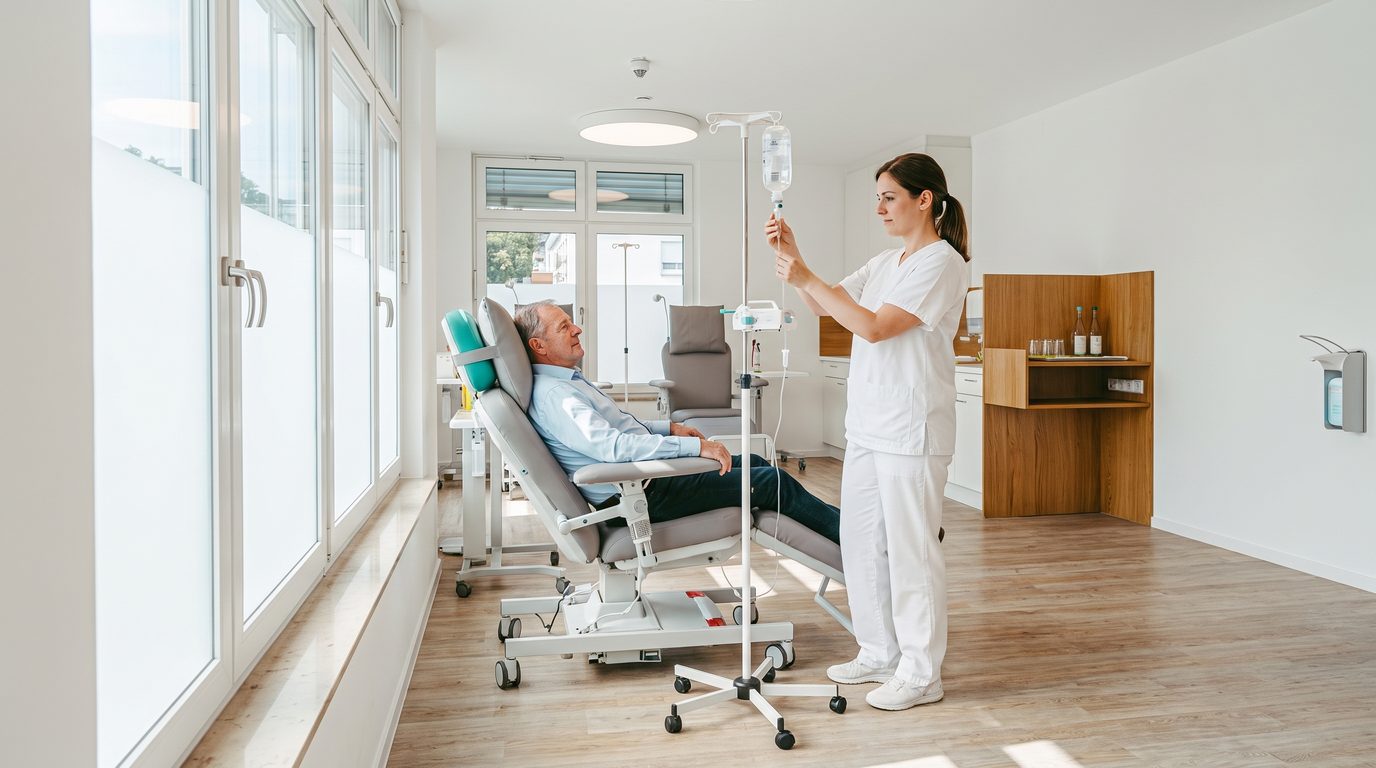
Micronutrient and regenerative infusions within the clinic, when lab values and profile suggest them. They run alongside the sessions, in the same building.
rTMS, accelerated/iTBS, tDCS, TPS and taVNS work on the networks your findings show. You sit in a treatment chair, no surgery, no anaesthesia, and return to your day afterwards.
You see your own brain activity on a screen and learn to bring it into a calmer balance, usually based on your qEEG findings. A skill you take with you.
Questionnaires during the series, then the second measurement, with a qEEG check if one stood at the start. If nothing has moved by the measurement point, we change the target, the frequency or the method instead of running the series to its end.
Symptoms usually arise from the interplay of several brain networks. That is why a program has several building blocks, and why it has measurement points in between. If nothing has moved by then, we check the target first, then the protocol, then the method. Stopping is also a decision, and one we take with you, with the findings and the questionnaire on the table. For a first orientation on where your networks stand today, take the Brain Network Analysis.
In a free first consultation, 15 to 20 minutes, we clarify what your assessment would include, what a program could look like in time, and what it costs. After that you know whether you want to go further.