The brain,
back in balance
We restore functional balance — as far as possible without drugs.
“You’ll have to
live with it.” Rarely true.
Medications switched again and again. Therapies, waiting lists, back to square one. And at some point that sentence, from someone who meant well and had run out of ideas.
It describes the limits of a method, not yours. What was usually missing in all those years was a look at the brain itself: which network is out of rhythm, measured rather than assumed.
What has stopped working can be measured. What can be measured can be addressed precisely.
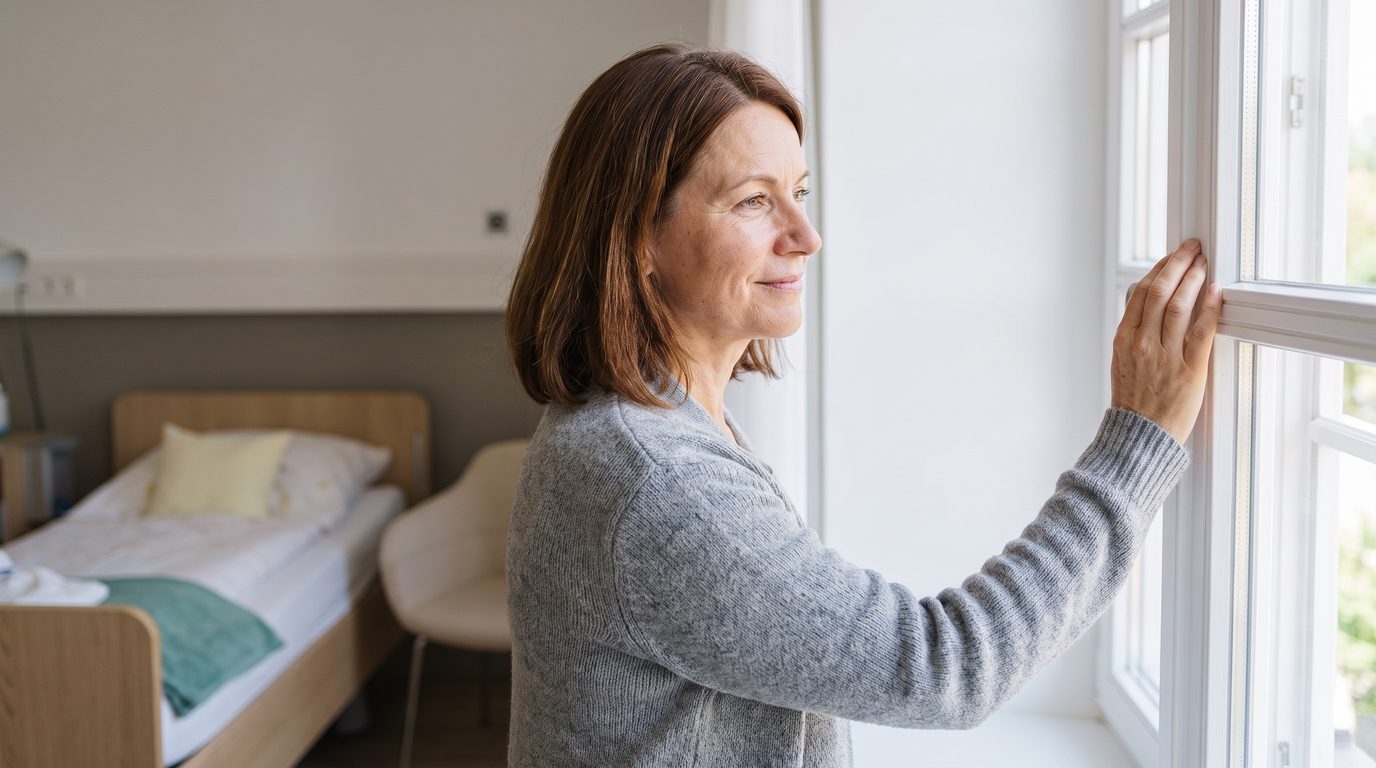
First your findings.
Then a decision.
Before anyone here is treated, we look. You get your findings explained and a clear view of what follows from them and what doesn’t.
That beginning is a structured assessment: history, existing findings, questionnaires, a clinical examination, and where needed lab work and imaging; a qEEG is added when the question calls for it. From that your program takes shape, one building block at a time.
You get what you need. Not what happens to be available.
A diagnosis tells you what a condition is called. It doesn’t tell you which network in your brain runs too loud or too quiet, and it doesn’t tell you what in the body is feeding it. So every patient here starts with a structured assessment, and we treat the body as one connected system. A chronic infection, Borrelia say, or viral remnants after COVID, keeps the immune system running flat out; its inflammatory messengers reach the brain and change how networks fire. Stimulate only the network and you are working against an engine that is still running. A thyroid that works too little turns down the baseline tension of the whole nervous system; a quiet prefrontal cortex is then a thyroid case first and an rTMS case second. And an irritated gut talks to the salience network directly, through the vagus nerve and through inflammatory signals.
That is why the Douwes Brain Center is not a TMS-only practice, not a hyperbaric-oxygen-only practice and not a brain-mapping-only practice. Nine procedures are in the building, and each one is a building block in an overall concept assembled for you; which blocks go into your program is decided by the assessment. Outpatient, graded by evidence, and medication is never where we start.
Medicine, graded by evidence.
Functional balance — as far as possible without drugs
Functional balance, to us, means this: a network that has become too loud, another that has gone quiet, a rhythm that has drifted, finding their way back into step. We work toward that with neuromodulation, regulation and training, and with as little medication as we can. The yardstick at the end is your everyday life: sleep, focus, energy, the quality of life this was about all along.
Measure
History, a clinical examination, questionnaires and lab work, with qEEG brain mapping where needed: the assessment shows which system is out of step before anyone talks about treatment.
Regulate
Neuromodulation, neurofeedback, infusions and training nudge the brain toward finding its own regulation again. Medication is added as sparingly as we can.
Restore
We mean function in daily life: sleeping, thinking, working, being present. Whether the program is getting you there is something we measure again.
Measure · Regulate · Restore
How we make
your brain visible
A single reading rarely tells the whole story. Five layers of diagnostics, each asking its own question, add up to one picture, and only from that picture does your program take shape.
Imaging
Existing MRI reports come in. The question here: is there a structural cause that needs to be settled first?
Functional & neurological diagnostics
The neurological exam links clinical signs to brain networks and rules out focal lesions.
Clinical assessments
Structured self- and observer ratings, plus the Brain Network Analysis and questionnaires we repeat as you go.
qEEG brain mapping
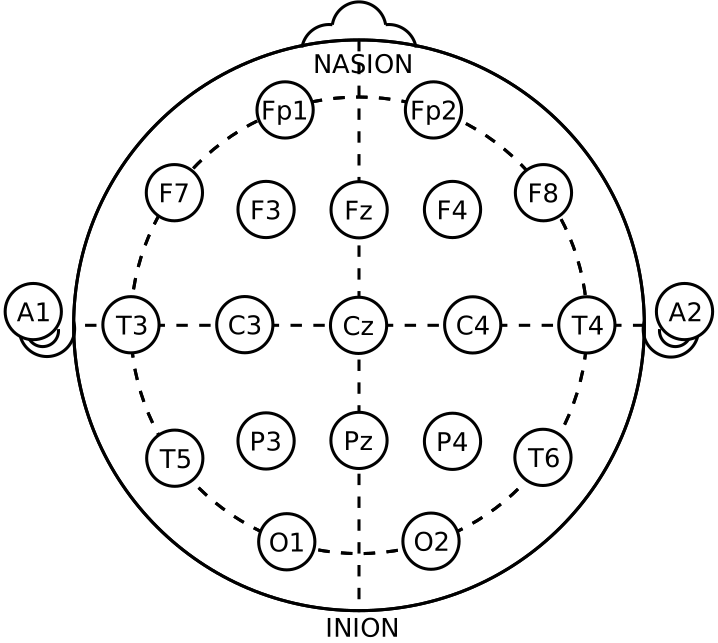
When the question calls for it: a quantitative EEG compared against a normative database. Which frequencies are too strong or too weak, and where? Diagnostics, not therapy.
Lab analysis
Inflammation, metabolism, hormones, micronutrients: the body this brain is working in.
One physician reads every layer together: imaging and the neurological exam rule out structural causes, assessments and, where one was recorded, the qEEG show function. From that comes your individual program.
Your path with us, in four steps
- 01
Measure
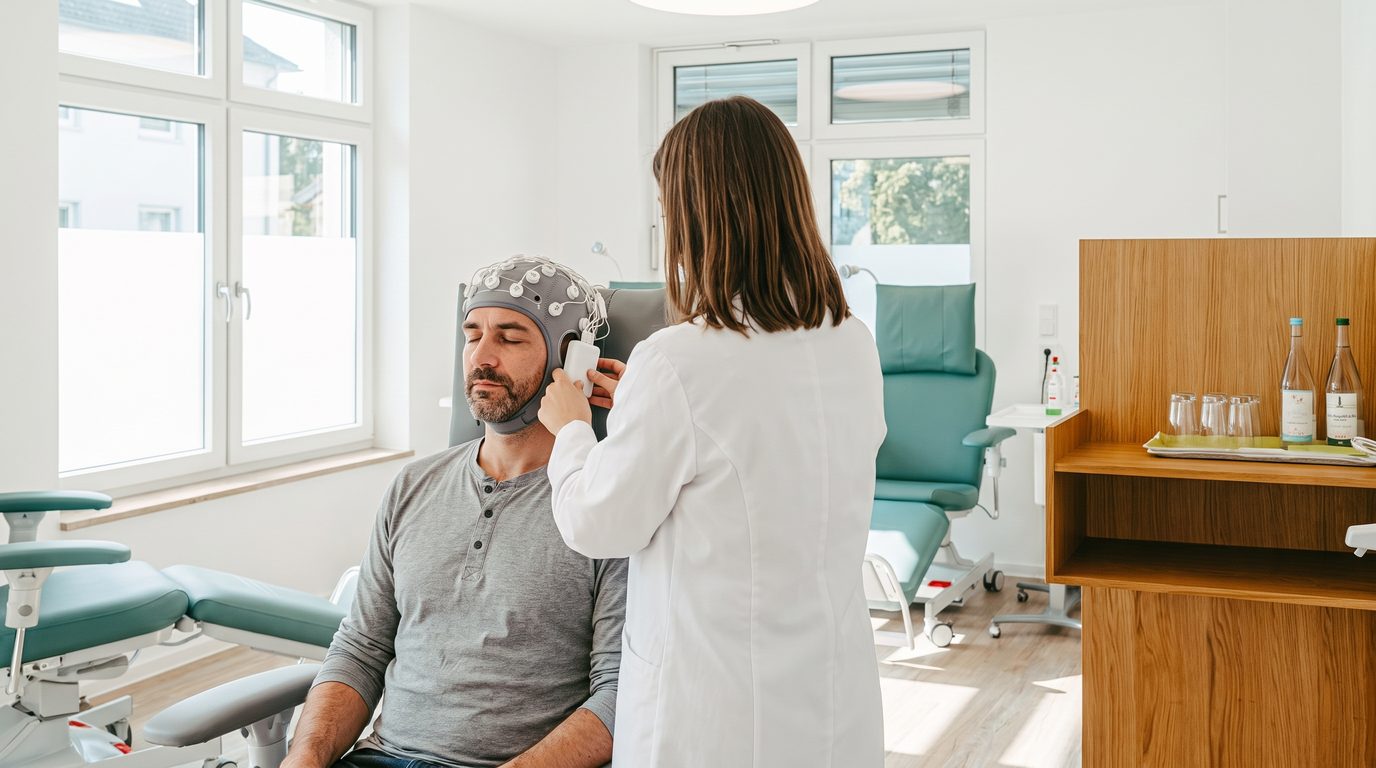
First we listen and read what already exists: your history, referral letters, questionnaires, then the clinical examination and, where needed, lab work and imaging. If the question calls for a qEEG, the EEG cap is added. None of it hurts.
- 02
Understand
A physician reads every layer together and explains your findings to you: which system is out of step and where the body is part of it. If a qEEG was recorded, you see your own brain map on the screen as part of that.
- 03
Modulate
Only now does your program take shape: neuromodulation where the assessment points, plus infusions and bio- or neurofeedback as your profile calls for. No medication as the first step.
- 04
Re-measure
We measure again, with the same questionnaires and, if one stood at the start, with a second qEEG. What has changed, you see for yourself. Where nothing has moved, we change the program.
One picture
becomes a program
Four building blocks, outpatient, each with its evidence level stated, under the roof of Clinicum St. Georg. Which ones come into play, and in what order, is decided by your measured profile.
Infusion & restorative therapies
Micronutrient and regenerative infusions in the clinic’s own building, when lab work and findings call for them.
Non-invasive neuromodulation
rTMS, accelerated/iTBS, tDCS, TPS, taVNS: site, frequency and method follow what the measurement shows.
Bio- & neurofeedback
The brain trains its own regulation, usually along the lines of the qEEG findings.
Follow-up & re-measurement
Questionnaires and a second measurement as you go. If nothing shows after the first weeks, we change the program rather than wait.
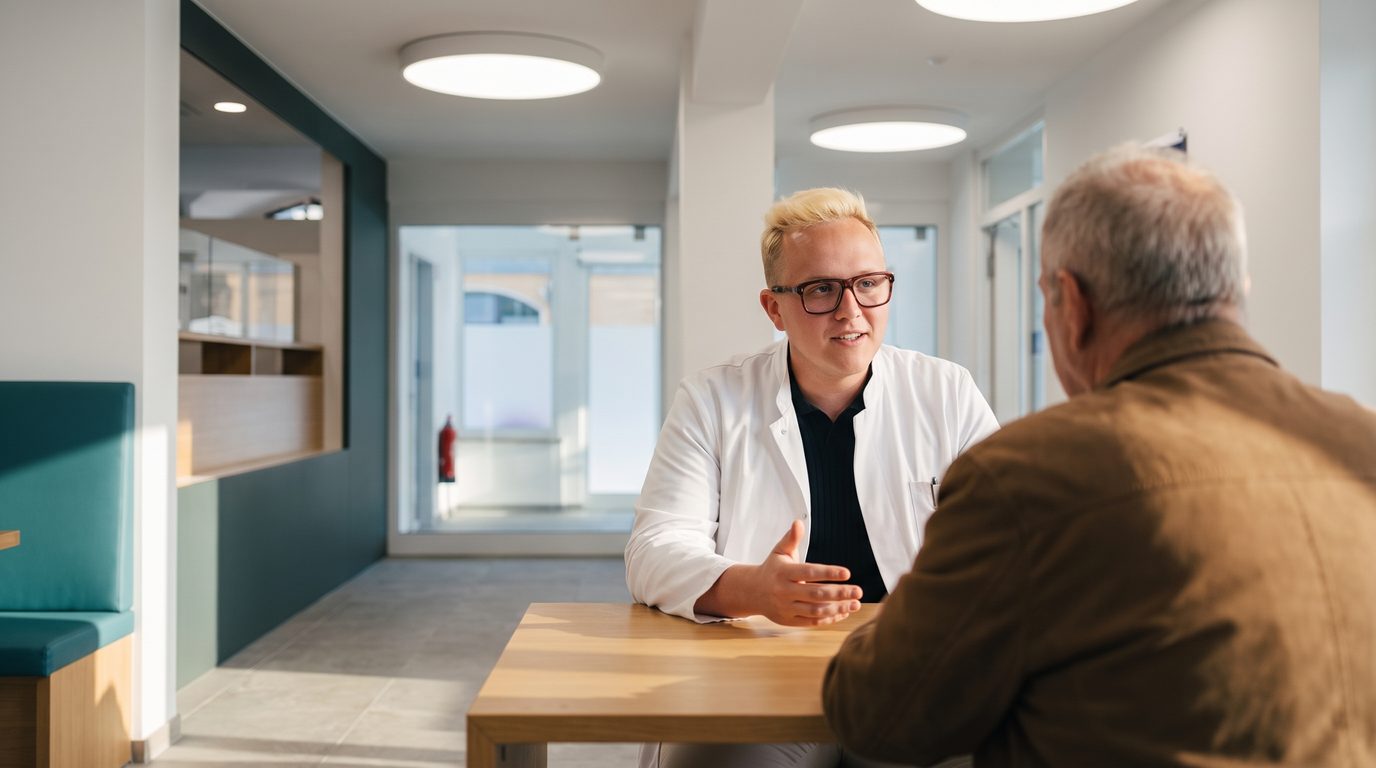
A clinic since 1991.
A physician who grew up in it.
Everything starts with a conversation. Dr. med. univ. Julian Douwes, Chief Medical Officer, and his team listen before anything is measured or planned, and in that conversation you find out whether this path makes sense for you at all.
The Douwes Brain Center is the brain health clinic within Clinicum St. Georg in Bad Aibling, Germany, the hospital his father founded in 1991. Patients from more than 90 countries have come here since, and he grew up in the building long before he began treating patients there himself.Alongside him: Dr. med. Martin Rößner, Chief Physician and specialist in internal medicine, and Katrien Boode, Lead Clinical Psychologist.
Nine procedures,
graded by evidence
Every procedure carries its evidence level in plain sight: strong, growing, limited or early. What is still early we call early, and we use it accordingly.
rTMS
Repetitive Transcranial Magnetic Stimulation
Magnetic pulses stimulate the prefrontal cortex, which is measurably underactive in depression. The primary indication is treatment-resistant depression.
Evidence: strong for depressionAccelerated TMS
SAINT protocol
Compresses a full rTMS course into a few days, with image-guided targeting of the prefrontal cortex.
Evidence: growing (FDA-cleared 2022)TPS
Transcranial Pulse Stimulation
Focused ultrasound shockwaves intended to support perfusion and neuroplasticity in targeted regions. CE-certified for mild-to-moderate Alzheimer’s; not FDA-cleared in the US.
Evidence: solid for Alzheimer’s, off-label elsewheretaVNS
Vagus Nerve Stimulation
A gentle stimulus at the ear reaches the vagus nerve, the brake of the autonomic nervous system, and aims at its regulation.
Evidence: growingNeurofeedback
EEG-based training
You watch your own brain activity in real time and train to regulate it yourself, with no external stimulation. Best evidence in ADHD.
Evidence: solid for ADHDqEEG / Brain Mapping
Quantitative EEG
A map of your brain activity against normative databases. It shows which network is out of rhythm and carries every choice of method we make.
Diagnostics, not a therapytDCS
Transcranial Direct Current Stimulation
A weak direct current shifts the excitability of the neurons beneath the electrode and supports neuroplasticity.
Evidence: moderate, well toleratedPhotobiomodulation
Near-infrared light
Red and near-infrared light reaches the mitochondria of nerve cells and supports their energy production. Investigated for dementia, brain fog and depression.
Evidence: early (promising, not established)Neuro-Physiotherapy
Movement-based rehab
Turns what stimulation sets in motion in the network into movement and function. For stroke, Parkinson’s and balance disorders.
Evidence: solid (established rehabilitation)The numbers belong to the hospital: Clinicum St. Georg, founded in 1991 by Dr. med. Friedrich Rudolf Douwes, and carried forward today by Dr. med. univ. Julian Douwes
What we treat
From treatment-resistant depression to Post-COVID brain fog. The starting point is the same in every case: your findings.
Depression
Learn more →Treatment-Resistant Depression
Learn more →Anxiety Disorders
Learn more →Adult ADHD
Learn more →Alzheimer’s & Dementia
Learn more →MCI & Cognitive Decline
Learn more →Long COVID & Post-COVID (Brain Fog, Fatigue)
Learn more →Burnout
Learn more →Insomnia & Sleep
Learn more →PTSD & Trauma
Learn more →Migraine
Learn more →Chronic Pain
Learn more →Tinnitus
Learn more →Parkinson’s
Learn more →OCD
Learn more →Stroke Rehabilitation
Learn more →Stress & Exhaustion
Learn more →Peak Performance
Learn more →Huntington’s Disease
Learn more →ALS (Amyotrophic Lateral Sclerosis)
Learn more →Multiple Sclerosis
Learn more →Epilepsy
Learn more →Traumatic Brain Injury
Learn more →Cerebral Palsy
Learn more →ME/CFS
Learn more →Fibromyalgia
Learn more →Bipolar Disorder
Learn more →Autism Spectrum
Learn more →Lyme Disease & Neuroborreliosis
Learn more →Your path in 3 steps
Assessment
History, existing findings, questionnaires and a clinical examination make up your findings. A qEEG is added when the question calls for it.
Individual plan
Your measurements become a personal treatment plan — graded by evidence, fully transparent.
Treatment
Non-invasive neuromodulation, outpatient, without medication as the first step — with progress measurement.
There is always something that can be done.
In a free consultation, 15 to 20 minutes with the medical team, we listen and tell you whether an assessment with us makes sense in your case. No obligation, and the decision afterward is yours.