ALS:
what still counts now
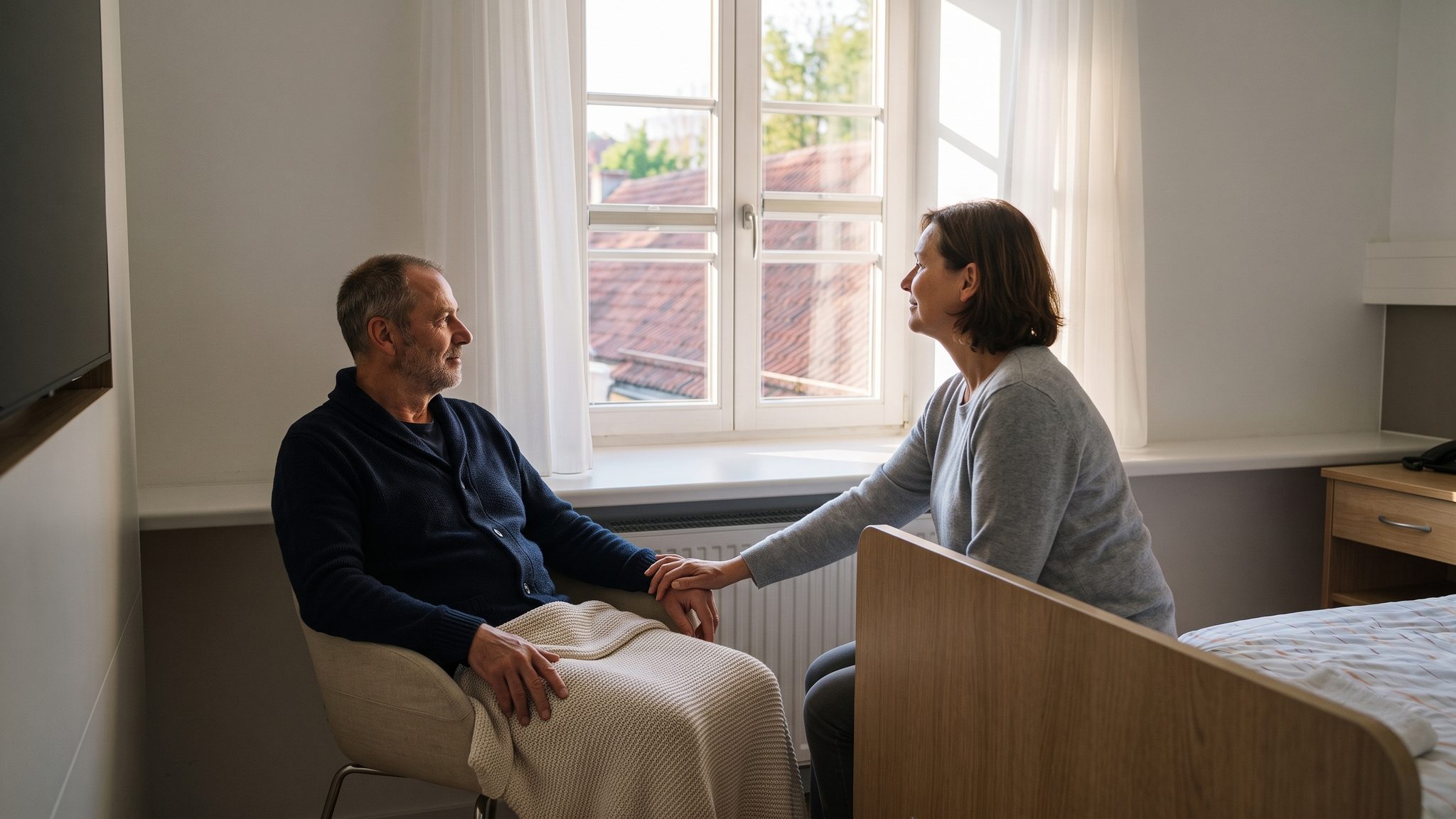
We cannot stop the course of ALS. What is done in this time for breathing, speech, sleep and mood does shape how the coming months look. Whether you are affected yourself or it is your husband, your mother: this is the part we work on.
- Free
- No obligation
- Reply within 2 business days
- Outpatient · Bad Aibling
- Non-invasive
Free & non-binding · usually a reply within 2 business days · confidential
Prefer to talk? Call us: +49 (0)8061 398-0
Since the diagnosis you have heard sentences that leave no room for questions. Perhaps you are looking less for a miracle than for people who listen, make daily life a little lighter and say what they see. We take that seriously, for the person affected and for the family carrying it with them.
ALS is rare: incidence is roughly 2–3 new cases per 100,000 people per year in Europe.
Are you a family member or carer? You are in the right place too — call or write to us; we support you alongside.
Symptoms have a map
In ALS the motor nerve cells (upper and lower motor neurons) that drive movement degenerate. Chiefly affected is the sensorimotor network: strength, speech, swallowing, breathing. Two connections often shape daily life more than the diagnosis itself. When the breathing muscles weaken at night, oxygen supply during sleep drops; daytime tiredness, headache and low mood frequently follow, long before anyone thinks of the breathing. And weight loss means an energy shortage for nerve cells already under strain; it is among the factors studies link to a less favourable course. Added to this are mood, sleep and, for some, cognitive changes in which the limbic and executive networks play a part.
For an overview of the six brain networks and a first orientation, see the Brain Network Analysis.
Alongside your neurological care: what can be done for everyday life.
Everything starts with a structured assessment: the findings from your ALS centre, history, questionnaires on sleep, mood and daily life, clinical examination, lab work where needed. A qEEG is added when a question about mood or cognition calls for it, not as routine. From this we build a supportive program that complements your neurologist’s treatment and is coordinated with them. Neuromodulation is one building block in it: gentle rTMS or tDCS for low mood or pain. Beside it stand physiotherapy with respiratory muscle training, sleep and night-time breathing, nutrition and weight, and psychological support for you and your family. Riluzole and all other medication stay as they are unless your neurologist decides otherwise.
Our aim stays the same: to restore functional balance, with as little medication as possible and a life with high quality of life as the measure.
You don’t have to decide anything today. A 15 to 20 minute conversation is enough to know whether an assessment is worth it for you.
Free & non-binding · usually a reply within 2 business days · confidential
Who it is for, and who it is not for
A good fit if …
- Medication or therapy has not been enough so far
- You are looking for a measurement-based, non-invasive path
- You are open to outpatient treatment in Bad Aibling
Less suitable if …
- You expect a purely remote or online treatment without on-site diagnostics
- You expect a guarantee — serious medicine cannot give one
In an acute crisis or having suicidal thoughts? Please seek immediate medical or emergency help — in Germany call 112, or the free 24/7 helpline Telefonseelsorge 0800 111 0 111.
The first consultation is free. We discuss the scope, duration and cost of any program openly afterwards, outpatient, here in Bad Aibling.
What the research shows
Peer-reviewed work on ALS (Amyotrophic Lateral Sclerosis) and the relevant procedures, graded by evidence level. No study proves an individual outcome.
In short: for some procedures the evidence is solid, for others still early. Where your case stands is settled in the assessment, and the program follows from it.
Repetitive transcranial magnetic stimulation for ALS / motor neuron disease (Cochrane review)
Non-invasive brain stimulation for ALS: current evidence (systematic review)
rTMS of the dorsolateral prefrontal cortex in ALS with cognitive impairment (double-blind RCT)
Respiratory muscle training and pulmonary function/survival in ALS (systematic review + meta-analysis)
Respiratory strength training for ALS (meta-analysis of randomized trials)
Transcranial static magnetic stimulation for ALS (randomised, placebo-controlled phase 2 trial)
More studies across all conditions: Science & Studies.
For brain stimulation in ALS the evidence is early and small; best supported are respiratory muscle training and good nutritional management. Which building blocks carry your daily life is decided in the assessment and in the course, not in a study of averages.
A real doctor. A real clinic.
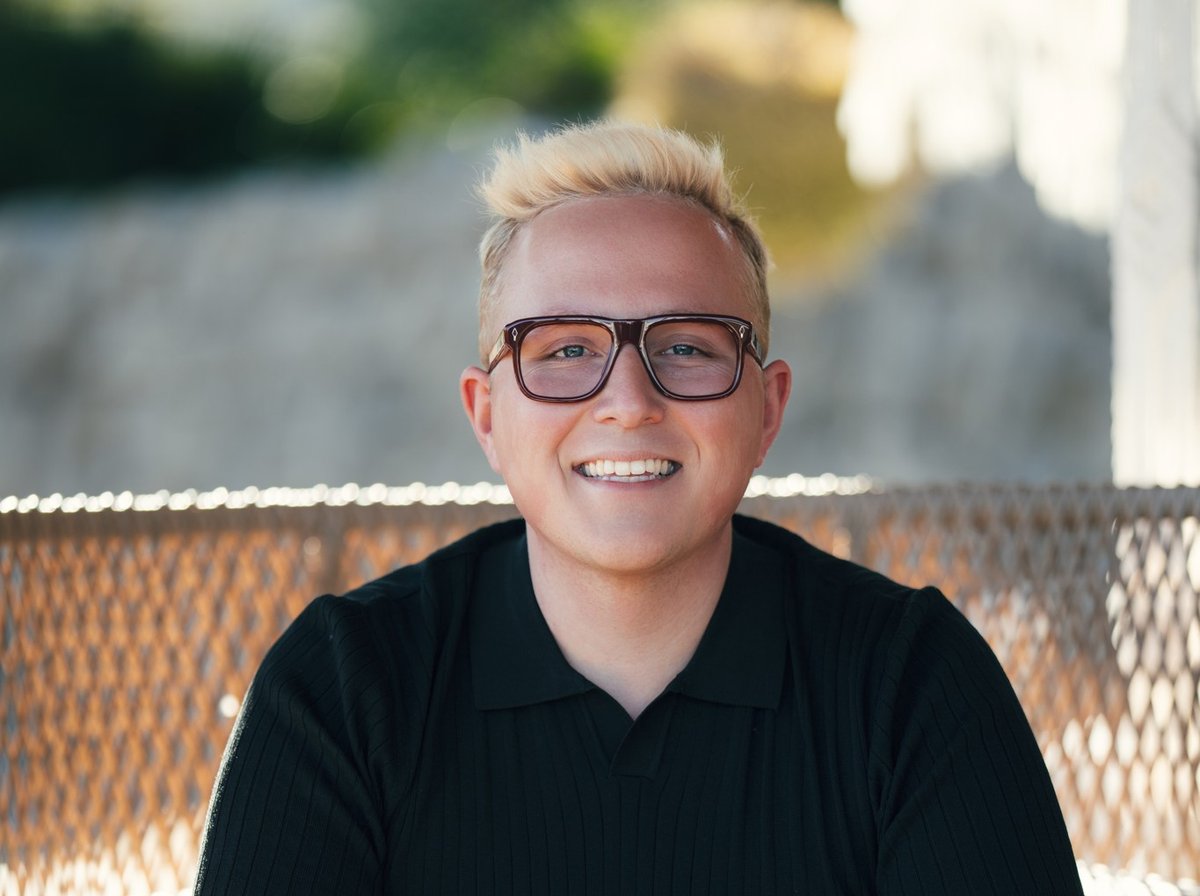
Dr. med. univ. Julian Douwes · Medical Director
Part of Clinicum St. Georg, under the medical direction of Dr. med. univ. Julian Douwes. Outpatient, evidence-graded, without medication as the first step — tailored to your profile. More on our program.
- 30+ Years of clinical heritage
- 90+ Countries patients travel from
- 30,000+ Treatment sessions delivered
In three calm steps
ALS (Amyotrophic Lateral Sclerosis): let’s talk about your path.
In a free consultation we clarify whether and how our measured program could fit you — no obligation, fully confidential.
Free & non-binding · usually a reply within 2 business days · confidential