rTMS
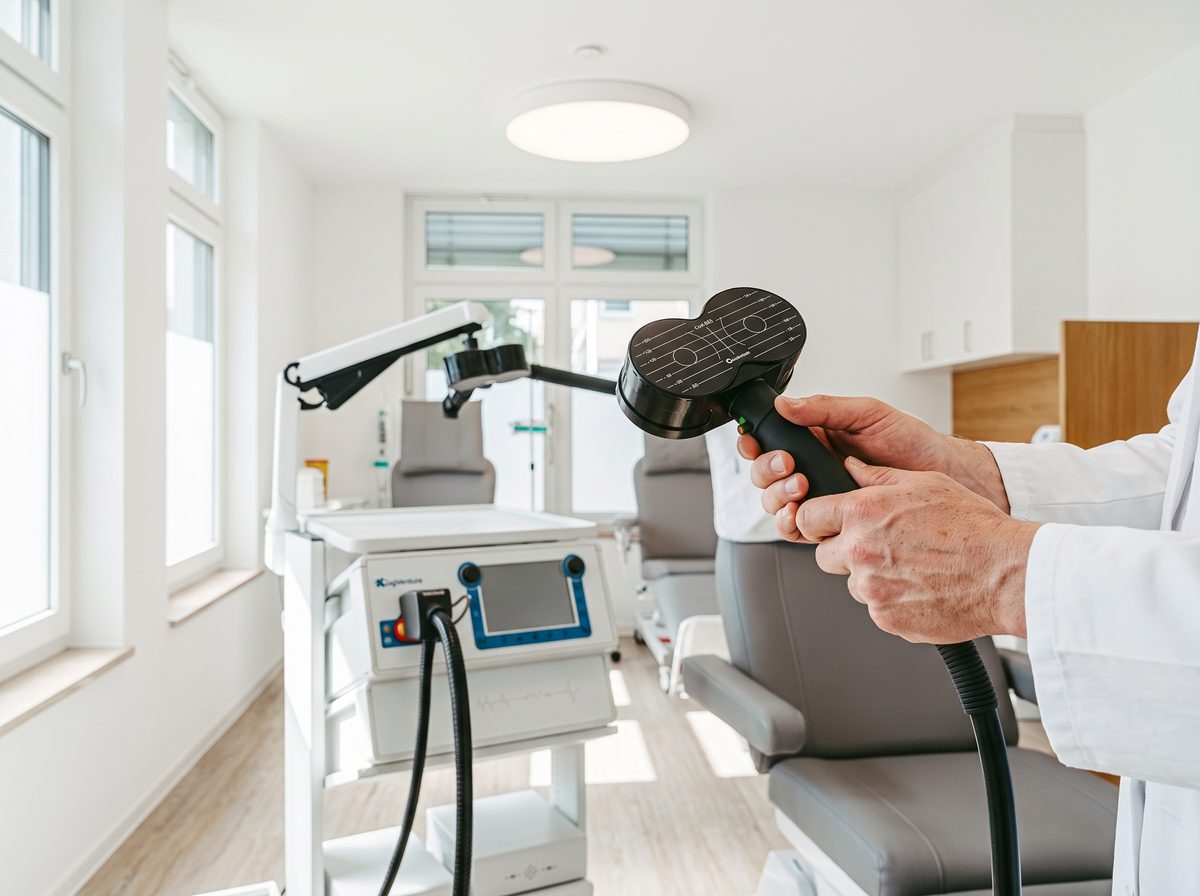
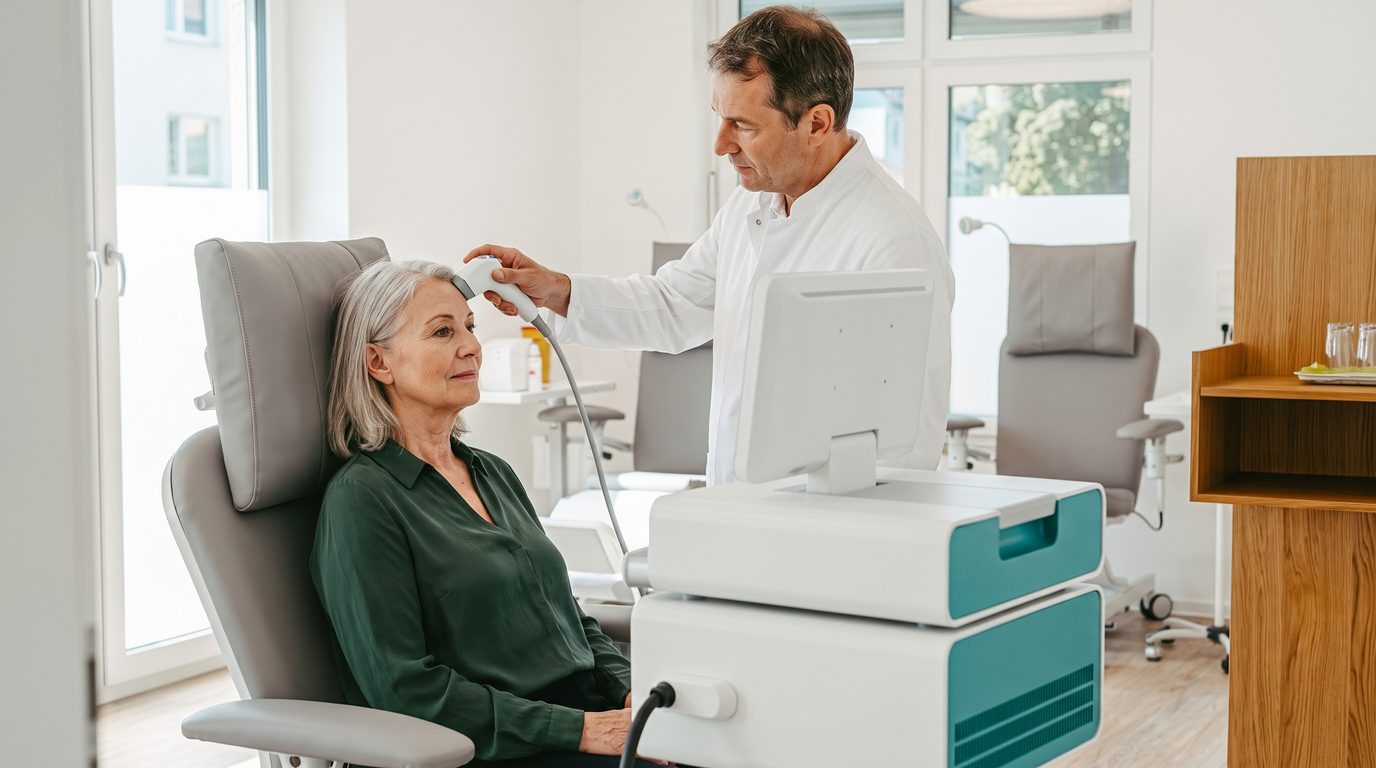
Magnetic pulses stimulate the prefrontal cortex, which is measurably underactive in depression. The primary indication is treatment-resistant depression.
rTMS, TPS, neurofeedback: each method acts on a different network. Which of them belong in your plan is decided by the assessment, and where the question calls for it, by a qEEG.
Perhaps you have read about rTMS and TPS side by side and wondered which of the two is stronger. The question has an answer, and it sits in your findings.
Magnetic pulses reach the prefrontal cortex. A stimulus at the ear reaches the vagus nerve. Neurofeedback trains self-regulation with no external stimulus at all. Different routes into different systems, and which of them is out of rhythm in you is what we read from the assessment. The nine methods on this page are building blocks; which of them belong in your plan is decided by that assessment, and whatever is needed alongside them, lab work, infection work-up, hyperbaric oxygen therapy, sleep, gut or psychological support, sits in the same plan. What the findings do not call for, we do not do.

History, existing findings, questionnaires, clinical examination, lab work where needed: that is how your picture takes shape. A qEEG with 32 electrodes is added when the question is which network is over- or under-active. Only then do we choose the building blocks.
History, existing findings, questionnaires and a clinical examination make up your findings. A qEEG is added when the question calls for it.
Your measurements become a personal treatment plan — graded by evidence, fully transparent.
Non-invasive neuromodulation, outpatient, without medication as the first step — with progress measurement.
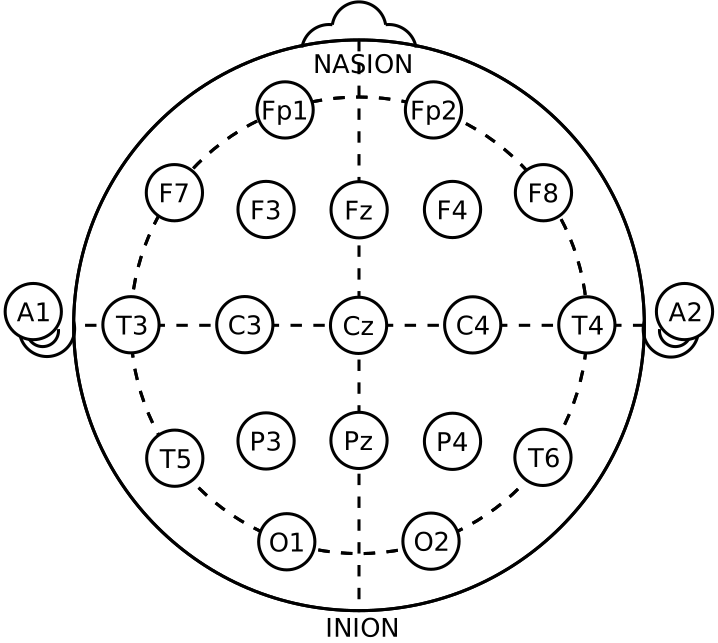
When a qEEG is recorded, the electrodes sit on the international 10-20 system, the same grid every EEG department uses. That lets us compare your activity with a normative database before any method is aimed at a network.
→ Diagnostics (qEEG brain mapping)
→ Our method in detail
Each grade describes how many studies stand behind a method, and how good they are. "Strong" means replicated and in part approved. "Early" means mechanistically plausible with little clinical data so far. The grade is a property of the method, not a statement about your course.
The cards are in no ranking order. Each names what the method acts on and the evidence grade that goes with it. The detail page for each method covers procedure, evidence and side effects.
Magnetic pulses stimulate the prefrontal cortex, which is measurably underactive in depression. The primary indication is treatment-resistant depression.
Compresses a full rTMS course into a few days, with image-guided targeting of the prefrontal cortex.
Focused ultrasound shockwaves intended to support perfusion and neuroplasticity in targeted regions. CE-certified for mild-to-moderate Alzheimer’s; not FDA-cleared in the US.
A gentle stimulus at the ear reaches the vagus nerve, the brake of the autonomic nervous system, and aims at its regulation.
You watch your own brain activity in real time and train to regulate it yourself, with no external stimulation. Best evidence in ADHD.
A map of your brain activity against normative databases. It shows which network is out of rhythm and carries every choice of method we make.
A weak direct current shifts the excitability of the neurons beneath the electrode and supports neuroplasticity.
Red and near-infrared light reaches the mitochondria of nerve cells and supports their energy production. Investigated for dementia, brain fog and depression.
Turns what stimulation sets in motion in the network into movement and function. For stroke, Parkinson’s and balance disorders.
All statements on efficacy are based on peer-reviewed studies and clinical guidelines; the current evidence level is stated on every treatment page. Outcomes are individual.

Which building blocks belong in your plan is decided by the assessment. If a qEEG shows an under-active prefrontal cortex, that argues for rTMS. A nervous system stuck on high alert argues for taVNS or neurofeedback. Lab work that shows an active infection or a thyroid out of range argues for starting there first. And a set of findings that fits no method argues for using none, which is something we will also tell you in the first consultation.
The responsible physician reviews every plan and its safety screening for contraindications before the first pulse is delivered. After treatment we take the findings again; where a qEEG was recorded, the second EEG shows whether the network has moved toward functional balance.
The Douwes Brain Center is the neuromodulation brand of Clinicum St. Georg in Bad Aibling. It is led by Dr. med. univ. Julian Douwes, as Chief Medical Officer. The hospital has treated patients for more than 30 years, they travel from over 90 countries, and internists and the laboratory work under the same roof.
→ About the Douwes Brain Center & Clinicum St. Georg · → Our team
Transcranial pulse stimulation (TPS) with the Storz Neurolith is CE-approved for Alzheimer’s dementia in Europe; the evidence there is solid. For other conditions we use TPS off-label: outside the formal approval, as an informed treatment attempt that you decide on with us after the assessment and the brain map.

Short mechanical pulses hit a targeted region and stimulate perfusion, cellular metabolism and neuroplasticity there. The mechanism does not ask for a diagnosis; it acts on the brain network it reaches. That is why we measure first which network is out of balance in you, and steer the pulses exactly there.
Large randomised trials need one uniform protocol for everyone with the same diagnosis. Two people with the same diagnosis, though, rarely share the same network pattern: in one the limbic network is overactive, in another the executive network is underactive. A one-size protocol reaches only part of them. That is why RCT evidence for measured neuromodulation is so hard to produce, and why we derive the protocol from the brain map rather than from the diagnosis.
Off-label means the evidence for that particular indication is not yet at approval level. We inform, document and measure the course, so that you and we can see in the second EEG whether anything has moved for you. More in our program.
For each method we link a peer-reviewed paper on PubMed: a meta-analysis, randomised trial or review. The evidence grade on the card is derived from exactly this kind of work. A study describes a group; what it means for your findings is something we discuss in the first consultation.
A large randomised trial shows the shorter iTBS form is non-inferior to classic rTMS in depression; the approach is broadly supported.
A double-blind randomised trial of accelerated, image-guided stimulation (SNT): promising, so far in a small group.
An individual-patient-data meta-analysis finds a moderate effect in acute depressive episodes, smaller than for rTMS.
A recent review maps the mechanisms and applications of auricular vagus nerve stimulation; protocols and effect sizes still vary.
An ADHD meta-analysis shows the effect is smaller in blinded than in open assessments. Solid data, with exactly that caveat.
Transcranial pulse stimulation is CE-approved for Alzheimer’s dementia. In other indications we use it off-label, after findings and informed consent.
A review frames the possible mechanisms: mechanistically plausible, while the clinical brain data are still early.
The links lead to PubMed or the journals themselves. Whether a method fits you is in none of these papers; only your assessment shows that.
In a free consultation we go through your history and decide where the assessment starts. You will hear from us whether a qEEG belongs in your case and which building blocks we would look at.