Neuroborreliosis: symptoms, stages and what happens in the brain
Neuroborreliosis is the involvement of the nervous system in Lyme disease. Typical symptoms are burning nerve pain that is worse at night, a one- or two-sided facial palsy, headache with a stiff neck and altered sensation; in the rare late form also gait disturbance, bladder problems and cognitive change. Acute neuroborreliosis usually responds well to antibiotics. What a proportion of people keep afterwards is a different matter: exhaustion, concentration problems, pain, a nervous system on permanent alert. “The infection has been treated” does not explain why. This article covers the stages, the diagnosis and the neurological side, and what can be measured and regulated in what remains.
Last updated: 2026-09-13 · Medically reviewed by Dr. med. univ. Julian Douwes
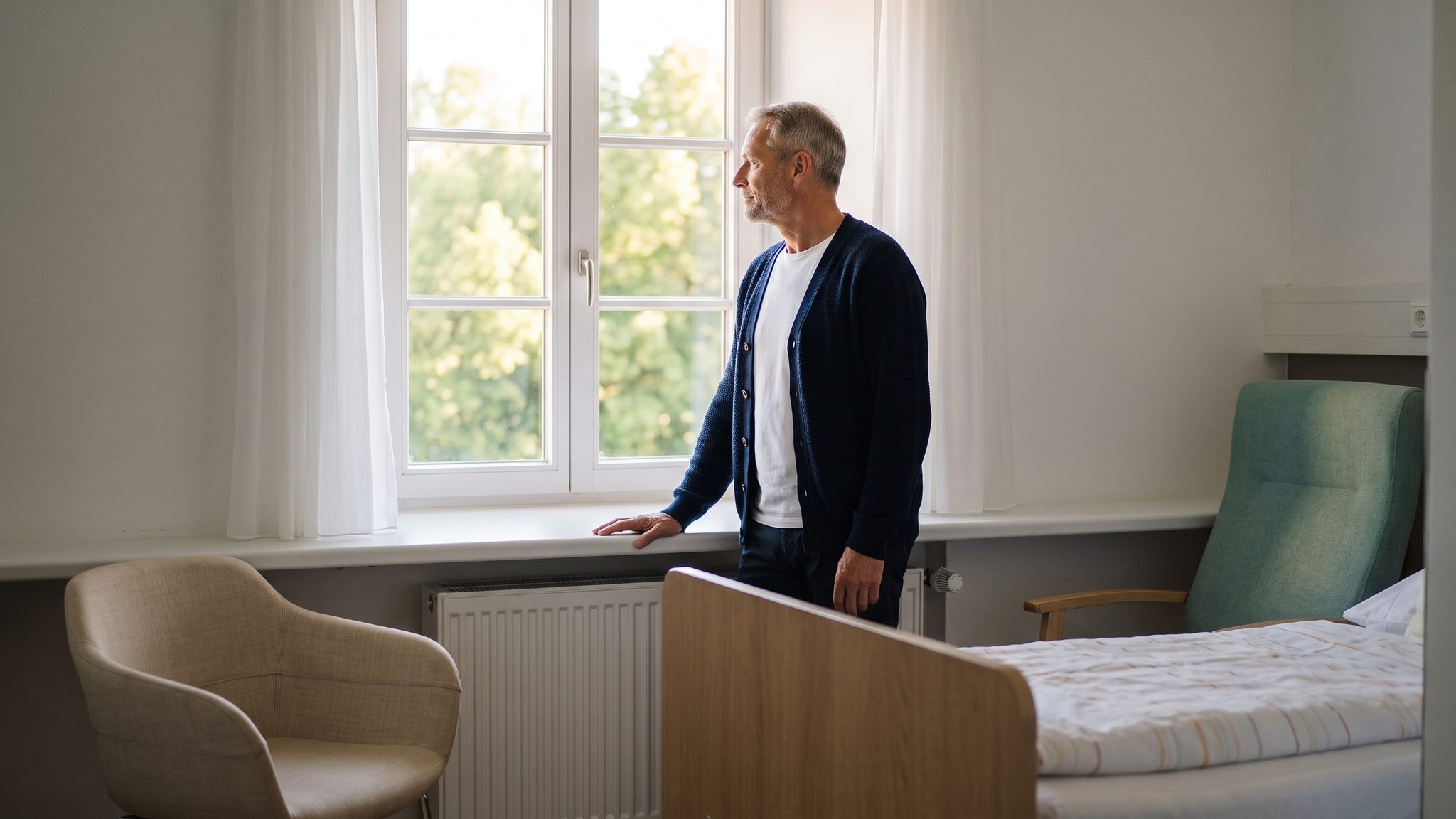
What neuroborreliosis is, and how it develops
Lyme disease (Lyme borreliosis) is caused by spiral-shaped bacteria of the genus Borrelia, transmitted by the bite of an infected tick. In Germany, depending on the region, roughly 10–30 % of ticks carry Borrelia; not every bite leads to infection, and not every infection to illness. The early skin form, the migrating rash (erythema migrans), is absent or overlooked in a substantial share of people. That is one reason why many first become aware of the infection through neurological symptoms.
Neuroborreliosis is the term used when Borrelia reach the peripheral or central nervous system. After the skin form it is the second most common manifestation in Europe: in about 3–15 % of all people with Lyme disease the nervous system is involved. The pathogens travel along nerve pathways or via the blood into the meninges and nerve roots and trigger an inflammatory reaction there, the actual cause of most symptoms is less the bacterium itself than the body’s immune response to it.
Neuroborreliosis symptoms: early, late, and afterwards
Early neuroborreliosis (weeks to a few months after the bite). It accounts for over 95 % of cases in Europe. The classic picture is Bannwarth syndrome: intense, burning or boring nerve-root pain that worsens at night and barely responds to ordinary painkillers, often combined with a facial palsy (especially common in children) and a mild meningitis with headache, stiff neck and light sensitivity. Added to this are altered sensation, muscle weakness in individual nerve territories, double vision or reduced hearing. Fever is usually mild or absent.
Late neuroborreliosis (months to years). It is rare (under 5 % of cases) but serious: a chronic inflammation of brain and spinal cord (encephalomyelitis) can lead to spastic gait disturbance, bladder dysfunction, hearing loss, balance and coordination problems and cognitive change. A polyneuropathy with tingling and numbness in hands and feet, frequently together with the skin change acrodermatitis chronica atrophicans, also belongs to the late forms.
Symptoms after treatment. Most people recover fully after guideline-based antibiotic therapy. A systematic review of treated neuroborreliosis cases shows, however, that a relevant share retain residual symptoms, exhaustion, concentration and memory problems, pain, sleep disturbance, low mood and circulatory problems. When such symptoms persist beyond six months and clearly limit daily life, the term post-treatment Lyme disease syndrome (PTLDS) is used. Exactly this group is the focus of our page on Lyme disease & neuroborreliosis.
What happens in the brain
In the acute phase the picture is clear: immune cells and inflammatory messengers, such as the chemokine CXCL13, which today serves as an early spinal-fluid marker, flood into the meninges and nerve roots. More interesting and less understood is why, in some people, the nervous system does not return to balance even after the pathogen has been dealt with successfully. Research discusses several levels that can reinforce one another:
- Neuroinflammation. In a PET pilot study, people with post-Lyme symptoms showed increased activity of microglia, the brain’s immune cells, in several brain regions. A “smouldering” immune activation can impair concentration, drive and sleep, even without active infection.
- Small-fibre neuropathy. Damage to the thin nerve fibres has been demonstrated in a proportion of people with PTLDS. It explains burning pain, tingling, temperature sensitivity, and often circulatory problems too, because the same fibres supply the autonomic nervous system.
- Autonomic dysregulation. A racing heart when standing (POTS), blood-pressure swings, sweating, digestive problems and exertion intolerance are signs that the unconscious control of circulation and energy has lost its rhythm. Heart-rate variability and tilt-style tests make this measurable.
- Network dysregulation. In the qEEG we frequently see, in post-infectious states, a slowing of frontal rhythms and altered coupling between the executive, attention and salience networks, the neurophysiological correlate of brain fog, sensory overload and exhaustion after mental effort. These patterns are not specific to Lyme disease, but they are objective, and they can be addressed.
Importantly, these levels are not competing explanations but a web. That is why we see little value in making “is it still Lyme or not?” the only question. The better question is: which systems are out of balance, and which of them can we measure and regulate?
Diagnosis: serology, spinal fluid, LTT, and clinical judgement
According to the guidelines of the German Society of Neurology and the European neurological society, acute neuroborreliosis is diagnosed on three building blocks: matching neurological symptoms, inflammation in the spinal fluid (raised cell count) and proof that more Borrelia antibodies are produced in the spinal fluid than in the blood (intrathecal antibody production). The chemokine CXCL13 in spinal fluid is considered an early, sensitive additional marker. The spinal-fluid examination is unpleasant but indispensable, because antibodies in the blood alone only say that the immune system has once encountered Borrelia, not whether they currently affect the nervous system. In southern Germany, many healthy people have positive antibodies without any illness.
It becomes harder with chronic, non-specific symptoms and no clear spinal-fluid finding. Here the colleagues at the Lyme centre at Clinicum St. Georg, with more than 12,000 Lyme patients treated since 1994, complement standard serology with extended laboratory diagnostics, such as the lymphocyte transformation test (LTT) or ELISpot methods, and a search for co-infections. These methods are not recognised in the guidelines as proof of an active infection; they are building blocks of an overall clinical assessment, not its replacement. The decision on antimicrobial or integrative treatment stays with the centre’s infectious-disease team.
Our task at the Douwes Brain Center is a different one: we measure what the nervous system is doing right now, independently of how active the infection still is. For every patient this means a structured assessment: history, existing findings, heart-rate variability and autonomic function tests, standardised cognitive tests, a sleep analysis and complementary lab values for inflammation, micronutrients and thyroid. qEEG brain mapping is added when the question calls for it, for instance in brain fog or sensory overload. The result is a profile that shows which networks and regulatory loops are out of balance.
The debate on “chronic Lyme disease”, put fairly
Few topics are debated so fiercely. On one side stand the guidelines: they do not use the term “chronic Lyme disease” because it implies a persisting active infection that usually cannot be demonstrated when symptoms persist after therapy. Two large controlled trials from the USA (2001) and the Dutch PLEASE trial (2016) found no additional benefit of months-long antibiotic courses over shorter standard treatment, with relevant side effects. On the other side stand many patients and experienced clinicians who see persistent, sometimes severe symptoms and have the impression that standard tests miss cases and standard treatments are not enough for everyone.
Our position is deliberately calm: the symptoms are real, whatever label they are given. Whether PTLDS, “post-Lyme syndrome” or chronic Lyme disease, what matters to the nervous system is which regulatory loops are out of balance. The question of infection activity belongs in the hands of physicians experienced in infectious disease; the question of neurological function belongs in the hands of those who can measure it. Both together, not against each other, is the approach at Clinicum St. Georg.
Our approach: Measure · Regulate · Restore
Our aim is always the same: to restore the functional balance of your brain and body, as far as possible without drugs and with as little medication as possible. Neuromodulation is one building block in that. As long as immune activation continues, inflammatory messengers reach the brain and keep the networks in alarm mode; that is why infection work-up at the Lyme centre, lab work and sleep belong in the same plan as taVNS or rTMS. For symptoms after neuroborreliosis this means, concretely:
- Measure. The assessment described above, from autonomic function, cognition, sleep and labs, with a qEEG added where needed, brought together into one picture.
- Regulate. Based on the profile we select non-invasive methods: taVNS to calm the autonomic nervous system and the inflammatory axis (the vagus nerve is the body’s own “inflammation brake”), carefully dosed rTMS or tDCS for fatigue, cognitive slowing, pain or low mood, neurofeedback as self-regulation training, photobiomodulation where it fits the profile. The evidence for this comes mostly from related post-infectious conditions such as Long COVID and ME/CFS, we transfer it with judgement and say so openly.
- Restore. The goal is function, sleep and quality of life, not a lab value. At the end of the program we re-measure so you can see what has changed.
We never change existing medication without your treating physicians. And anyone with acute neurological deficits, a fresh facial palsy, severe nerve pain, fever with a stiff neck, belongs first in acute neurological care, not with us.
Frequently asked questions
Which symptoms are typical of neuroborreliosis?
How is neuroborreliosis diagnosed?
Can neuroborreliosis permanently damage the brain?
What is the difference between neuroborreliosis and post-Lyme syndrome?
Does the Douwes Brain Center treat the infection itself?
Read more
Similar articles
An article does not know your findings.
What fits you is shown by the structured assessment. The free consultation takes 15 to 20 minutes and clarifies whether this path is worth it for you.