Lyme brain fog and fatigue, and what neuromodulation can do
The antibiotics are done, the infection counts as treated, and yet you are not the person you were: fatigue that no sleep repairs, fog in the head, word-finding trouble, a racing heart when standing, pain, low mood. Roughly one in ten people knows these late effects of Lyme disease. They arise less from the pathogen itself than from a nervous system that does not return to balance after the infection: neuroinflammation, autonomic dysregulation, a self-regulation of the brain networks that has fallen asleep. That is exactly where non-invasive neuromodulation comes in. This article explains how we capture the profile behind the fatigue, which methods are options and what the evidence supports.
Last updated: 2026-09-13 · Medically reviewed by Dr. med. univ. Julian Douwes
Lyme fatigue and brain fog: why the symptoms stay
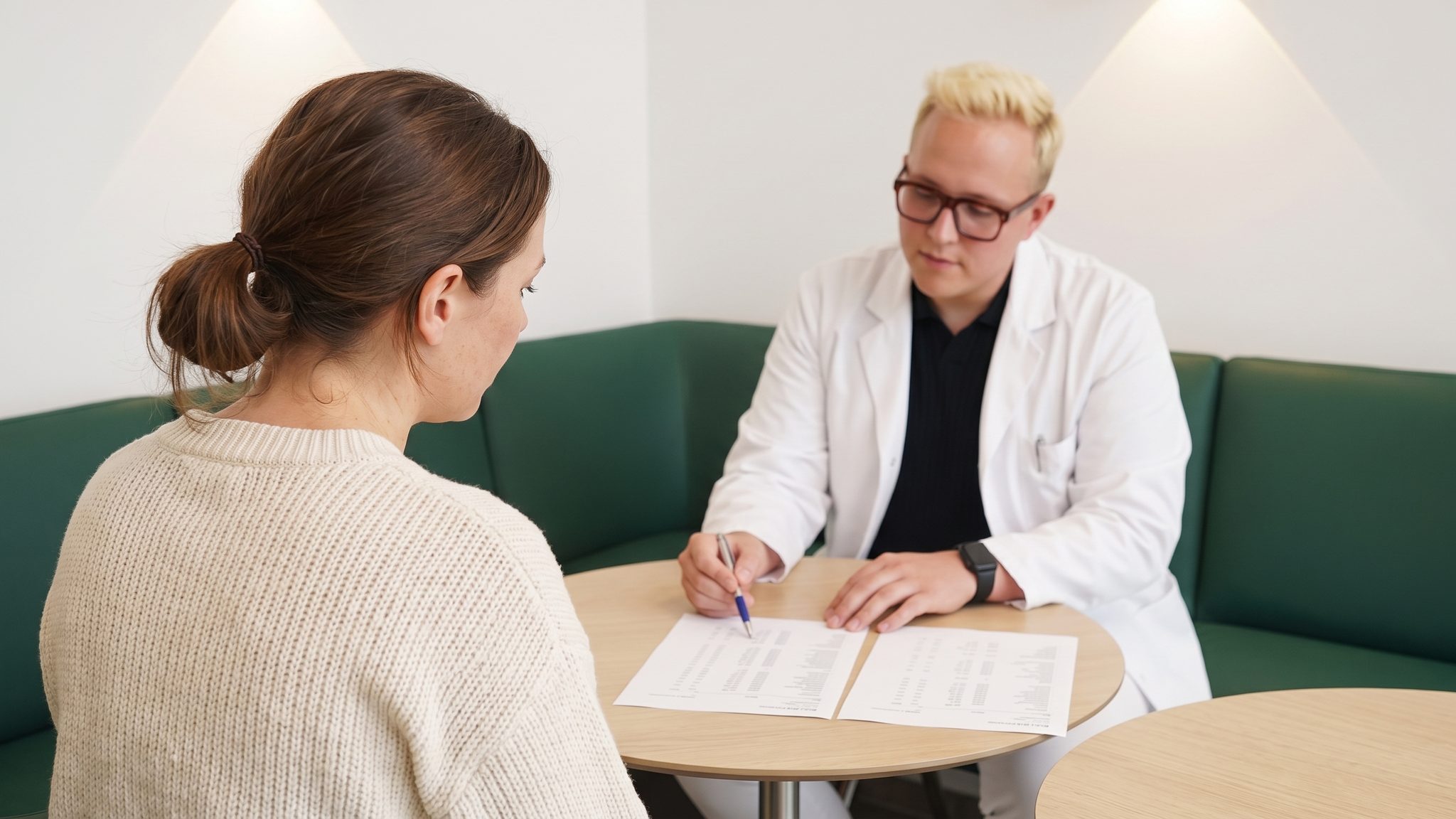
Anyone who has been through Lyme disease often knows a frustrating experience: the antibiotics are done, the doctor declares the infection treated, and yet you are not the person you were. Lyme fatigue feels different from ordinary tiredness: it is leaden, worsens after physical or mental effort and barely improves with sleep. Added to this is brain fog, a feeling as if cotton wool lay between you and your thoughts: names are missing, sentences break off, multitasking overwhelms, noise and light become too much.
Research calls this post-treatment Lyme disease syndrome (PTLDS) when such symptoms last longer than six months. Cognitive tests show measurable deficits in processing speed and verbal memory in those affected. And several mechanisms explain why the nervous system does not let go: a smouldering activation of microglia (the brain’s immune cells), made visible in a PET pilot study; a small-fibre neuropathy that explains burning pain and circulatory problems; an autonomic dysregulation up to POTS with a racing heart when standing; and an altered network balance that shows in the qEEG as slowing of frontal rhythms and poor coupling between executive, attention and salience networks. These levels are the actual target of our work – described in detail on our page on Lyme disease & neuroborreliosis.
Why more antibiotics are usually not the answer
It is understandable to think of the pathogen when symptoms persist after an infection. The evidence here, however, is unusually clear: two controlled US trials (2001) and the Dutch PLEASE trial (2016) found no additional benefit of months-long antibiotic therapy over shorter standard treatment for persistent Lyme symptoms – with relevant side effects. That does not mean the question of infection activity is settled; it belongs in the hands of colleagues experienced in infectious disease, at Clinicum St. Georg in the Lyme centre, which has treated more than 12,000 people with Lyme disease since 1994 and uses integrative methods such as whole-body hyperthermia alongside antibiotics.
But it does mean: the neurological side – fatigue, brain fog, pain, mood, circulation – needs its own approach. One that targets not the bacterium but the regulatory loops of the nervous system. And one that gets by with as little additional chemistry as possible: our aim is to restore functional balance with as little medication as possible.
Step 1 – Measure: the profile behind the fatigue
“Lyme fatigue” is not one uniform state. In one person autonomic dysregulation dominates, in another cognitive slowing, in a third pain and sleep. That is why everything with us begins with a structured assessment: history, previous findings from the Lyme centre, questionnaires, clinical examination. Which measurements are added depends on your picture:
- qEEG brain mapping with a network profile when brain fog and concentration are in the foreground: where is activity slowed, where overactive, how do the networks communicate with one another?
- Autonomic function: heart-rate variability at rest and under load, circulatory response when standing – the measurable side of a racing heart, dizziness and exertion intolerance.
- Cognitive assessments: standardised tests of processing speed, attention and memory – so brain fog gets a number that can be re-measured.
- Sleep analysis and lab values for inflammation, micronutrients and thyroid – because unrecognised deficiencies and sleep disturbance amplify any fatigue.
The result is a profile instead of a label: which systems are out of balance, and which of them can we regulate specifically?
Step 2 – Regulate: taVNS, rTMS, tDCS, neurofeedback
Based on the profile we select non-invasive methods, each with its evidence grade:
- taVNS (transcutaneous auricular vagus nerve stimulation). A small electrode at the ear gently stimulates a branch of the vagus nerve – the body’s own brake for stress and inflammatory reactions. That vagus nerve stimulation can inhibit cytokine production has been shown in studies and a recent meta-analysis; in fatigue within an autoimmune disease (Sjögren’s syndrome), effects on exhaustion and immune response were observed. For post-Lyme symptoms there are so far reviews and case reports, no large trials. Evidence grade: growing. We use taVNS when the profile shows autonomic imbalance or signs of persistent inflammatory activation.
- rTMS (repetitive transcranial magnetic stimulation). Magnetic pulses specifically stimulate networks that appear slowed in the qEEG – usually the left dorsolateral prefrontal cortex, the “control centre” for concentration and drive. In Long COVID with fatigue and cognitive dysfunction and in ME/CFS, studies show symptom relief; in depression rTMS is an established method. For post-Lyme fatigue we transfer this evidence with judgement and dose carefully so as not to trigger a worsening after exertion. Evidence grade: solid (related indications), early (Lyme).
- tDCS (transcranial direct current stimulation). A very weak direct current lowers or raises the excitability of brain areas. A randomised, double-blind pilot study found improvement over sham stimulation in post-COVID fatigue. Gentle, well tolerated, often combined with cognitive training. Evidence grade: solid (post-COVID), early (Lyme).
- Neurofeedback. A training in which you see your own brain activity in real time and learn to regulate it – without electrical stimulation. For brain fog and sensory overload, a building block to “wake up” self-regulation again. Evidence grade: adjunctive.
- Photobiomodulation (near-infrared light via the head and nose) and targeted micronutrient infusions – sparingly, only when the profile justifies them.
None of these methods targets the Borrelia; we work on the measurable consequences of the infection and re-measure. Neuromodulation is one building block beside infection work-up, lab work and sleep: as long as inflammatory messengers from an active infection reach the brain, any stimulation works against an engine that keeps running. That is why both sides belong in the same plan.
Step 3 – Restore: function, sleep, quality of life
The goal of our program is not a lab value but a life with high quality of life: being able to read a book again, hold a conversation without losing the thread, get through a day without spending two in bed afterwards. That is why the program includes, alongside the stimulation sessions, sleep hygiene and activity management (pacing), so that recovery becomes possible at all, as well as medical supervision that respects existing medication – we never change it without your treating physicians.
At the end comes the follow-up measurement: qEEG, heart-rate variability and cognitive tests are repeated. That way you – and we – see in black and white what has changed and what remains open. For many people who have heard for years that there is “nothing to find”, this objectification alone is an important step.
Who this is for – and who it is not for
Our approach fits if your Lyme disease was treated and fatigue, brain fog, pain, circulatory or mood problems have remained; if you are a patient of the Lyme centre and want to address the neurological side specifically; or if you are looking for a drug-sparing, measurement-based path that complements your existing treatment. It does not fit if you have acute neurological deficits (a fresh facial palsy, severe nerve pain, fever with a stiff neck belong immediately in acute neurological care) or if you expect us to settle the infection question. What fits you, we clarify in a free initial consultation: 15 to 20 minutes, no obligation, ideally with your previous lab results to hand.
Frequently asked questions
How long does fatigue last after Lyme disease?
What are typical late effects of Lyme disease?
Does vagus nerve stimulation (taVNS) help in Lyme disease?
Can rTMS help with fatigue and brain fog after Lyme disease?
Do I need to go to the Lyme centre first, or straight to the Brain Center?
Read more
Similar articles
An article does not know your findings.
What fits you is shown by the structured assessment. The free consultation takes 15 to 20 minutes and clarifies whether this path is worth it for you.