Brain health & prevention: keeping the brain actively healthy
A healthy brain is no accident, and the strongest levers cost nothing: sleep, exercise, nutrition, mental and social activity, handling stress. That is the base, and it is better evidenced than any supplement. If you want to know beyond that where your brain stands today, you do not get a measurement on suspicion with us but a structured assessment; whether a qEEG is added depends on the question you bring.
Last updated: 2026-07-25 · Medically reviewed by Dr. med. univ. Julian Douwes
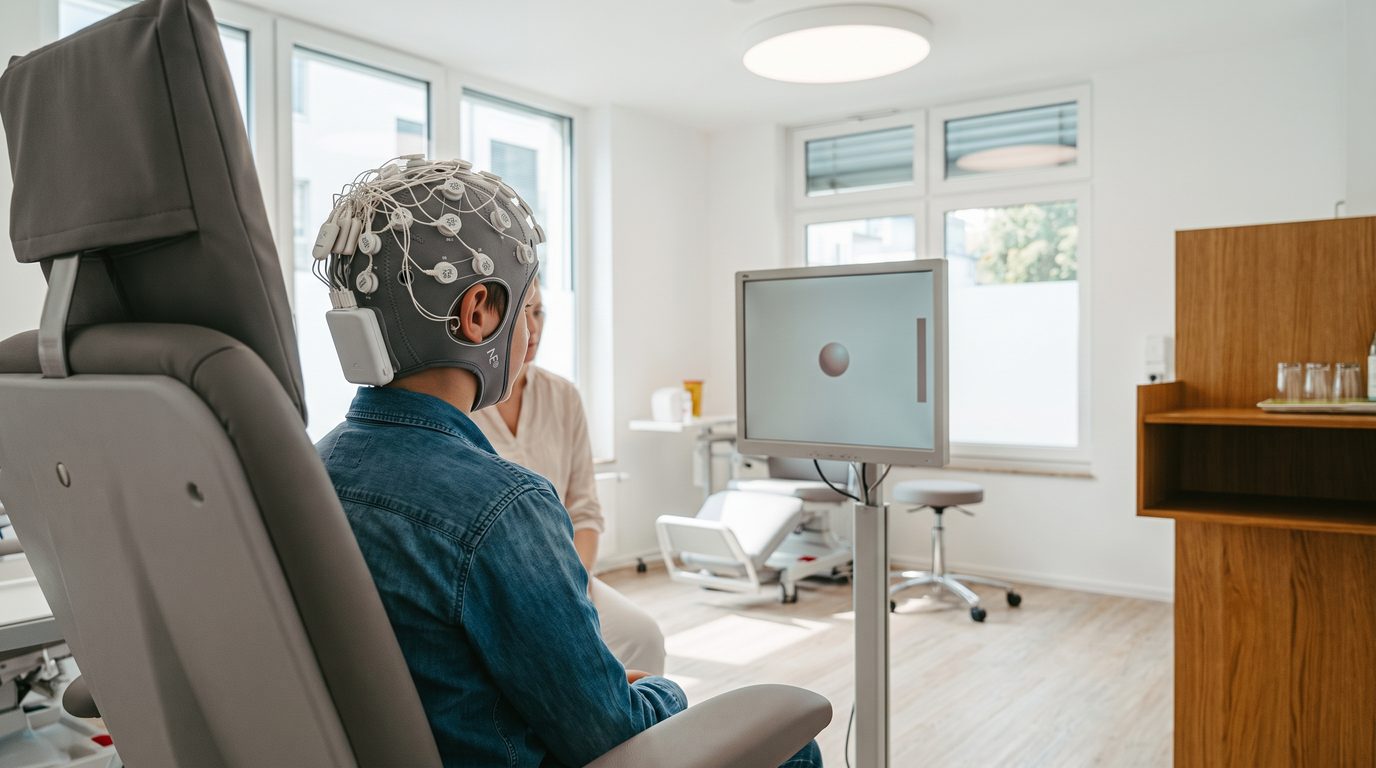
The fundamentals – best evidenced
The most effective levers for brain health are also the most familiar. The real art is keeping them up in everyday life:
- Sleep: sufficient, regular sleep is the brain’s "cleaning phase".
- Exercise: regular physical activity supports circulation and neuroplasticity.
- Nutrition: a balanced, broadly Mediterranean-style diet supports the vessels and metabolism.
- Mental & social activity: learning, contacts and new stimuli keep networks flexible.
- Stress regulation: chronic stress burdens the brain; rest and relaxation are protective.
This base does not replace medical treatment, but it is the foundation of any sensible prevention.
Why measuring helps in prevention too
Much in the head stays subjectively blurred: am I just tired, or is something changing? A qEEG brain mapping can make the current state of your brain networks visible – painlessly and repeatably. This is not a test that predicts disease, but an objective starting point.
The real value lies in the trajectory: because the qEEG can be repeated as often as needed, you can track over time how your network picture develops – for example alongside changes in lifestyle or a training programme. This turns a feeling into a traceable observation.
Training self-regulation: neurofeedback
Beyond the everyday fundamentals, neurofeedback can play a role. Here you receive real-time feedback on your brain activity and learn to reach certain states – such as relaxed alertness or focus – more deliberately. This often happens on the basis of the qEEG findings.
Neurofeedback is a form of training, not a miracle cure, and the evidence varies in strength by goal. Whether it makes sense for your goal, such as cognitive performance, is something the assessment shows.
Prevention and early changes
Some people come not with complaints, but with a legitimate question: "Is everything all right – and will it stay that way?" Especially with first, non-specific changes in memory or concentration, an objective baseline can bring reassurance or provide early orientation.
If you are worried about mild cognitive changes, this does not replace a specialist work-up. A measurement can, however, be part of a close-meshed approach, and what it can achieve in your case we tell you beforehand, not afterwards.
What prevention can achieve, and what it cannot
No lifestyle and no measurement can reliably prevent disease. What is realistic: strengthening the fundamentals, noticing changes earlier and, where there is a starting point, counteracting them in a targeted way. That includes what runs beneath the surface: poorly controlled blood sugar, an underactive thyroid or unrecognised sleep apnoea throttle network performance long before a qEEG shows anything. That is why lab work and sleep belong in every baseline assessment, and neurofeedback is a building block only after that.
If you want to keep your brain actively healthy, the simplest first step is the free consultation: 15 to 20 minutes in which we listen, place your situation and say whether, and which, baseline assessment makes sense in your case.
Frequently asked questions
What can I do myself for my brain health?
Can a qEEG help with prevention?
Does neurofeedback help keep the brain fit?
Can prevention avert dementia or other conditions?
When is a baseline assessment worthwhile?
Read more
Similar articles
An article does not know your findings.
What fits you is shown by the structured assessment. The free consultation takes 15 to 20 minutes and clarifies whether this path is worth it for you.