Neuromodulation in Germany: a realistic overview
In Germany a whole range of non-invasive neuromodulation is available: rTMS, tDCS, TPS, taVNS and neurofeedback. Available does not mean suitable. The methods differ in evidence, approval status and field of use, and which one fits you is decided by a structured assessment, not by the device a practice happens to have in the building. We bring several of these methods together under the roof of Clinicum St. Georg in Bad Aibling and use them as building blocks of one overall concept.
Last updated: 2026-07-25 · Medically reviewed by Dr. med. univ. Julian Douwes
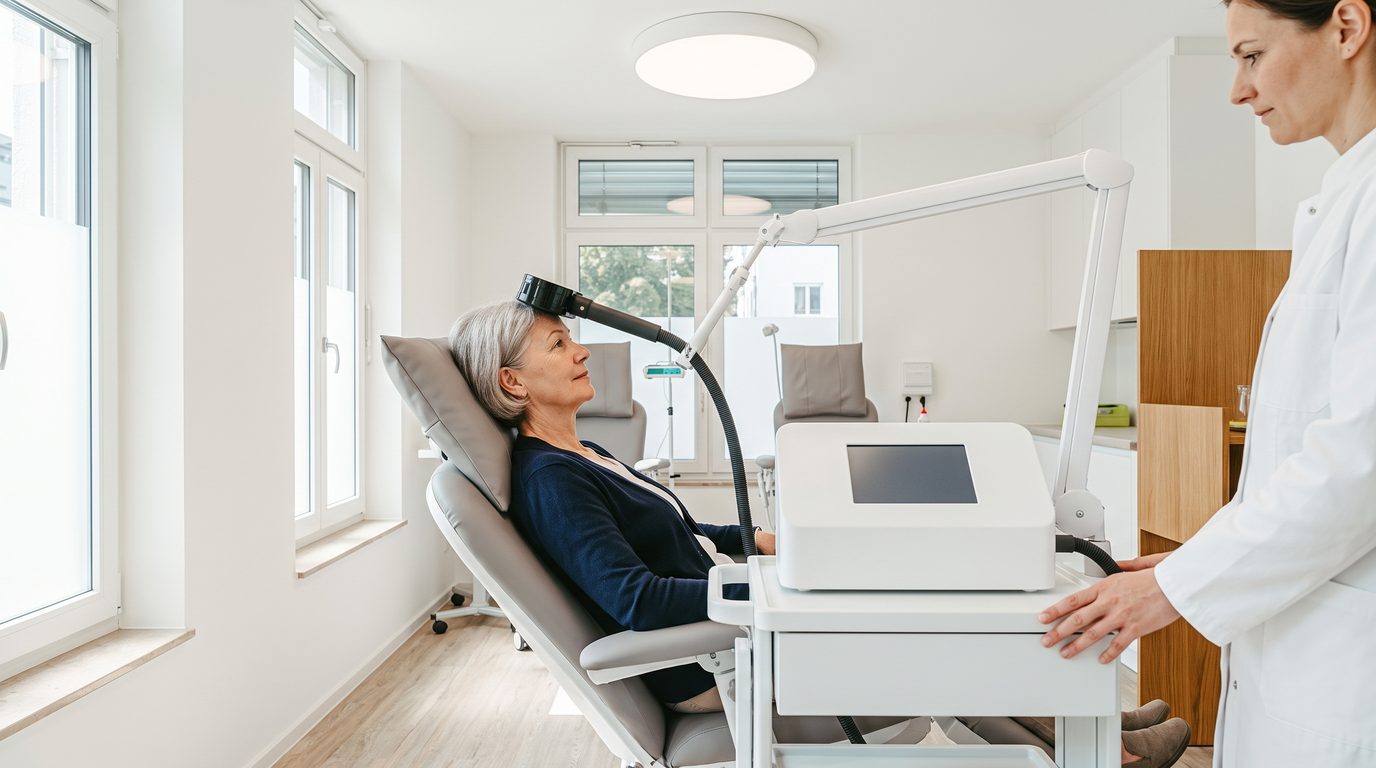
Which methods exist?
Non-invasive neuromodulation includes several established and newer methods:
- rTMS, magnetic stimulation, best evidenced for depression.
- tDCS, weak direct-current stimulation, milder and more broadly usable.
- TPS, transcranial pulse stimulation using ultrasound; CE-approved for Alzheimer’s, off-label in other areas.
- taVNS, transcutaneous vagus nerve stimulation at the ear.
- neurofeedback, training self-regulation, often based on the qEEG findings.
"Non-invasive" means: no surgery, no implants, no intervention under the skin. This fundamentally distinguishes these methods from invasive approaches such as deep brain stimulation.
How is this regulated in Germany?
The devices are regulated as medical products in Germany and carry CE marking. An important point is the difference between an approval/CE marking for a specific field of use and off-label use: rTMS, for example, is broadly established for depression, while many further fields of use are well founded but not (yet) formally approved.
Off-label does not mean "dubious", but a physician-directed use outside the formal approval, transparently justified and with informed consent. TPS is a good example: CE-approved for Alzheimer’s, off-label in other indications with an individual, network-based rationale. We disclose this status on every treatment page.
What is realistic, and what is not?
Best evidenced is rTMS for depression; for other methods and fields of use the evidence ranges from solid through growing to preliminary. We offer only methods with a traceable evidence base and tailor them to your findings.
A reputable provider is one who discloses the evidence status, measures first rather than treating in a blanket way, checks contraindications and names limits. That is precisely our standard, set out under research and treatments.
Neuromodulation at Clinicum St. Georg, Bad Aibling
The Douwes Brain Center works under the roof of Clinicum St. Georg in Bad Aibling, an integrative clinic with long experience and an international patient community. The advantage: several neuromodulation methods, modern diagnostics such as qEEG brain mapping and medical supervision in one place, embedded in a coordinated programme.
Instead of "one device for everyone", an individual plan emerges with us: measure first, then select the suitable method, or a combination, and monitor the course. How to reach us and where we are can be found under location.
Your first step
If you are wondering whether neuromodulation is an option for you, you do not have to work through the methods yourself. In the free consultation we put your situation in context and explain which options are realistic. The call takes 15 to 20 minutes and commits you to nothing.
If a treatment is an option, with us it begins with a structured assessment: history, existing findings, questionnaires, clinical examination, and where needed lab work and imaging. Whether qEEG brain mapping is added is decided after that. Neuromodulation is one building block in that plan: a thyroid that delivers too little hormone dampens the baseline tone of the entire nervous system, and anyone who then only stimulates treats the consequence instead of the cause. That is why lab work, sleep and, where it fits, infection work-up belong in the same plan as the method.
Frequently asked questions
Which neuromodulation methods are available in Germany?
Is rTMS approved in Germany?
What does off-label mean in neuromodulation?
Where does treatment take place with you?
Does neuromodulation promise a cure?
Read more
Similar articles
An article does not know your findings.
What fits you is shown by the structured assessment. The free consultation takes 15 to 20 minutes and clarifies whether this path is worth it for you.