rTMS for Treatment-Resistant Depression
Depression is called treatment-resistant when two guideline-based treatment attempts have not helped enough. What is usually missing from that list: a treatment that works on the brain itself rather than on its chemistry. rTMS, and in condensed form accelerated TMS, is exactly that and is among the best-studied non-invasive options in this situation. This article explains who it may suit, how it works and what the evidence shows.
Last updated: 2026-07-25 · Medically reviewed by Dr. med. univ. Julian Douwes
What "treatment-resistant" really means
The term sounds final, but it is not. Treatment-resistant depression usually refers to depression that has not responded to at least two adequately dosed and sufficiently long treatment attempts. That does not mean nothing works anymore, it means the path taken so far was not the right one. It is often worth approaching the problem from a different angle: not through another drug, but through targeted modulation of the networks involved.
Why network modulation is a different lever
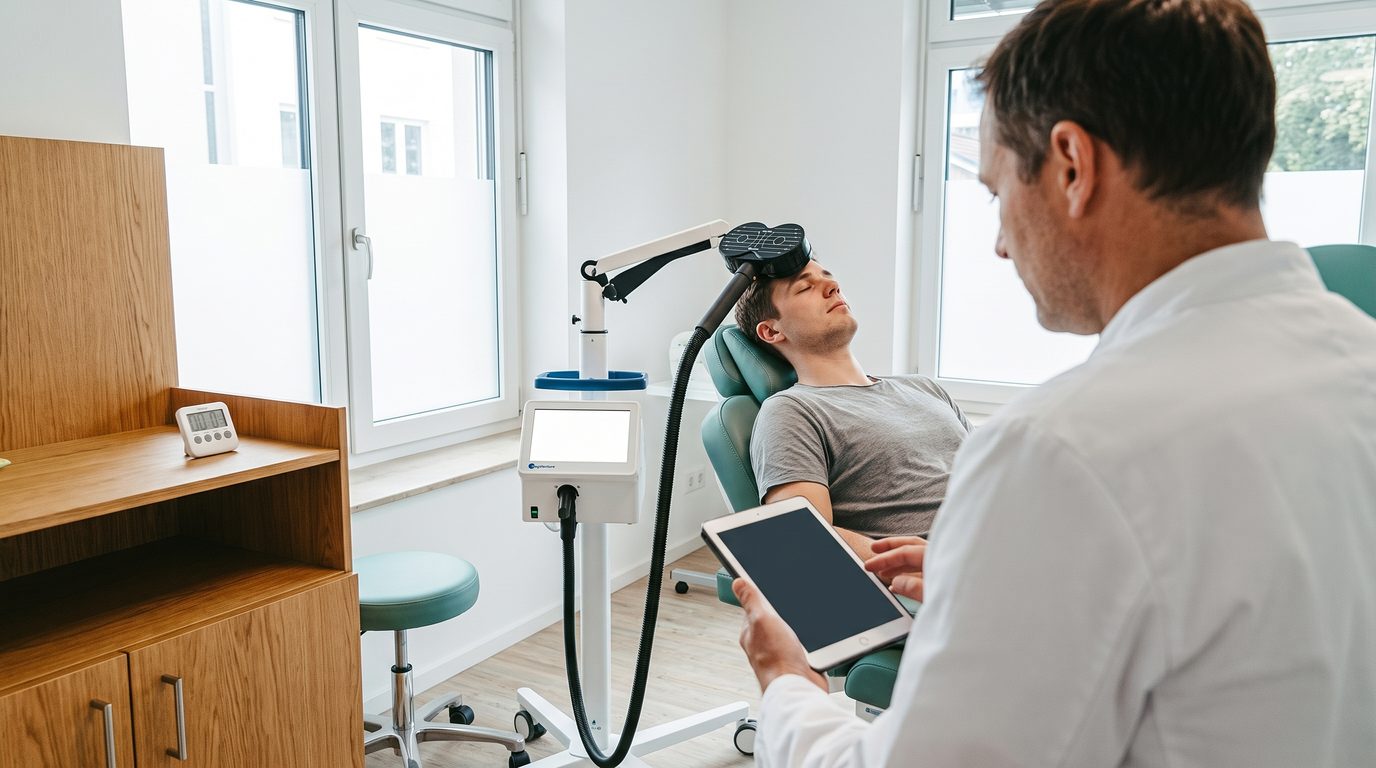
Medication works systemically through neurochemistry. rTMS works locally and precisely: it modulates the activity of a defined region, for depression usually the left dorsolateral prefrontal cortex, and through it the connectivity within the network system. Because the point of action is different, rTMS can help even when several medications have not been enough. That is exactly why we measure beforehand which network is out of rhythm, and do not treat by rote.
Classic rTMS or accelerated TMS?
Two paths are available:
- Classic rTMS, daily sessions over several weeks, the longest-established format.
- Accelerated TMS (accelerated/iTBS), several short theta-burst sessions per day, condensed into a few days. For people with high distress or limited time this dense format can be appealing.
Which path fits you depends on your measured profile, your history and your everyday life. We decide together after the diagnostics.
Measure first, then treat
Precisely when depression has so far been treated inadequately, a careful look pays off. In our program every treatment begins with a structured assessment: history, existing findings, questionnaires, clinical examination, and where needed lab work and imaging, also to rule out structural or other causes. Whether qEEG brain mapping is added is decided after that. Only from this does an individual treatment program emerge. For a first orientation try the Brain Network Analysis (not a diagnosis).
What the evidence shows, and what it does not
For rTMS in depression, including treatment-resistant courses, randomised trials and meta-analyses exist; we rate the evidence as solid. Accelerated protocols are promising and under active research. Real, linked studies are available at Science & Studies.
Even the best evidence describes averages, your course is individual. Especially after several disappointing attempts, it matters to us to measure carefully, treat transparently and monitor the course closely.
Frequently asked questions
Is rTMS an option when several antidepressants have already failed?
What is the difference between rTMS and accelerated TMS?
Do I have to stop my medication?
What happens after the treatment?
How do I find out whether rTMS makes sense for me?
Read more
Similar articles
An article does not know your findings.
What fits you is shown by the structured assessment. The free consultation takes 15 to 20 minutes and clarifies whether this path is worth it for you.