rTMS vs. tDCS: What is the difference?
rTMS and tDCS are both non-invasive neuromodulation methods, but they work in different ways. Simplified: rTMS uses strong magnetic pulses that prompt nerve cells to fire directly; tDCS uses a weak direct current that gently shifts the excitability of brain regions. rTMS is stronger, better evidenced and more equipment-intensive; tDCS is milder, cheaper and more everyday-friendly. Which method suits you is decided by your findings, not by fashion and not by whichever device happens to be free.
Last updated: 2026-07-25 · Medically reviewed by Dr. med. univ. Julian Douwes
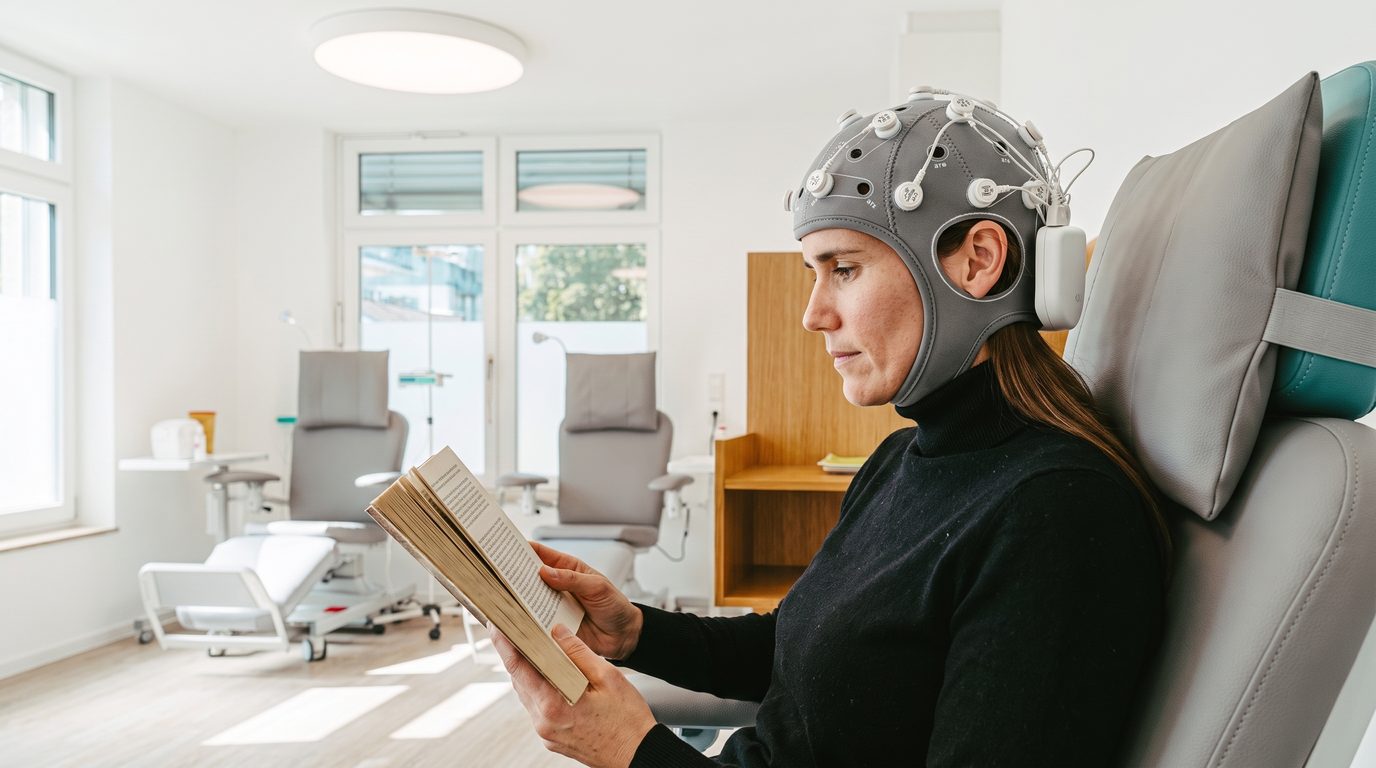
The core difference: magnetic pulse vs. direct current
rTMS (repetitive transcranial magnetic stimulation) uses a coil to generate brief, powerful magnetic fields that induce electrical currents in the tissue and cause nerve cells to fire directly. It is therefore called a suprathreshold method: it actively triggers action potentials.
tDCS (transcranial direct current stimulation), by contrast, passes a very weak, constant direct current through the scalp via two electrodes. This current does not fire cells itself, but only makes it a little easier or harder for a region to become active, a subthreshold, modulating method.
Comparison at a glance
- Mechanism: rTMS, magnetic pulse, triggers firing. tDCS, direct current, shifts excitability.
- Strength: rTMS more focal and powerful. tDCS milder and more diffuse.
- Evidence: rTMS is very well evidenced for depression and approved in many places. tDCS shows growing, but overall weaker and less consistent evidence.
- Session: rTMS usually 3–40 minutes at the device. tDCS 20–30 minutes, technically much simpler.
- Sensation: rTMS, tapping on the scalp. tDCS, mild tingling or itching under the electrodes.
- Effort & cost: rTMS more technically demanding and costly; tDCS cheaper. Actual costs always depend on the individual plan.
How does the evidence differ?
rTMS for depression is among the best-studied neuromodulation methods, with numerous randomised trials and meta-analyses and approvals in several countries. tDCS also has a growing evidence base, for example in depression or chronic pain, but the results are more heterogeneous and the effect sizes often smaller.
This does not mean tDCS is "worse": as a milder, well-tolerated method it can be useful, for instance as an adjunct or when rTMS is not an option. We set out the respective evidence status transparently on every treatment page, see also research.
Which method suits whom?
There is no blanket answer. rTMS is often the first choice when a strong, focal stimulation of a clearly defined region makes sense, for example in depression that does not respond adequately to medication. tDCS can fit when a milder, broader approach is called for or when rTMS is ruled out for safety reasons.
What decides it for us is the findings: it starts with a structured assessment, with qEEG brain mapping added where needed to show which network is out of balance. Only then do we choose the method, region and dose. Sometimes a combination or an entirely different path is the better option.
What this means for your decision
You do not have to choose between rTMS and tDCS yourself; that is a medical judgement based on your findings, your history and your goals. Both methods are non-invasive, outpatient and without anaesthesia. How you respond to which method shows in the course; that is why we measure it and adjust. The first step is a free initial consultation.
The easiest way to clarify your questions is the free consultation. What to expect and where we treat you can be found under location.
Frequently asked questions
Is rTMS or tDCS better?
What is the main difference between rTMS and tDCS?
Is tDCS gentler than rTMS?
Can rTMS and tDCS be combined?
What does rTMS cost compared with tDCS?
Read more
Similar articles
An article does not know your findings.
What fits you is shown by the structured assessment. The free consultation takes 15 to 20 minutes and clarifies whether this path is worth it for you.