Neurofeedback for Adult ADHD
Neurofeedback is a training in which you learn to regulate your own brain activity: in real time, via feedback on a screen. In adult ADHD it targets the pattern itself with which your brain holds attention and brakes impulses. Anyone diagnosed as an adult usually has years behind them in which “try harder” was the only advice on offer. This article explains the principle, the process and how we read the evidence.
Last updated: 2026-07-25 · Medically reviewed by Dr. med. univ. Julian Douwes
What neurofeedback is
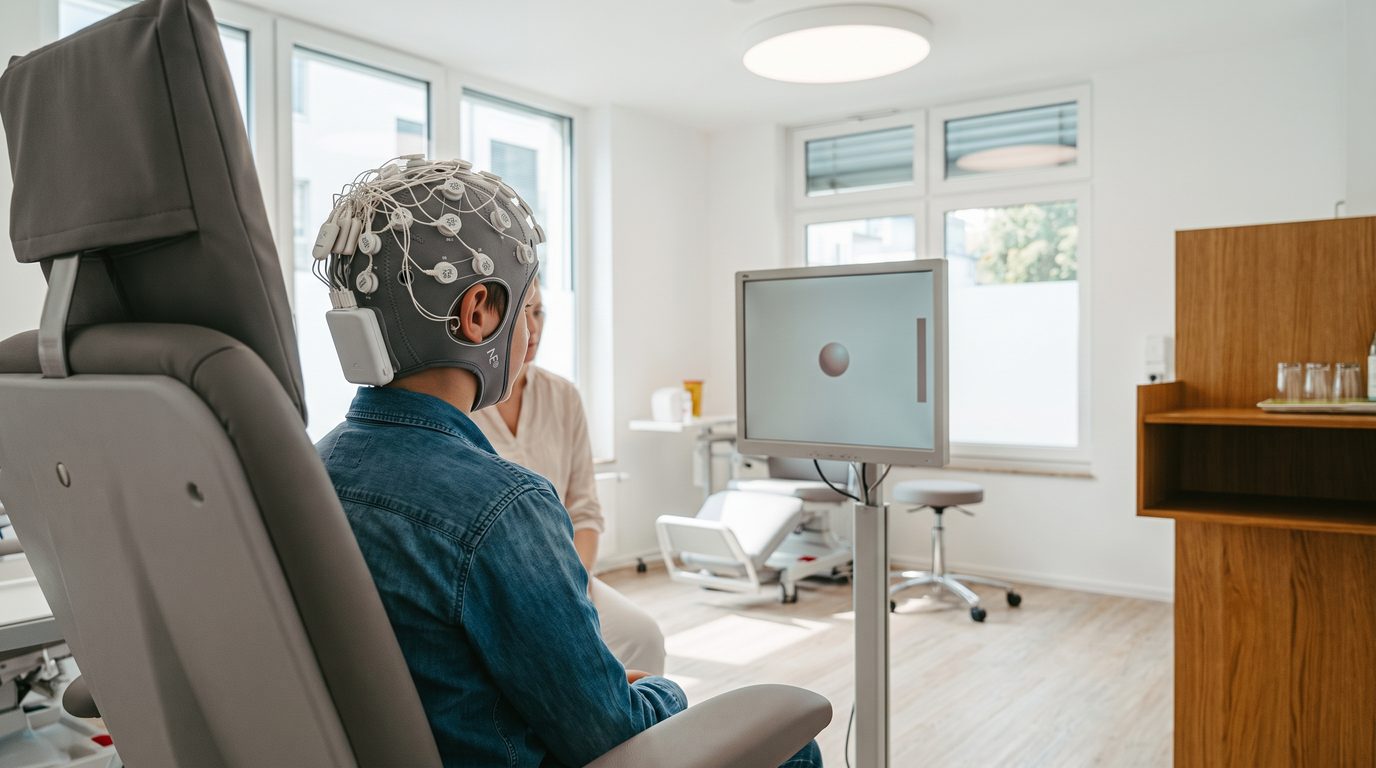
Neurofeedback is a form of self-regulation training. Sensors on the scalp measure your brainwaves, and a computer turns them into a simple signal, for instance a film that plays more clearly, or a game that moves when your brain enters a more favourable state. This makes visible what usually runs unconsciously, and step by step you learn to produce that state yourself. More basics at What is neurofeedback?
What happens in the brain in ADHD
In adult ADHD the central executive network (planning, working memory, self-control) and the attention network in particular do not work together reliably. The head feels "full", focus slips away, tasks pile up. Neurofeedback targets exactly this self-regulation: it trains you to reach the states favourable to concentration more often and more stably. How the individual brain networks interact is explained separately.
The process, often based on the qEEG
We do not train blindly. It begins with a structured assessment: history, existing findings, questionnaires. For choosing a neurofeedback protocol, a qEEG brain mapping is usually part of it, showing your activity pattern compared with a normative database. From this we derive which training goal makes sense for you. A session typically lasts around 30–45 minutes: you sit relaxed, the sensors are placed, and you work with the feedback. Neurofeedback is a learning process, effects build up over a series of sessions, not overnight.
Reading the evidence
Neurofeedback for ADHD has been researched for years. The evidence is mixed: some studies show improvements in attention and self-regulation, while others find smaller effects when strictly controlled against sham conditions. Overall we rate the evidence as moderate and deliberately use neurofeedback as one building block within a program. Real, linked studies are available at Science & Studies. How well you respond is individual.
Neurofeedback within the overall program
Neurofeedback works best when it fits the measured profile and is coordinated with the other building blocks. In our program we combine it as needed with other non-invasive neuromodulation methods and ongoing assessments. An existing treatment such as medication or coaching continues; neurofeedback is added to it. If you want to know which of your networks are under strain, start with the Brain Network Analysis (orientation, not a diagnosis).
Frequently asked questions
Does neurofeedback work for adults with ADHD too?
How many sessions are needed?
Does neurofeedback replace my ADHD medication?
Is neurofeedback unpleasant?
How do I begin?
Read more
Similar articles
An article does not know your findings.
What fits you is shown by the structured assessment. The free consultation takes 15 to 20 minutes and clarifies whether this path is worth it for you.